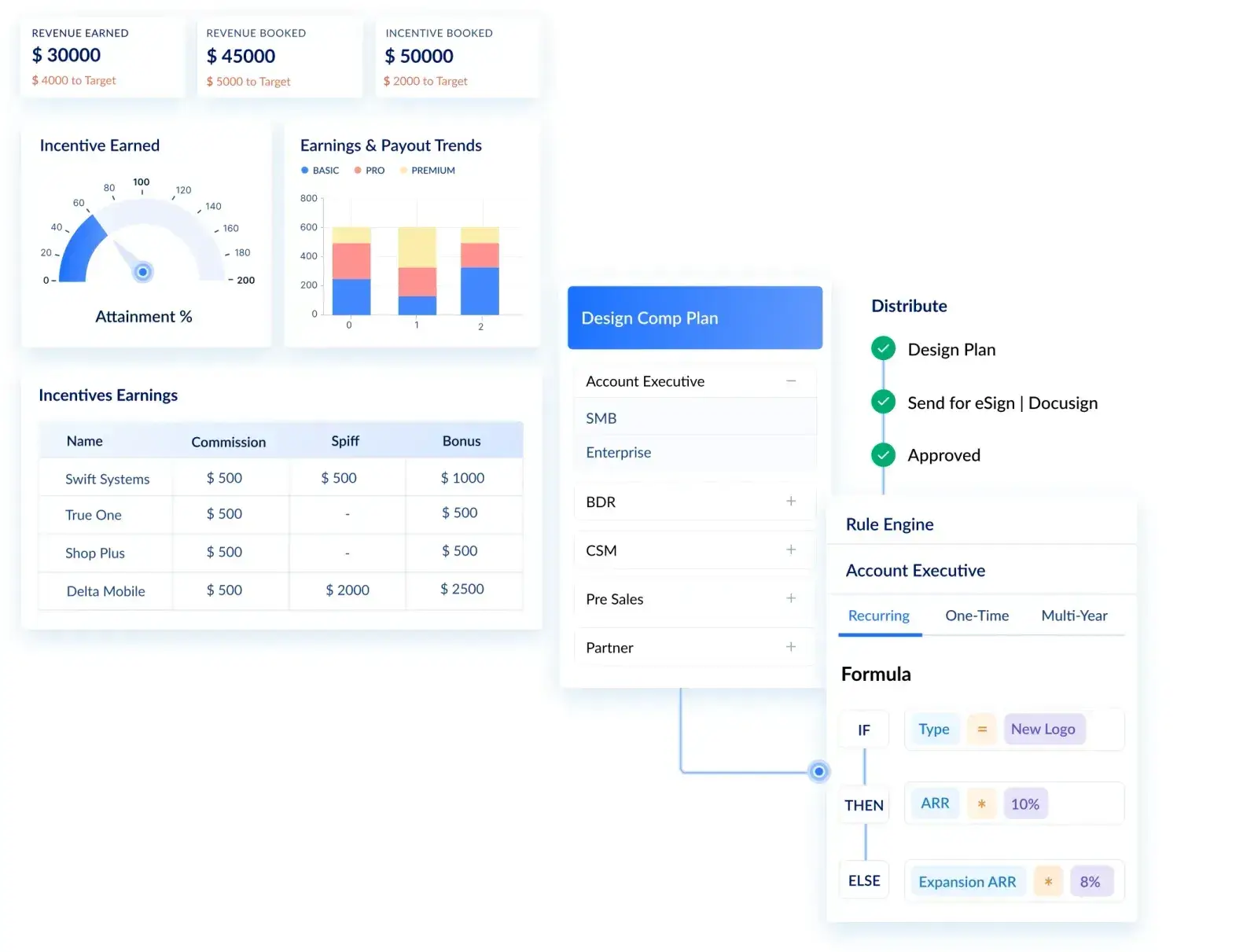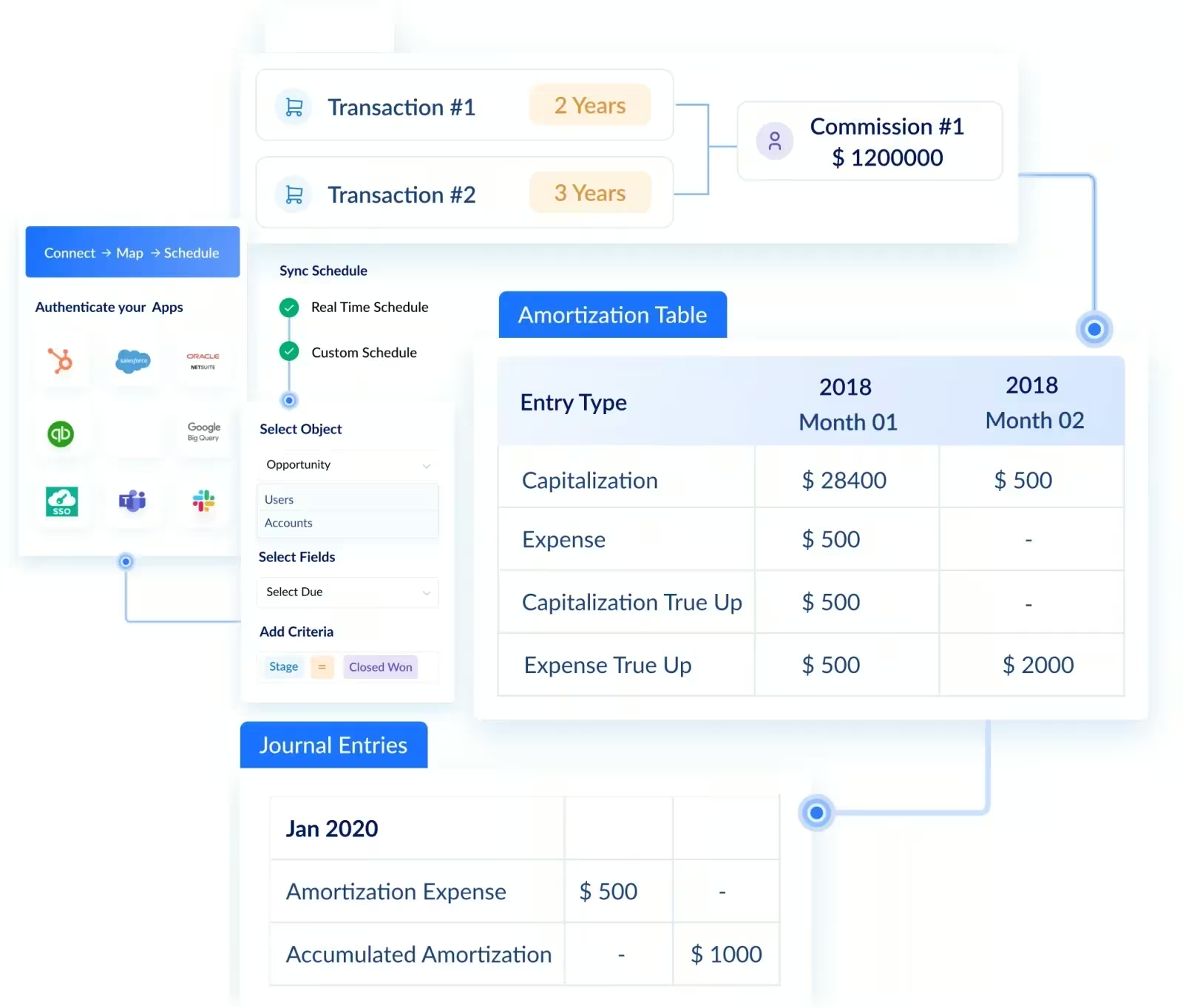
Xactly Pricing Breakdown: Costs, Modules & What to Expect
.webp)
If you're considering Xactly for sales incentive compensation management, pricing is likely one of the first things you’re trying to understand.
Like most enterprise software, Xactly’s pricing model isn’t just a flat per-user number. Costs depend on the products you choose, how many users you have, and how complex your implementation needs to be.
In this guide, I’ll walk you through how Xactly structures its pricing, what third-party benchmarks suggest, the main factors that impact total cost, and when exploring alternative commission platforms might make sense.
Xactly Intent Pricing: What the Vendor Says
If you visit Xactly’s official pricing page, you won’t find publicly listed per-user rates, published subscription tiers, or self-serve plans. Instead, Xactly operates on a custom, quote-based model where organizations must request a demo to receive pricing.
The platform is structured as a modular suite, including products such as Incent (incentive compensation management), forecasting, and sales planning, with pricing dependent on which solutions are selected.
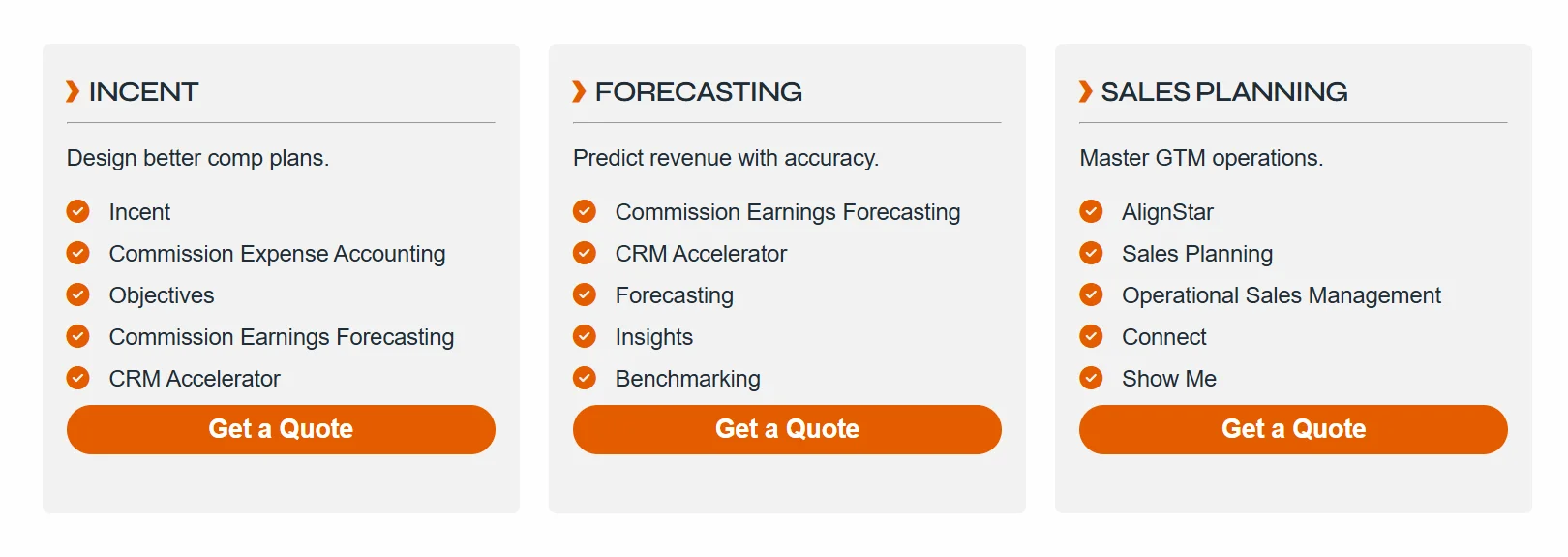
Pricing is tailored to each organization based on product modules, user count, integration needs, and contract scope.
Xactly Incent Pricing Per User (Third-Party Benchmarks)
Third-party industry analyses and marketplace data provide estimated ranges that can help with budgeting.
Based on publicly available benchmark data, Xactly pricing generally follows a per-user, annual subscription model, with costs increasing depending on modules, seat count, and implementation scope.
Xactly incent enterprise pricing :
| Deployment Size | Estimated Per-User Cost | Estimated Annual Subscription |
|---|---|---|
| Small Teams (SimplyComp – up to ~25 reps) | ~$40/user/month | ~$480 per user/year |
| Mid-Market (50–100 reps) | ~$60/user/month | ~$36,000–$72,000/year |
| Growth Stage (100–300 reps) | ~$60+/user/month | ~$72,000–$216,000/year |
| Enterprise (300+ reps) | Custom pricing | ~$216,000–$720,000+/year |
(Source - Vendor Marketplace)
In addition to subscription costs, organizations should account for implementation services, support, and optional modules such as forecasting or sales planning. Visdum prices differently on two of those counts: the subscription is billed per payee with support, hosting and integrations folded in, and admins, approvers and managers who only review or sign off are not billable seats at all. Configuration is a separate one-time fee, as it is with most platforms in this category, but subscription billing does not start until requirements sign-off, and average go-live is 0.65 months against a 3.5-month category average on G2's Summer 2026 report. The Visdum pricing page sets out both lines in full.
Xactly Pricing Tiers and Modules
What Drives the Total Cost of Xactly?
Xactly uses a custom, modular pricing structure, which means total cost varies based on product selection and deployment scope rather than a fixed public rate.
1. Product Modules
Xactly offers multiple solutions within its revenue intelligence suite, including Incent (incentive compensation management), forecasting, and sales planning. Since pricing is modular, selecting additional products increases total contract value.
2. Seat Count
Although Xactly does not publicly list per-user pricing, third-party marketplace data indicates that enterprise deployments typically follow a per-user subscription structure. The number of administrators, managers, finance users, and sales reps included in the contract impacts total subscription cost.
3. Implementation Scope
Xactly requires structured onboarding and configuration. Based on product documentation and user feedback, deployments commonly involve compensation plan setup, system integrations, and workflow configuration. Implementation scope can influence first-year total investment.
4. Add-Ons & Services
Enterprise software agreements often include additional services such as support packages or bundled modules. Vendr marketplace data indicates that contract value can vary depending on selected products and negotiated terms.
Xactly Potential Trade-Offs (Based on User Feedback)
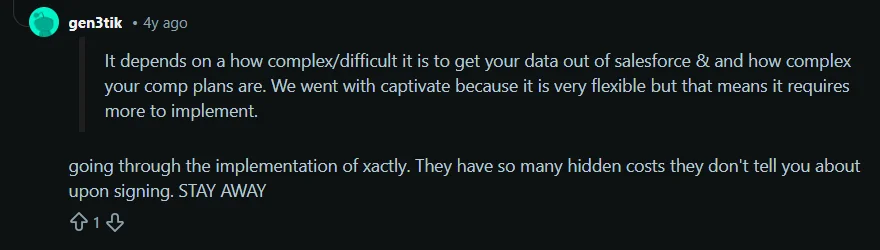
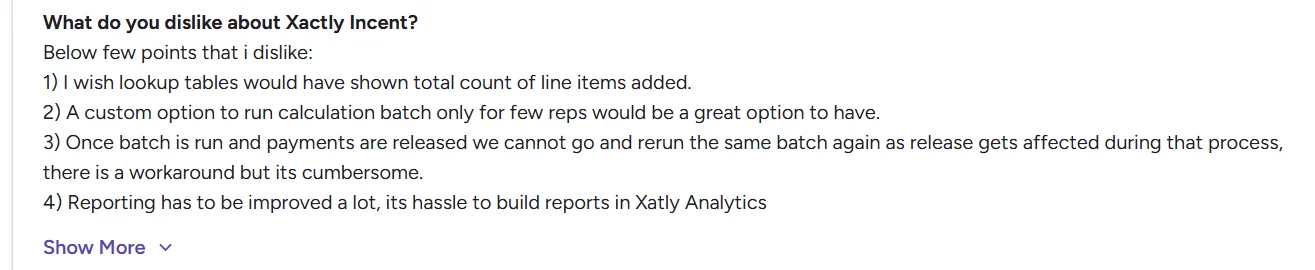
While Xactly is positioned as an enterprise-grade incentive compensation platform, aggregated user feedback highlights recurring operational challenges. Below are some commonly mentioned concerns across review platforms.
Slow System Performance
Users report slow loading times when accessing reports or working with larger datasets. This can impact timely decision-making, especially for teams relying on real-time visibility.


Delayed Data Updates
Some reviews mention delays in data syncing and dashboard updates. This may affect accurate quota tracking and short-term performance monitoring.

Limited Commission Detail
Several users note insufficient detail in commission breakdowns. This can make it harder for reps and finance teams to clearly understand how payouts are calculated.

Legacy or Excel-Like Experience
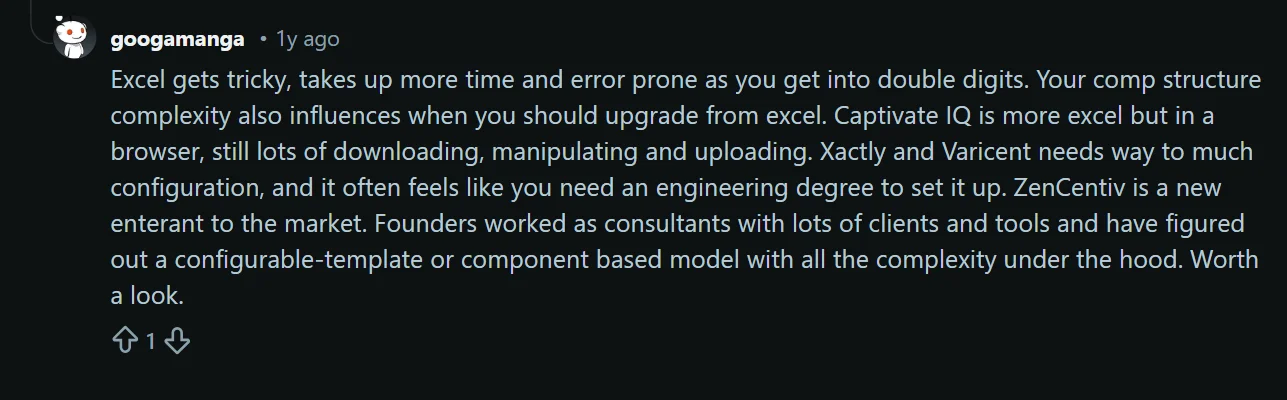
Some users describe the workflow as feeling rigid or spreadsheet-like. Compared to newer platforms, the UI may feel more static in design.


Is Xactly Worth the Investment?
Xactly is built for large, structured revenue teams that need strong governance around compensation. If you’re running layered commission plans and have dedicated RevOps or finance teams managing the process, it can be a solid fit.
However, there are trade-offs to consider.
Implementation can be configuration-heavy, especially for complex environments. Some users mention a learning curve for reps and managers who need quick payout visibility.
Modular pricing and seat-based scaling may also increase total cost as teams grow.
Ultimately, the right choice depends on whether your priority is enterprise governance, or operational speed and usability.
When You Should Compare Alternatives?
Xactly may not be the ideal fit for every revenue organization.
You may want to compare alternatives if your priority is:
- Faster deployment without heavy configuration cycles
- A modern, intuitive user interface
- Real-time payout visibility for sales teams
- Customizable dashboards tailored to different roles and KPIs
- Accurate earnings and payout breakdowns with clear traceability from deal to paycheck
- Mobile-friendly access for reps and managers
- Simplified setup with reduced administrative overhead
Organizations that value ease of adoption, payout transparency, and quicker time-to-value often evaluate alternative commission platforms like Visdum before committing to long-term enterprise contracts.
.webp)
Xactly vs Visdum : How they differ
| Category | Xactly | Visdum |
|---|---|---|
| Implementation Timeline | Configuration-heavy onboarding (up to ~6 months) | Rapid deployment with pre-built, plug-and-play integrations |
| User Experience | Governance-focused, structured workflows | Clean, intuitive interface designed for clarity |
| Dashboard Experience | Standard enterprise dashboards | Highly customizable, decision-ready dashboards |
| Payout Transparency | Commission visibility through layered reports | Granular earnings and payout breakdowns |
| Real-Time Updates | Some users report slow updates | Built for real-time performance visibility |
| Mobile Access | Limited mobile emphasis | Mobile-responsive access for reps |
| Best Fit | Large enterprises with complex governance needs | Teams prioritizing speed, transparency, and usability |
While both platforms operate in the incentive compensation space, their positioning and operational focus differ. For the full head-to-head on implementation, usability and G2 index scores, see Xactly vs Visdum, side by side.
Why Teams Choose Visdum Over Xactly
Many teams evaluating Xactly ultimately compare it against modern commission platforms that prioritize speed and usability. Here are some reasons organizations consider Visdum:
✅ Faster Deployment
Xactly implementations can take several months (often up to ~6 months) depending on compensation complexity and enterprise configuration requirements.
Visdum, by contrast, is designed for rapid rollout. With pre-built, plug-and-play integrations, most teams go live in ~3 weeks (≈0.65 months) without heavy development or extended configuration cycles.
Teams can move from implementation to operational use quickly, reducing time-to-value and minimizing internal technical overhead.
✅ Cleaner, More Intuitive Interface
The platform is designed for clarity, helping reps and managers understand earnings without navigating complex reporting layers.
Its visual rule builder allows teams to configure commission logic without writing complex formulas, making plan setup more accessible for RevOps and finance users. As highlighted in user reviews, many teams appreciate how intuitive and easy the platform is to navigate, even for non-technical users.

✅ AI Copilot for Smarter Commission Workflows
Visdum’s AI Copilot is a smart, conversational assistant designed to make managing sales compensation easier.
It acts like a guide within your system, helping you get answers, understand plans, and check important details quickly.
✅ Real-Time Payout Visibility
Sales teams can track commissions, quota attainment, and payout progress without waiting for delayed dashboard updates.
✅ Mobile-Responsive Access
Visdum’s mobile-responsive view gives sales teams instant access to performance metrics, earnings, and payout progress in one place.
Reps can check commissions, understand earning components, compare performance across quarters, switch currencies, and download payout summaries, all in real time.
✅ Customizable, Decision-Ready Dashboards
Visdum’s Enterprise Dashboard is designed to help leaders move from data to decisions quickly.
Metrics are logically grouped with a clear KPI-to-driver hierarchy, and performance can be sliced across any dimension, without rigid reports or data exports.
Role-based, customizable views ensure each team sees only what matters. It is built for real-time action, not just visualization.
✅Role-Based, Customizable Reporting
Visdum’s reports are structured by role and designed for clarity, allowing for the implementation of custom commission plans. Leaders can move from KPIs to detailed contributing factors without fragmented dashboards.
Reports can be structured based on:
- The metrics a role cares about
- The time frame they operate in for SOC compliance
- The specific plan or component being reviewed
- The required level of detail (summary vs. underlying data)
It’s built for in-the-moment decision-making. not just end-of-quarter analysis.
✅ Easier Cross-Team Adoption
With a streamlined interface and reduced configuration overhead, teams often experience smoother onboarding across sales, finance, and RevOps.
Conclusion
Xactly pricing is structured for enterprise environments that prioritize governance and layered compensation control. However, total cost depends heavily on modules selected, seat count, and implementation scope.
If speed, usability, and faster time-to-value matter more than enterprise complexity, it may be worth comparing alternatives before committing to a long-term contract.
.webp)
FAQs
How much does Xactly pricing cost per user?
Xactly pricing typically follows a per-user, annual subscription model, though official rates are not publicly listed. Based on third-party benchmarks, Xactly pricing is often estimated in the range of ~$40–$60 per user per month for core modules like Incent. Larger enterprise deployments with additional modules or services can cost more.
What is included in Xactly Incent pricing?
Xactly Incent pricing generally covers incentive compensation management capabilities, including commission calculation, plan configuration, and reporting. Total cost depends on whether additional modules such as forecasting or sales planning are included.
Does Xactly offer different pricing tiers?
Xactly pricing tiers are structured around modules rather than fixed starter or self-serve plans. Organizations can select from products such as Incent, Forecasting, and other revenue intelligence solutions, which impacts overall pricing.
What impacts Xactly Incent enterprise pricing?
Xactly Incent enterprise pricing depends on several factors, including number of users, selected modules, implementation scope, integrations, and support services. Larger deployments and multi-module environments typically increase total contract value.