The 9 Best Qobra Alternatives in 2026
.webp)
If you're in the market for a sales commission automation platform, you've likely heard of Qobra. It is a sales commission automation platform that serves mid-market and up finance and RevOps teams and helps them automate their sales commissions.
Qobra has made a name for itself as a modern sales compensation management platform, but no tool is a perfect fit for every revenue team. Whether you need deeper CRM integration, more robust performance management features, or a tool that handles large enterprises with ease, there are several heavy hitters worth your attention.
What to Look For in Qobra Alternatives
Before we dive into the list, let's talk about why people look elsewhere. Based on common pain points found in user reviews (G2), here is what you should keep top of mind when evaluating a sales compensation management tool against Qobra:
- Data Latency: One common gripe is occasional time delays in data updates. If your RevOps teams need up-to-the-minute visibility to drive sales productivity, look for a tool that offers true real-time syncing.
- The Learning Curve: While many tools are intuitive, some users find the initial setup for complex compensation structures a bit steep. You want a platform that offers a smooth user experience from day one.
- Mobile Accessibility: If your reps are often on the go, a lack of a robust mobile app can be a dealbreaker. Look for a tool that offers native dashboards for mobile.
- Customization Depth: For those with very complex commission structures, limited customization in reporting can be a bottleneck. Your next tool should act as a strategic lever, allowing for highly customizable commission structures.
The 9 Best Qobra Alternatives
Here are the 9 best Qobra alternatives, ranked on their key features, that can confidently compete with Qobra and fulfill all your sales compensation needs in 1 platform, along with the pros and cons of each.
Quick Glance Table for Qobra Alternatives
1. Visdum
Visdum is a sales commission automation software that makes it easier to scale your sales comp while prioritizing ease of use. It shines specifically in its ability to integrate deeply with CRMs, ERPs, and other platforms. It is built to manage the entire lifecycle from plan design to automated payouts.

Key Features:
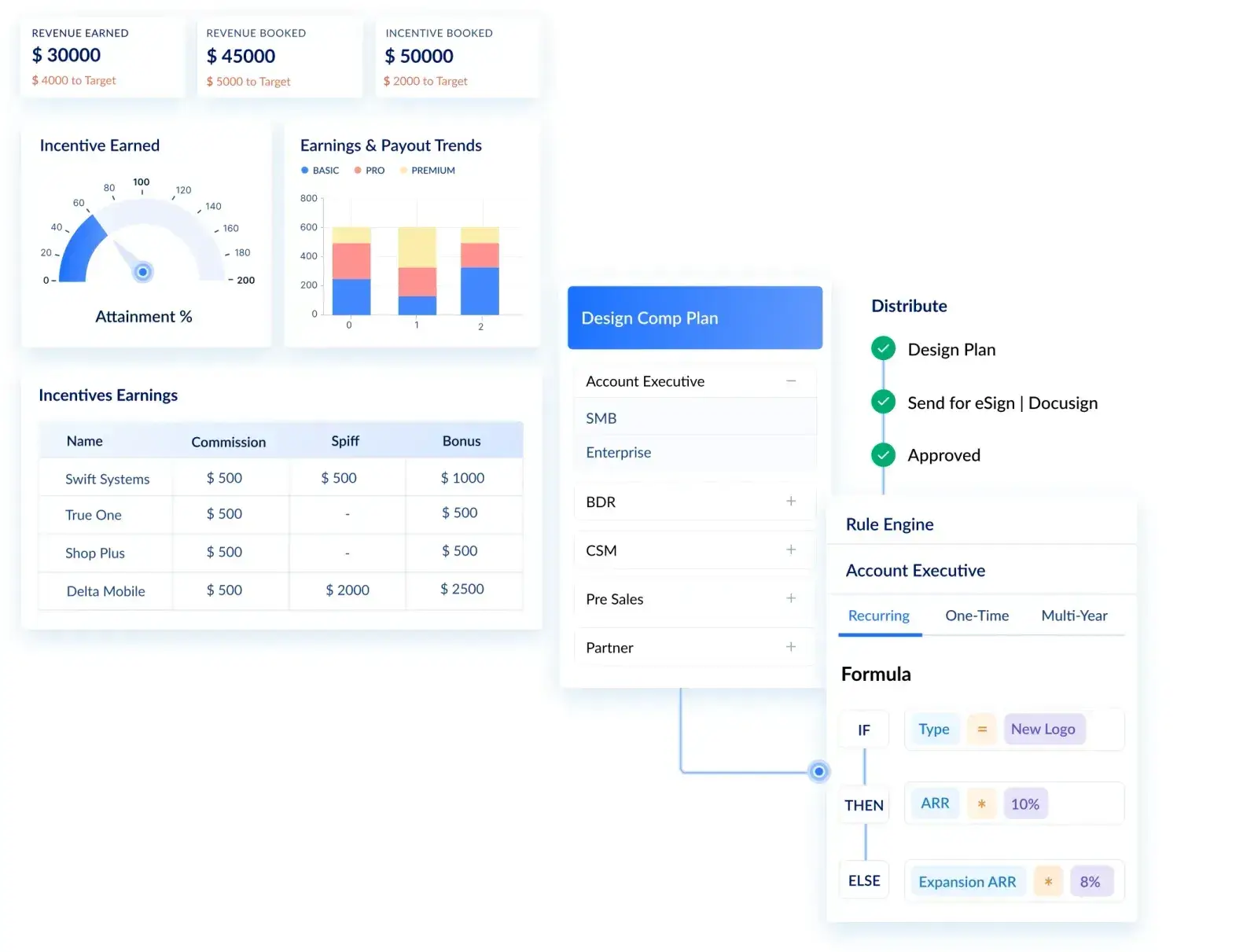
- No-Code Plan Builder: Use a visual rule builder to create flexible compensation plans without technical help.
- Real-Time Dashboards: Provide sales reps and sales leaders with instant visibility into earnings and attainment.
- Multi-Level Approval Workflows: Automate the path from manager review to finance sign-off seamlessly.
- AI Copilot: Visdum's AI Copilot acts as a conversational layer across the platform to which you can ask queries regarding usage, get detailed reasons for deviations, etc.
- Comprehensive Audit Trail and Compliance: Visdum provides a comprehensive audit trail and support for ASC 606, and is SOC II Certified.
- Dedicated Support: Visdum is the winner in G2's Sales Compensation Category for 'Best Relationship' signifying our focus on customer support.
Pros & Cons:
- Pros: Extremely fast implementation times; Enterprise-grade dashboards; strong rep trust due to transparent statements.
- Cons: Newer to the market compared to legacy giants; smaller third-party consultant ecosystem.
Firebolt evaluated Visdum head to head against Qobra before choosing it. Here is how their Head of Growth described the decision:
"We looked at a number of companies, Everstage, QuotaPath, Qobra, and obviously Visdum. The sales process was much smoother with Visdum than any other company. The whole evaluation process allowed us to do proof of concepts and very quickly showcase value." - Sundeep, Head of Growth, Firebolt
Hear how Firebolt weighed Visdum against Qobra and two other tools:
.webp)
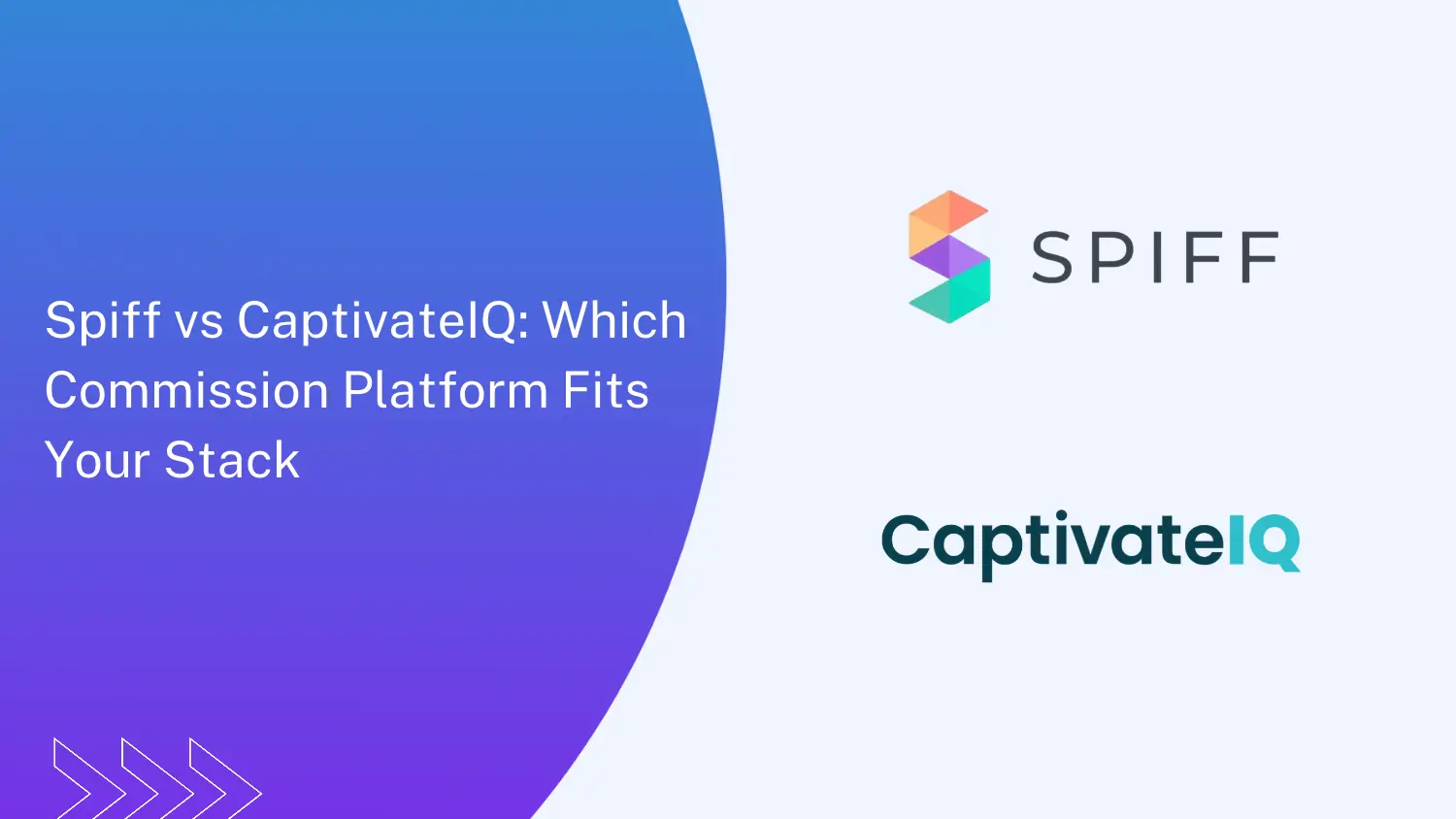
2. Salesforce Spiff
If you are already living in the Salesforce ecosystem, Spiff is a powerhouse. It is designed to feel like a natural extension of your CRM, providing sales reps with real-time visibility into their earnings.
Key Features:
- Native Salesforce Integration: Direct data sync that pulls opportunity data without manual uploads.
- Commission Estimator: Allows reps to see potential earnings on deals still in the pipeline.
- Automated Document Generation: Creates and tracks compensation plan acknowledgments.
Pros & Cons:
- Pros: Best-in-class UI/UX; real-time processing prevents end-of-month "blackouts"; highly scalable for large enterprises.
- Cons: Implementation can be complex; best features are heavily optimized for Salesforce users only.
3. QuotaPath
QuotaPath is known for its incredible user experience and focus on the individual contributor. It’s one of the few tools that offers a free trial, allowing you to get a feel for the interface before committing.
Key Features:
- Self-Service Integrations: Connect your CRM and payroll tools (like Rippling) in minutes.
- Earnings Simulation: Reps can model "what-if" scenarios to see how different deal sizes affect their paycheck.
- Audit-Ready Accuracy: Maintains a strict history of plan changes and payout logs.
Pros & Cons:
- Pros: High adoption rates among sales reps; excellent customer support; transparent and affordable pricing.
- Cons: Can struggle with extremely complex commission structures (e.g., multi-year retro-credits); reporting depth is lighter than enterprise rivals.
4. CaptivateIQ
CaptivateIQ is the go-to for RevOps teams that love the logic of a spreadsheet but hate the errors. It provides the "spreadsheet-like" flexibility you are used to but automates the commission calculations to ensure accuracy.
Key Features:
- Logic Modeling: Use spreadsheet-style syntax to build customizable commission structures.
- Data Ingestion Layer: Massages and cleans data directly within the platform.
- Global Currency Support: Handles 75+ currencies for international revenue organizations.
Pros & Cons:
- Pros: Infinite flexibility for unique plans; reduces manual data prep by hours; robust reporting.
- Cons: Often requires professional services for the initial build; can be expensive for medium businesses.
.webp)
5. Performio
Performio is a veteran in the sales performance management space. They are highly specialized in handling the needs of global companies with highly complex commission structures that other tools might struggle to model.
Key Features:
- Component-Based Plan Builder: Drag-and-drop elements to create multi-tiered plans.
- Incentive Modeling: Deep simulation capabilities for budget forecasting.
- Compliance Tools: Fully supports ASC 606 and SOX compliance for audit trails.
Pros & Cons:
- Pros: Handles massive transaction volumes without slowing down; extremely reliable calculation engine; strong data security.
- Cons: The UI can feel more "utilitarian" compared to Spiff or QuotaPath; steeper learning curve for new admins.
6. Commissionly
For small to medium businesses that need a straightforward commission management tool without the enterprise price tag, Commissionly is a solid bet. It covers the essentials of commission structures and reporting without the bloat.
Key Features:
- Tiered Pricing: Affordable options starting at a per-company flat rate.
- Multi-Currency Support: Handles commissions for small international teams.
- Automated Email Reports: Sends PDF statements to reps automatically on payout dates.
Pros & Cons:
- Pros: Quickest setup on this list; easy to use for non-technical users; budget-friendly.
- Cons: Limited direct integrations (relies heavily on Zapier); lacks advanced AI or forecasting tools.
7. SAP SuccessFactors (formerly SAP Commissions)
If you are already deep in the SAP world, their compensation management software is the logical choice. It is a beast in terms of power, designed specifically for the most complex sales compensation needs in the world's largest organizations.
Key Features:
- AI-Driven Optimization: Suggests plan changes to maximize sales performance.
- Dispute Management: A formal in-platform workflow for reps to challenge specific line items.
- Enterprise Scaling: Built to handle tens of thousands of payees across global territories.
Pros & Cons:
- Pros: Unmatched power and scalability; integrates perfectly with other SAP ERP modules.
- Cons: Very long implementation cycles (up to 8 months); high cost of ownership; dated user interface.
8. Varicent
Varicent is a leader in the Gartner Magic Quadrant for a reason. It offers deep AI-driven insights into sales performance and compensation plans, helping sales leaders make data-driven decisions about their revenue organization.
Key Features:
- Augmented Intelligence: Surfaces "why" a rep is underperforming, not just "how much."
- Territory & Quota Planning: Includes tools for balancing territories and setting fair quotas.
- Granular Data Analysis: Ability to drill down from a high-level dashboard into individual transaction logic.
Pros & Cons:
- Pros: Holistic approach to sales performance management; excellent for strategic long-term planning.
- Cons: Requires dedicated administrative resources; can be "overkill" for smaller revenue teams.
9. Xactly
Xactly is one of the most established names in sales commission software. They offer a suite of products that cover everything from territory planning to commission software, making them a one-stop shop for holistic sales performance management.
Key Features:
- Xactly Benchmarking: Compare your compensation plans against 20 years of anonymized industry data.
- Automated Credit Assignment: Handles complex splits and overlays automatically.
- Forecasting Precision: Predicts commission expenses with near-100% accuracy.
Pros & Cons:
- Pros: Massive ecosystem of partners and consultants; proven track record with the Fortune 500.
- Cons: Some users report slow loading times for large reports; the platform is composed of several modules that can feel disconnected.
What’s Next?
Choosing a tool is just the first step. Once you have narrowed down your list to two or three candidates, I recommend setting up demos specifically focused on your most complex commission structures. Ask the vendors: "Show me how you handle a mid-quarter plan change." Use a sample plan to test out the capabilities of the platform you are choosing.
Visdum offers a customized POC according to your requirements-
.webp)
The goal is to move from being a "calculator" to being a "strategist." When you automate the tedious parts of commission management, your RevOps team can finally focus on what matters- driving growth.
FAQs
How does Visdum’s customization compare to Qobra’s rigid dashboards?
Qobra users often find reporting layouts too static. Visdum overcomes this with enterprise-grade dashboards, and an AI-Copilot for ease of customization. This allows reps to customize dashboards and ask how to customize using natural language. Thus, trasnforming static data into dynamic, role-specific insights that Qobra’s more rigid interface struggles to match.
Can Visdum resolve the CRM sync latency cited by Qobra users?
Data delays in Qobra can lead to "shadow accounting." Visdum utilizes a high-frequency sync engine for Salesforce (native integration)and HubSpot, ensuring commissions update the moment a deal closes. This provides the true real-time visibility needed to maintain rep trust and motivation throughout the sales cycle.
How does Visdum simplify the complex plan modeling that challenges Qobra admins?
Qobra can have a steep learning curve for non-standard plans. Visdum’s No-Code Visual Rule Builder uses drag-and-drop logic to handle complex multi-tiered accelerators and retro-credits. This allows RevOps teams to launch sophisticated incentives in hours without technical expertise or expensive professional services.
What are the most effective Qobra alternatives for sales commissions?
The best alternative depends on your needs: Visdum is ideal for AI-driven insights and fast scaling, while Salesforce Spiff suits native CRM users. CaptivateIQ offers spreadsheet-like flexibility, and QuotaPath is built for SMB self-service. Each excels where Qobra may lack specific depth or integration.
How long does it take to implement a modern commission platform?
Unlike legacy tools that take months, modern platforms like Visdum typically go live in four to eight weeks. By using pre-built connectors and automated data mapping, these tools ensure a rapid transition from spreadsheets, allowing teams to see a return on investment within a single quarter. Visdum wins for fastest implementation in G2's sales compensation category.
Does automated software ensure ASC 606 compliance?
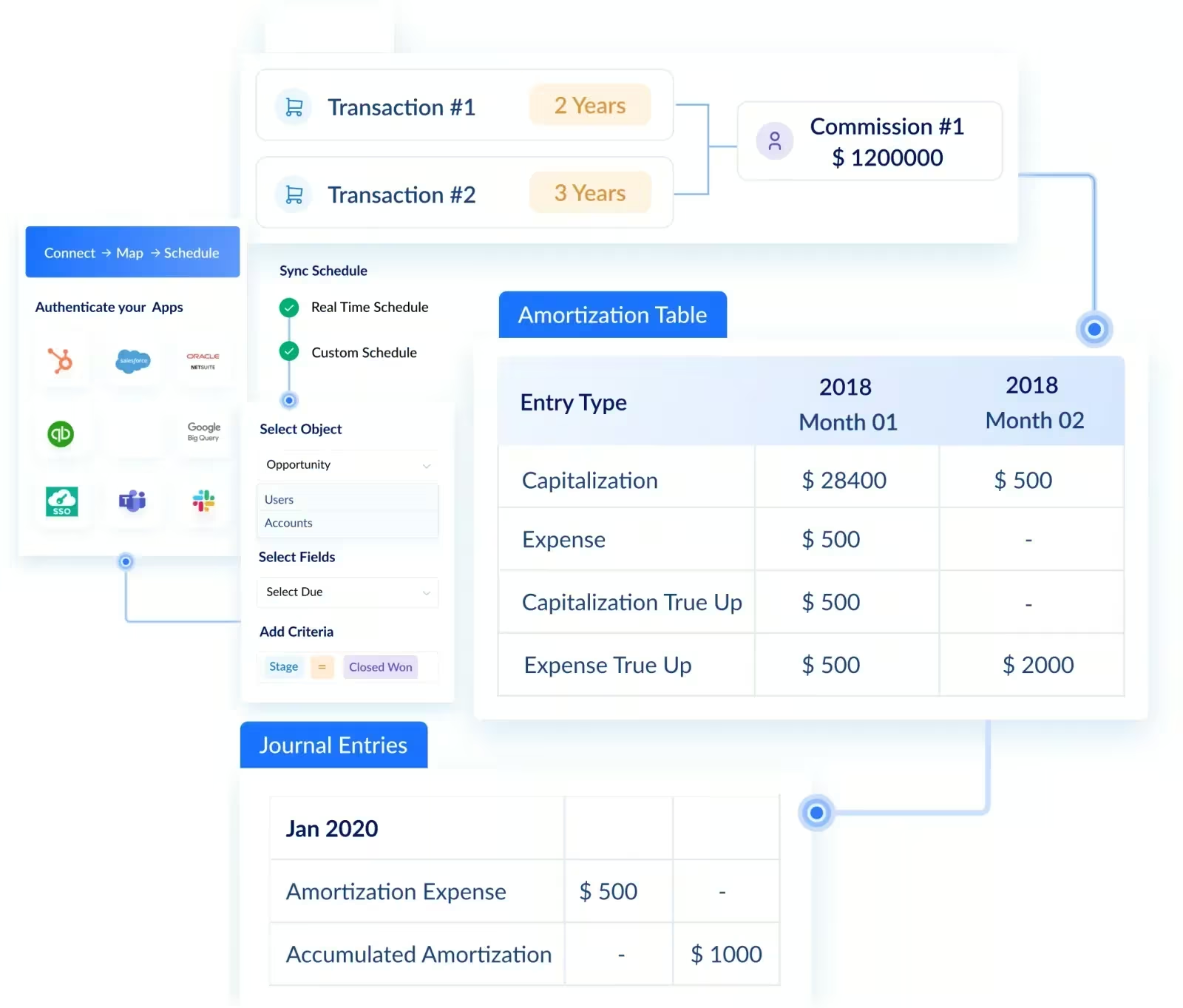
Yes. Platforms like Visdum automate ASC 606 compliance by providing an immutable audit trail and automating expense amortization. This replaces manual reconciliation, ensuring finance teams are always audit-ready while eliminating the human errors common in spreadsheet-based tracking.
What is the ROI of moving to a sales compensation tool?
Automation typically reduces administrative work by 50% and eliminates the 3-5% error rate found in manual sheets. More importantly, providing reps with real-time earnings visibility creates a powerful incentive loop that can boost overall sales productivity by over 10%.
.webp)