How Visdum Boosts Commission Visibility with Dashboards and Visual Rule Builders
.avif)
Sales compensation has traditionally been complex. But complexity does not need to mean confusion.
Modern revenue teams need clarity not just at the payout stage, but across the entire commission lifecycle. From plan design to earnings visibility, every stakeholder should be able to understand how incentives are calculated and why payouts look the way they do.
This is where Visdum changes the equation. By combining real-time dashboards with intuitive visual rule builders, it brings transparency, speed, and trust into commission management.
Key Takeaways
- End-to-end visibility, not just final payouts
Visdum connects CRMs, ERPs, billing, and payroll systems to create a single, real-time source of truth for commissions. - Real-time dashboards for every stakeholder
Sales reps, managers, and finance teams get personalized views into performance, earnings, and progress without waiting for monthly reports. - No-code visual rule builders replace spreadsheet logic
Compensation plans can be modeled, updated, and understood without relying on complex formulas or manual Excel workflows. - Fewer disputes through transparent calculations
Every payout is backed by clear, traceable logic so teams can see exactly how commissions are computed. - Audit-ready from day one
Detailed computation logs and audit trails ensure Finance and RevOps can validate every number quickly and confidently.
Why is Commission Visibility Still a Challenge in 2026?
Despite advances in CRM and sales tooling, most organizations still rely heavily on spreadsheets to manage commissions.
This typically involves manually exporting data, applying layered formulas, managing credit splits, and calculating payouts across disconnected files. Over time, this creates a system that is difficult to maintain and even harder to trust.
As a result:
- Sales reps lack real-time insight into their earnings
- Managers cannot proactively track performance against incentives
- Finance teams struggle to validate calculations during audits
- Disputes take longer to resolve due to limited traceability
The deeper issue is not just inefficiency. It is the absence of visibility.
By the time commissions are finalized, understanding how a specific payout was calculated often requires retracing multiple sheets, formulas, and assumptions. This slows down payout cycles, increases audit risk, and creates uncertainty for sales teams.
Visdum was built to eliminate this gap.
What kind of visibility does Visdum provide?
Visdum is built for full transparency across the commission lifecycle. From plan design to payout, every stakeholder sees the data, logic, and outcomes clearly and in real time.
Below are the capabilities we built into Visdum specifically so every stakeholder can see what is happening. Visibility is what produces transparency, and high-growth sales teams run on transparency.
Real-time enterprise dashboards for reps and leaders
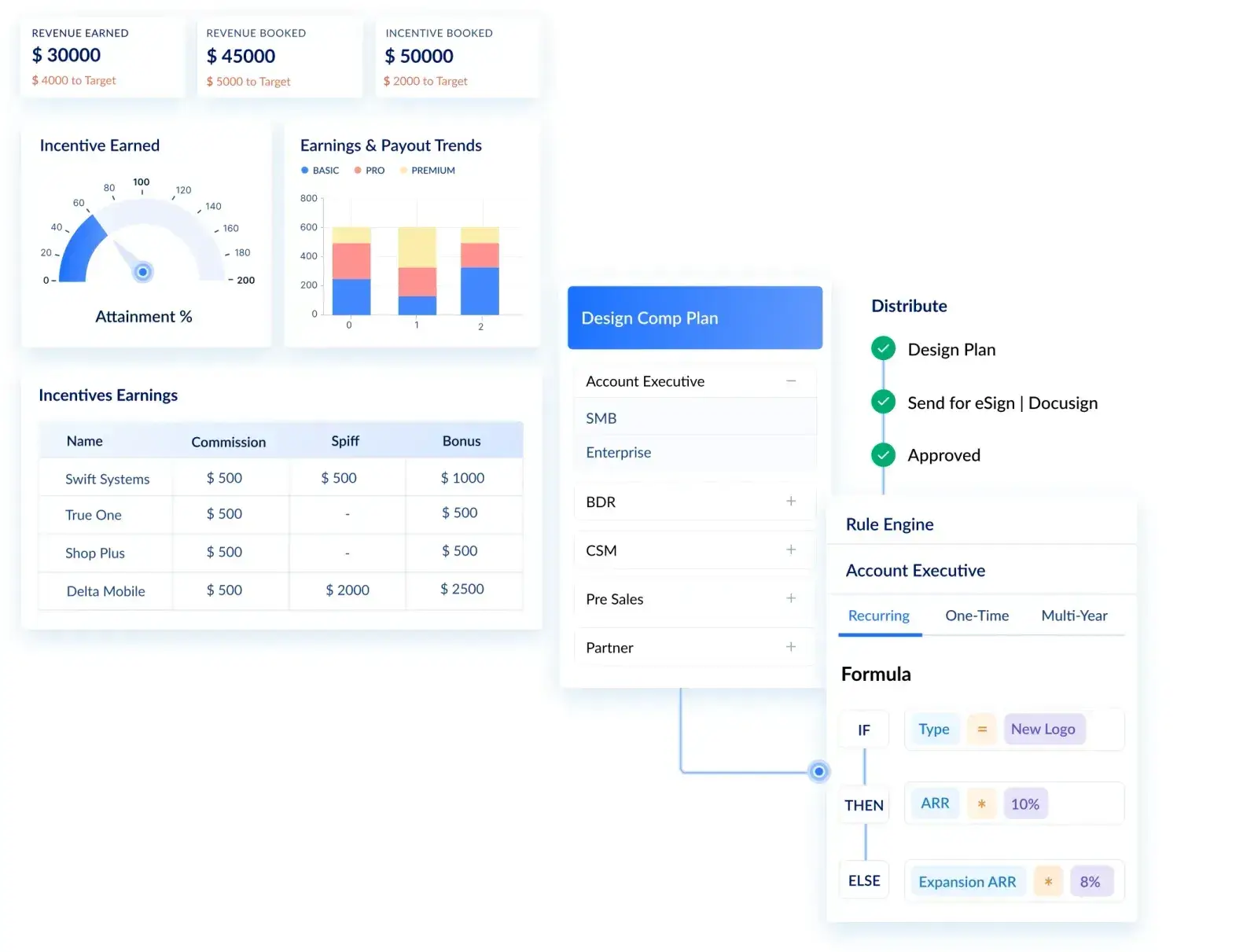
Each sales rep gets a personalized dashboard showing current earnings, quota progress, plan components, and payout history. Reps can drill down to the finest details of any transaction: their plan, the payout structure for a deal, and any bonuses or spiffs attached to it.
Visdum's enterprise dashboard is role-configured rather than one fixed report, so admins, leaders, and reps each open a view tuned to their decisions. A CFO can watch cost-of-sales and payout patterns, an admin can monitor plan health across teams, and a rep can track their own attainment, all from the same underlying data.
Admins and leaders can slice performance by rep, region, segment, product, or time period without exporting anything to a spreadsheet.
A Dynamic Heat Map sits at the center of the leadership and admin views, turning attainment and payout data into clear visual cues. It shows who is ahead, who is on track, and who is at risk inside the current quarter, so leaders can act on pacing early rather than wait for an end-of-period summary.
.gif)
Mobile commission visibility for reps
Reps rarely sit at a desk when they most want to know where they stand. The question after a strong call, "did that move me closer to my number?", usually gets answered hours later from a spreadsheet or a finance inbox. Visdum's mobile-responsive experience closes that gap by putting attainment, earnings, and payouts on the rep's phone in real time.
.webp)
It runs in any mobile browser, so there is no app to install and nothing new to learn. From their phone, reps can check current earnings and quota attainment, see which plan components are driving their payout, compare performance across quarters, toggle between currencies, and download payout summaries on the spot.
The view is organized into four tabs: Home for attainment and gross earnings, Earnings for a component-by-component breakdown across periods, Payouts for the trend graph and downloadable statements, and Profile for account settings. The same drill-down logic that powers the desktop dashboards carries through, so a number a rep sees on mobile is the same traceable number Finance sees in the back end.
Drill-down computation logs for traceable payouts
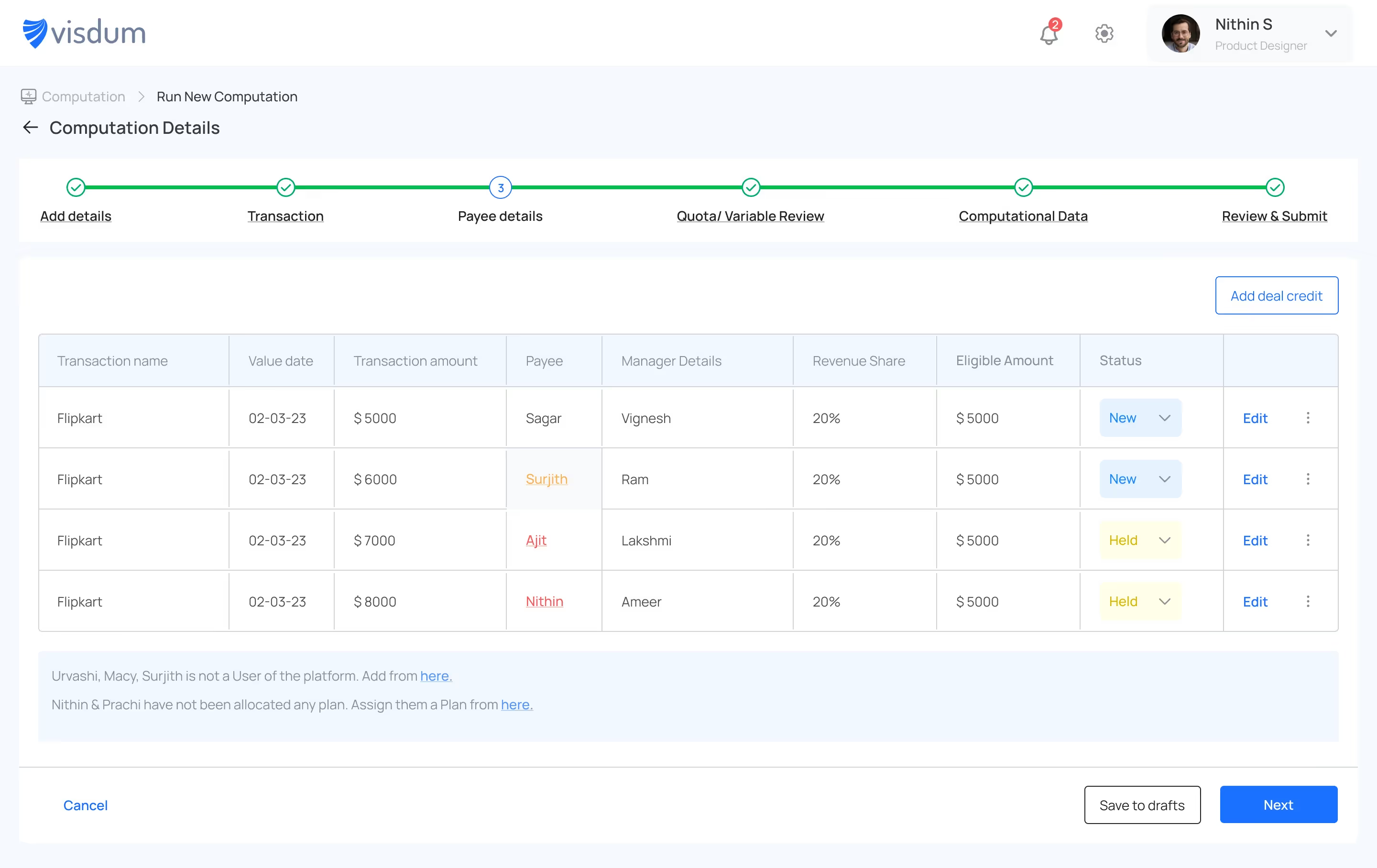
Every commission entry in Visdum comes with a full computation breakdown. You get the entire journey behind the final number, so you can see exactly how the payout amount was reached.
Reps and ops teams can trace what deals were included, which rules were applied, and how credits were calculated. That traceability produces easier auditability for Finance, faster dispute resolution, more trust from both leadership and reps, and the ability to adjust plans on the fly when progress is slower than expected.
A no-code rule builder that replaces spreadsheet logic
Visdum's plan builder lets you create commission logic without writing formulas. No more VLOOKUPs. No more VBA-backed spreadsheets. Plans and components are saved, so you can reuse them across other plans whenever you need them.
The rule engine is Excel-like but built for compensation logic, with support for derived fields, credit rules, commission tiers, and split logic. The result: RevOps teams can design, test, and explain new comp plans without depending on engineering or maintaining error-prone Excel models.
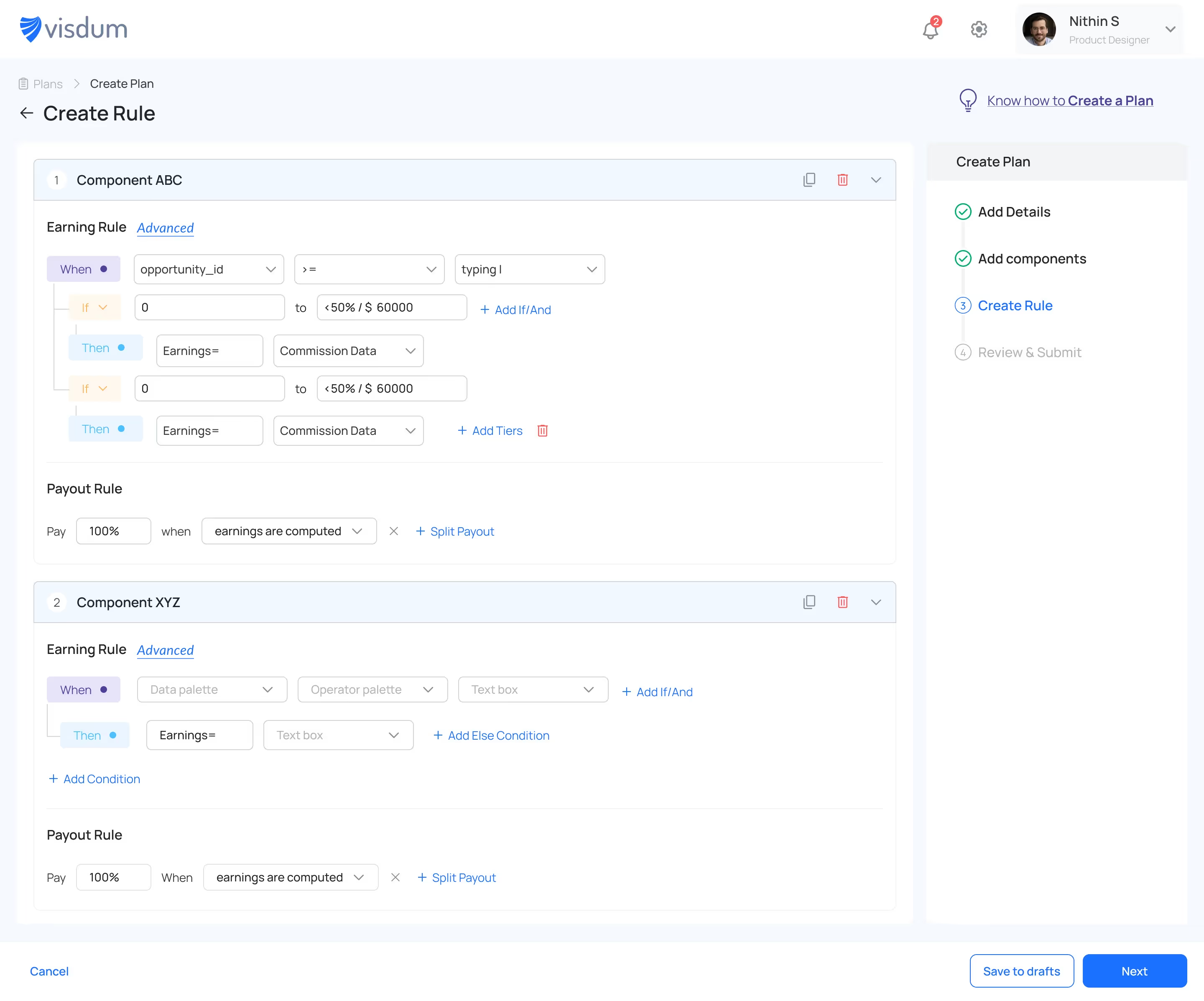
Result: Revenue ops teams can design, test, and launch new comp plans without depending on engineering or making Excel error-prone models.
Audit-ready commissions for Finance
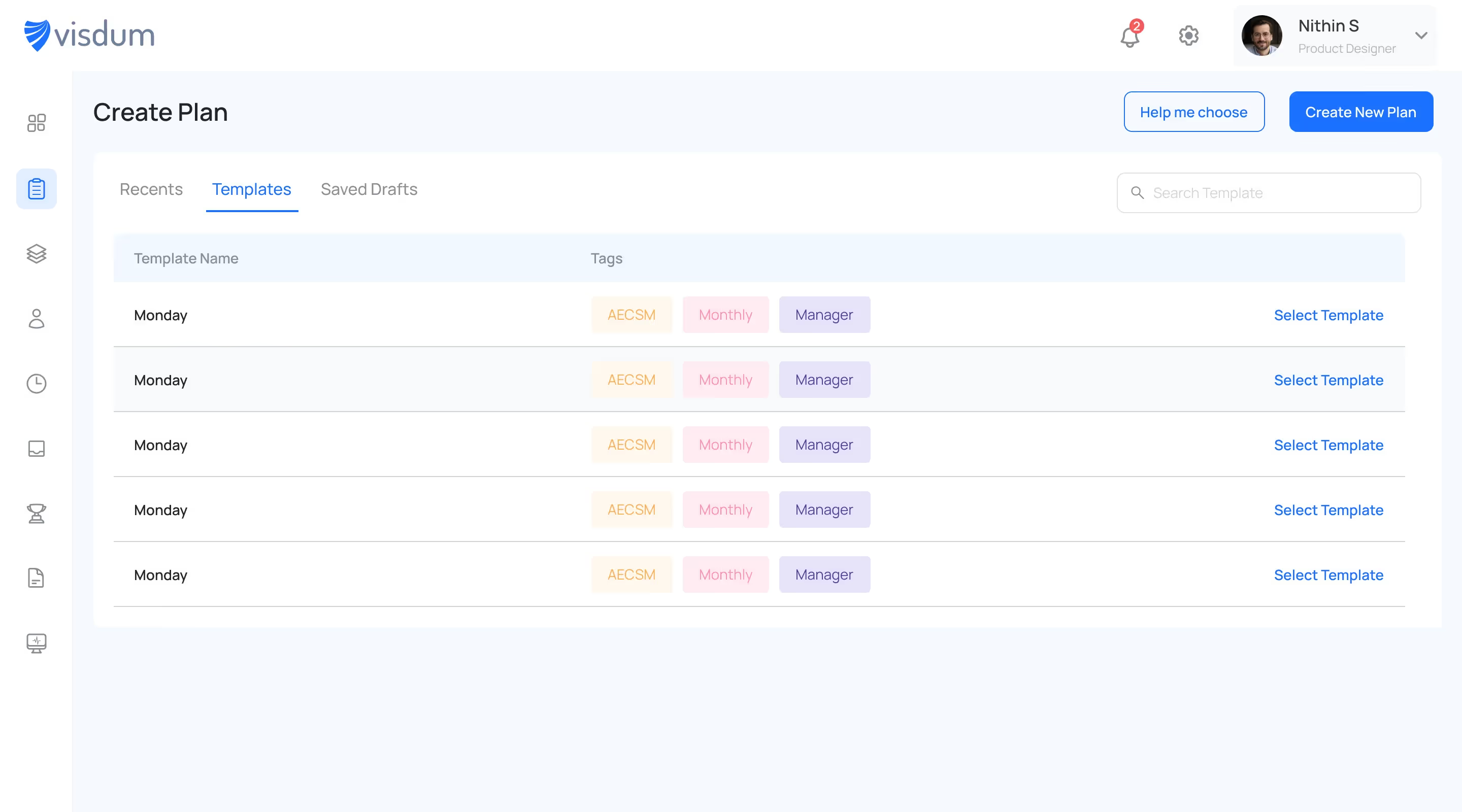
Auditability is a major factor for any payout function. Visdum makes sure no number you see is produced out of thin air. Finance and compliance teams can view full payout history, computation trails, any overrides or adjustments, and the contributors who made those adjustments.
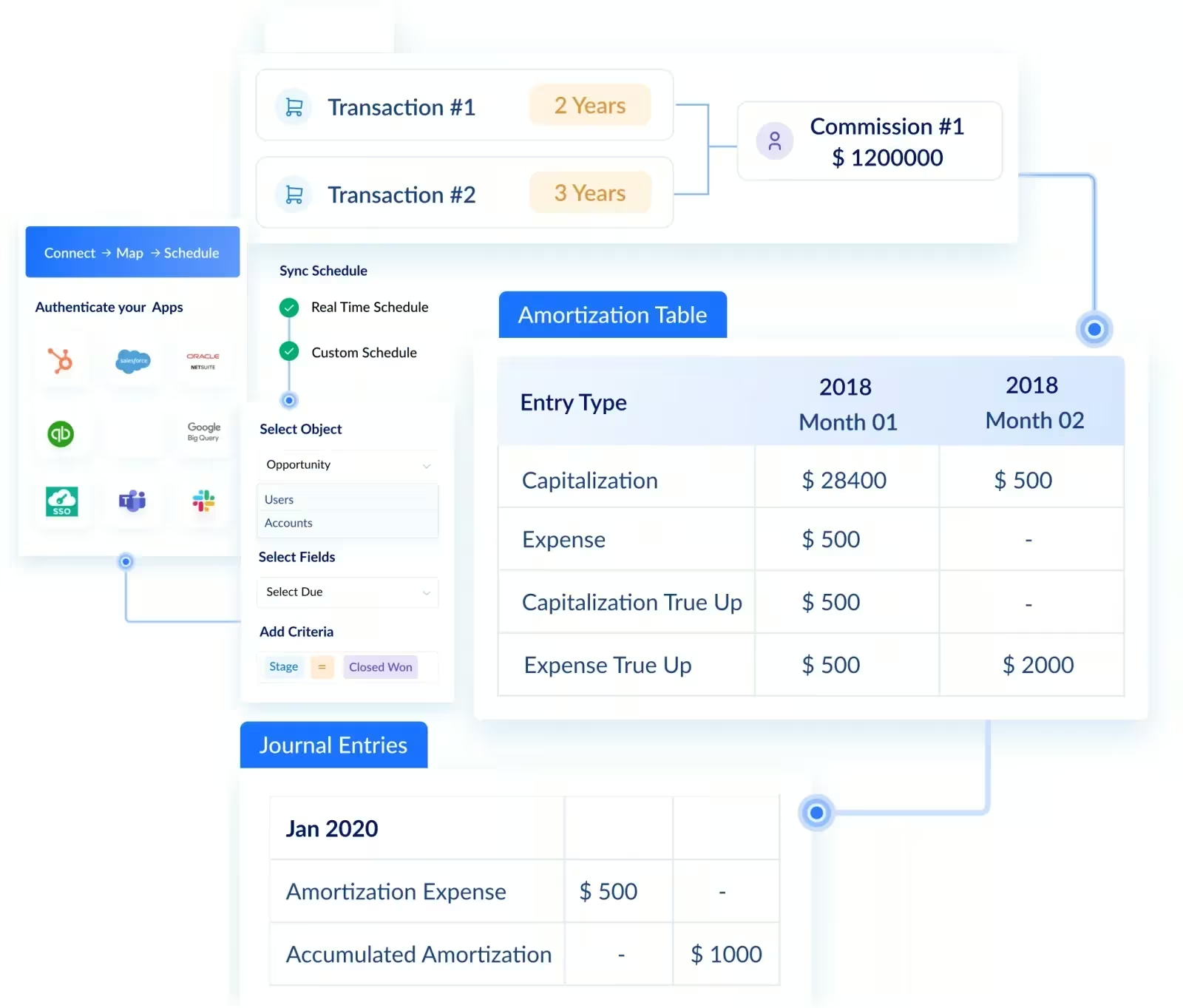
This lets Finance generate compliant reports, reconcile payroll faster, and reduce back-and-forth with RevOps. For SaaS finance teams carrying deferred commission costs, Visdum also supports ASC 606 commission amortization, so the same logic that drives payouts feeds clean, auditable expense schedules. You can see how this connects through to reporting and compliance.
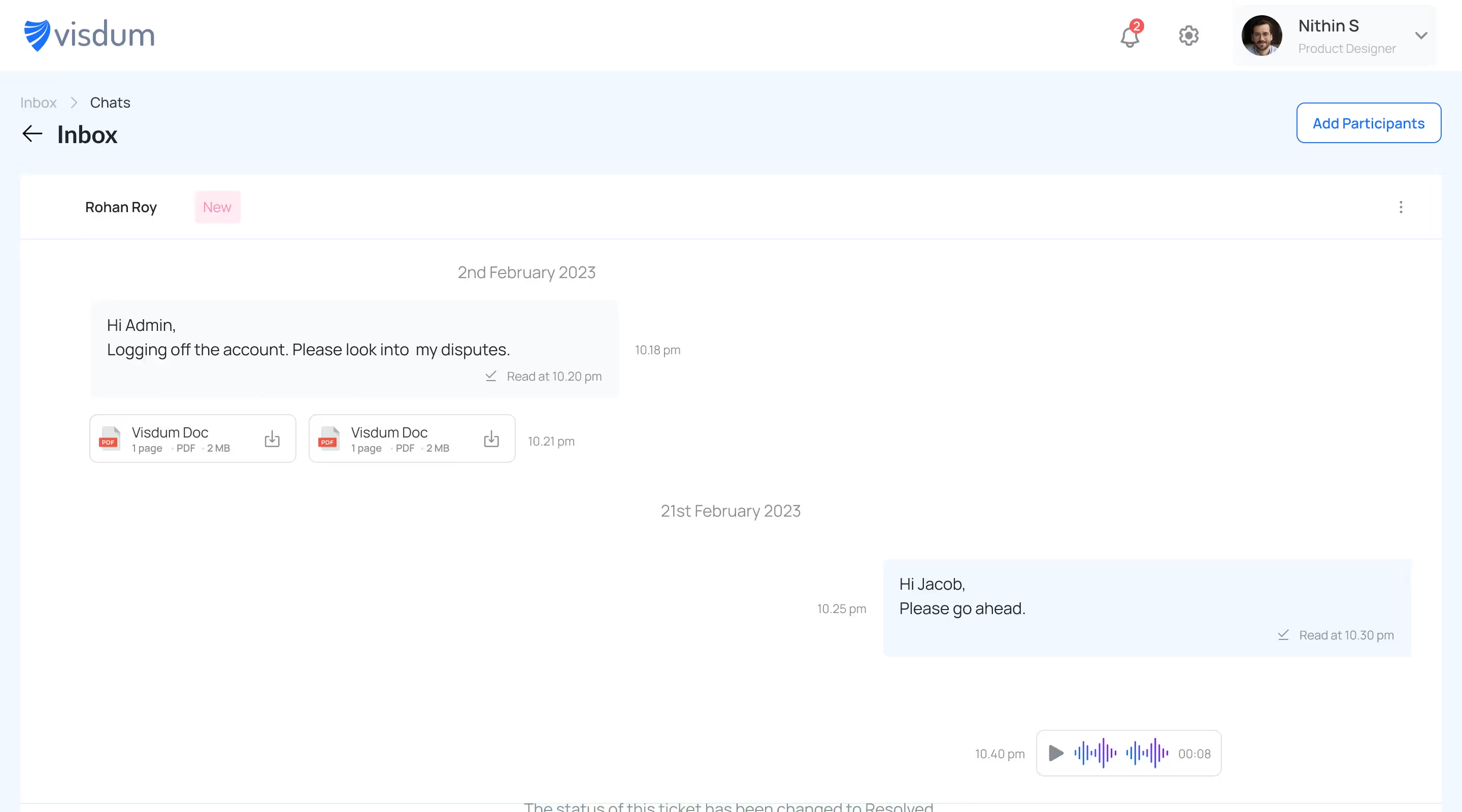
In-app dispute resolution that cuts email threads
When a rep questions a payout, the conversation usually scatters across email, Slack, and a finance inbox, and the context gets lost along the way. Visdum keeps that exchange inside the platform, attached to the exact transaction in question, so the rep, ops, and Finance all work from the same numbers while they resolve it.
Two things shrink dispute volume in the first place. Transparent computation logs let reps answer most of their own questions before raising a ticket, and when a dispute is logged, the full calculation trail sits right next to it, so resolution is faster and the outcome is documented. CV Library saw disputes effectively disappear after moving off spreadsheets for this reason.
How does Visdum achieve this real-time visibility?
Here is what happens under the hood to make the commission process visible at every stage. Visdum connects to 100+ CRM, ERP, billing, and payroll systems so data flows in without manual exports.
How did CV Library go from spreadsheets to full automation with Visdum?
CV Library, the UK's largest independent job board, ran sales comp for 85+ reps across 9 departments on 25+ separate spreadsheet plan variations. Monthly commissions and an interdependent quarterly bonus had to be calculated manually for every rep, and reps had little insight into how their paychecks were built, which drove a steady stream of disputes back to admin. They went live on Visdum in December 2024.
The headline numbers: 25+ comp plan variations unified into one system, 100% transparency into how commissions are calculated, and a 90% reduction in time spent on the comp process.
The pattern is the one this whole page describes: when the calculation logic is visible and centralized, accuracy and trust follow, and the admin time spent defending numbers drops.
.webp)
Who benefits the most?
- Sales Reps: know exactly how much they have earned, anytime, from desktop or their phone.
- Sales Leaders: coach based on mid-cycle progress, not month-end surprises.
- RevOps Teams: launch, test, and audit comp plans in minutes.
- Finance Teams: get reliable, clean, ASC 606-ready commission data.
- CROs and VPs: read quota-versus-payout insights accurately.
Reps and ops teams who want answers without waiting can also ask the AI Copilot plain-language questions about any payout and get a sourced explanation back.
Why is commission visibility no longer optional?
TL;DR: Spreadsheets hide performance data and introduce errors. Visdum replaces them with real-time dashboards and a visual rule engine, so reps and leaders get continuous visibility into earnings and plan logic, and RevOps can test, launch, and audit comp plans without engineering help. Computation logs reduce disputes, and Finance gets full, ASC 606-ready auditability into every transaction.
Modern sales teams cannot afford opacity in commissions. With hybrid reps, complex plans, and rising compliance demands, your stack has to surface clear, auditable, real-time compensation data.
Visdum does exactly that, with live dashboards, no-code logic, drill-down computation trails, and automated statements. The outcome is commissions that are transparent, fast, and accurate, with the audit trail to prove it.
.webp)
FAQs
How does Visdum help with commission visibility for reps?
Reps get their own dashboard where they can track quota progress, view expected payouts, see computation breakdowns, and raise disputes with full context attached.
What kind of rules can be set in Visdum?
Visdum supports a wide range of commission rules including threshold based tiers, split credit logic, time based bonuses, and product specific plans, all configured using a visual rule builder without the need for complex spreadsheets or manual calculations.
How often does Visdum sync data?
Visdum supports flexible data syncing options including scheduled syncs, manual syncs, and event triggered updates, with many customers choosing nightly syncs combined with on demand triggers during active commission cycles.
Can reps see their commissions on mobile?
Yes. Visdum's mobile-responsive view runs in any mobile browser, with no app to install. Reps can check attainment, earnings, and payout components, switch currencies, and download payout summaries from their phone.
Does Visdum support audit and compliance requirements?
Yes. Visdum keeps full computation trails, override logs, and approver history, and it supports ASC 606 commission amortization for finance reporting.