





Sales Compensation Software That Replaces Spreadsheets and Legacy ICM


Sales Commission Management on Autopilot

Connect your CRM, ERP, and HRIS in days, not months
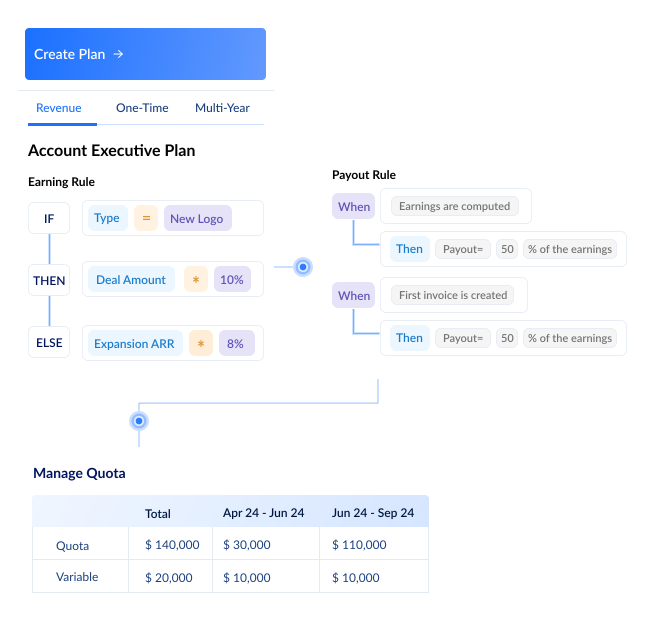
Build any comp plan without engineering or IT

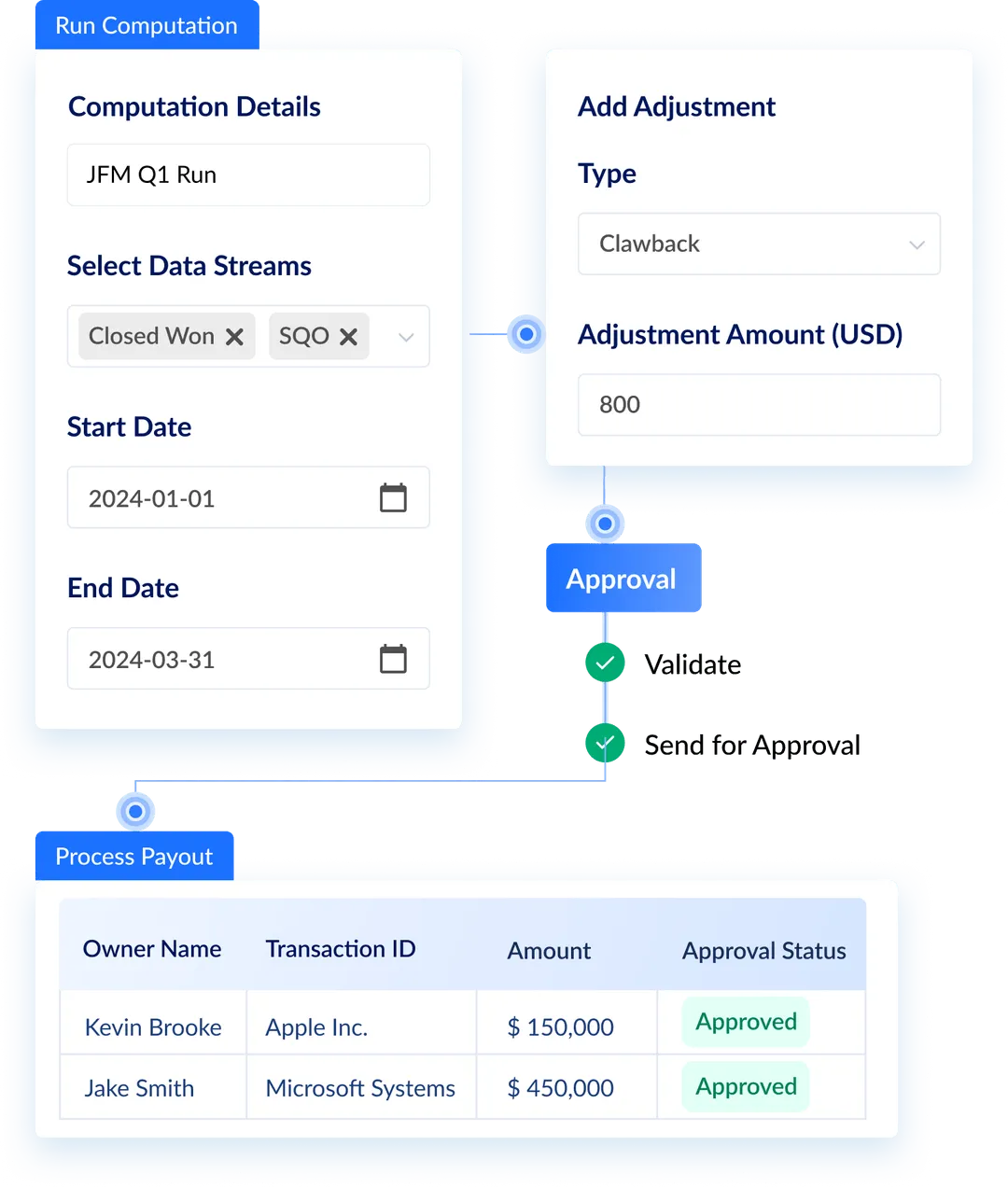
Process payouts in 3 days. End disputes before they start.

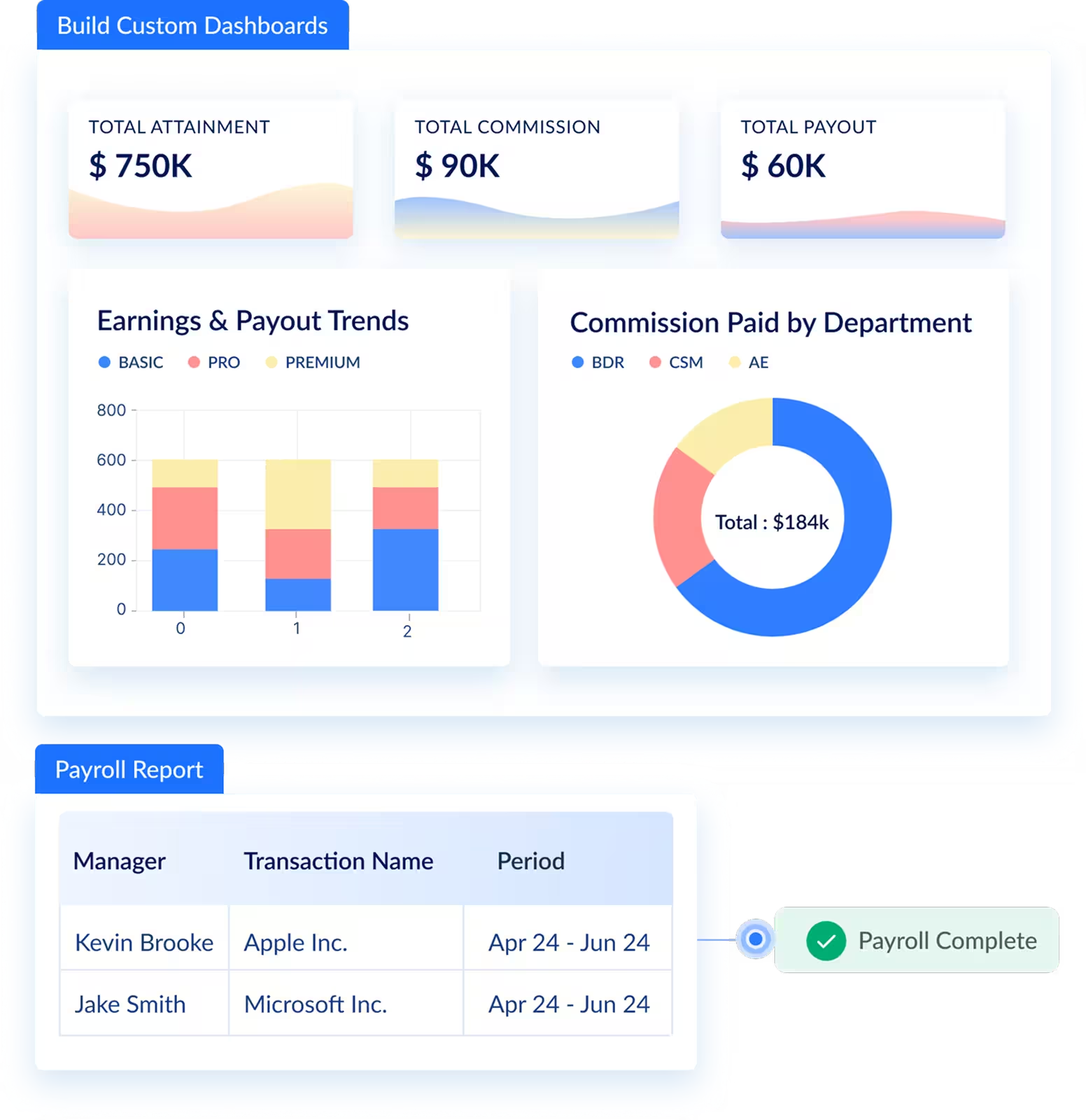
Forecast commission expense before quarter close

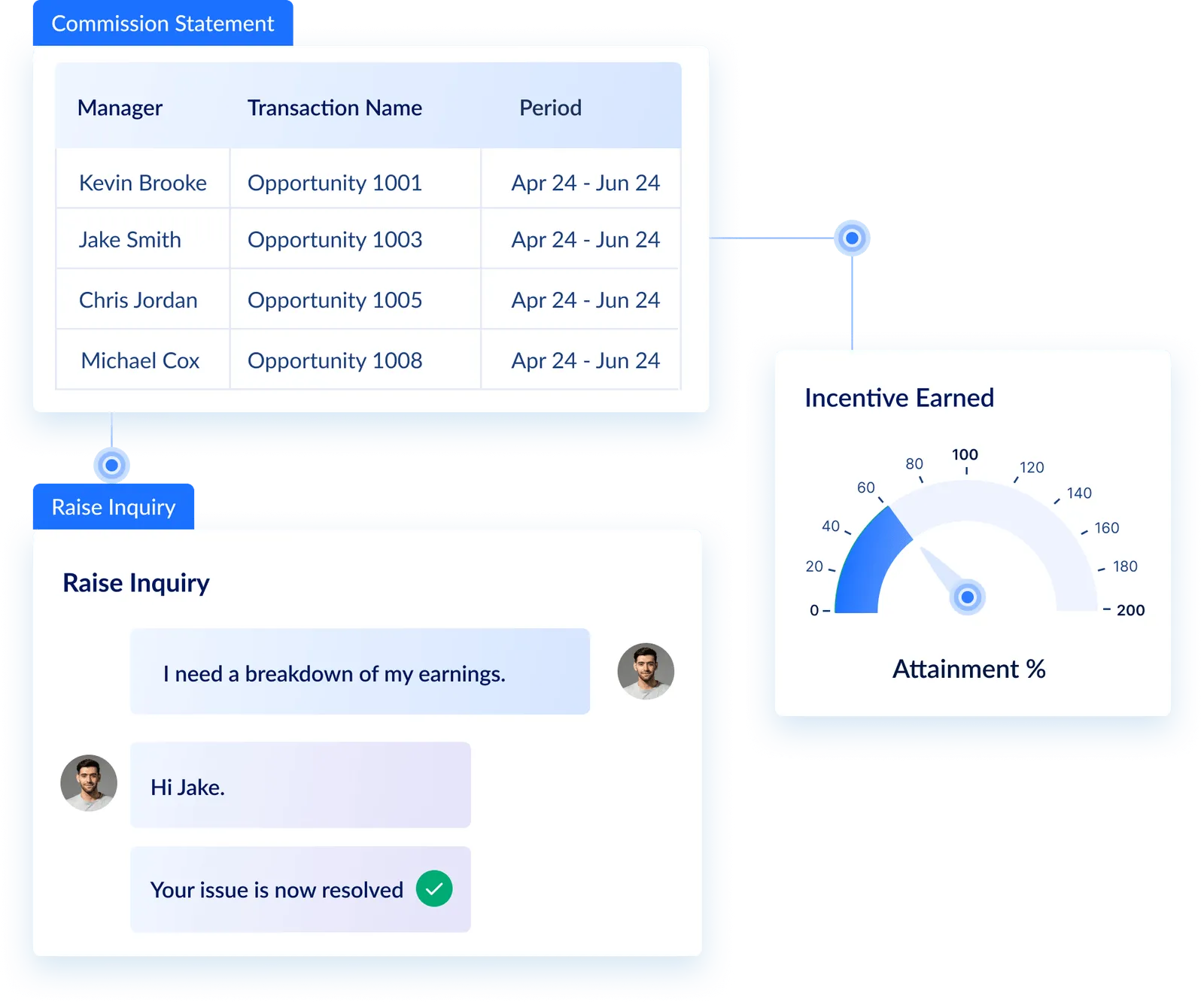
Reps see exactly what they're earning, in real time
Built to scale across your tech stack and your teams
#1 for Ease of Use, Fastest Implementation, and Best Relationship on G2
.avif)
.avif)
.avif)
.avif)
.avif)
How WebEngage shifted from spreadsheets to sales compensation automation

How Subex adopted Sales Compensation Automation to align with their evolving business needs

How Hubilo automated sales compensation to align with their dynamic business needs

Frequently asked questions
How much does sales compensation software cost?
Sales compensation software pricing typically ranges from $25 to $75 per rep per month for entry-level platforms, and is custom-quoted for mid-market and enterprise deployments. Visdum sits in the mid-market range, with pricing scaled to team size, plan complexity, and integration needs. Most teams of 40 to 150 reps move into the mid-market tier. See Visdum pricing for a personalized quote.
Can I see Visdum running my actual commission plan before buying?
Yes. Visdum offers a custom proof-of-concept (POC) where your actual comp plan is configured in the platform using your sample deal data. The demo shows your real commission scenarios, not a canned product walkthrough. POCs are scoped during the initial discovery call and typically cover splits, accelerators, clawbacks, or any other complexity specific to your plan.
How do you automate sales commission tracking?
Manual commission tracking breaks at three predictable points: when comp plans get complex with tiers, accelerators, or clawbacks; when team size crosses 30 to 50 reps; and when finance needs audit-ready calculations. Visdum automates commission tracking by syncing deal data from Salesforce, HubSpot, or any major CRM in real time, applying your comp plan logic automatically, and surfacing payouts to reps with calculation transparency. Most teams move from spreadsheet tracking to fully automated Visdum payouts in 2 to 3 weeks.
What are the key features of an incentive compensation management (ICM) platform?
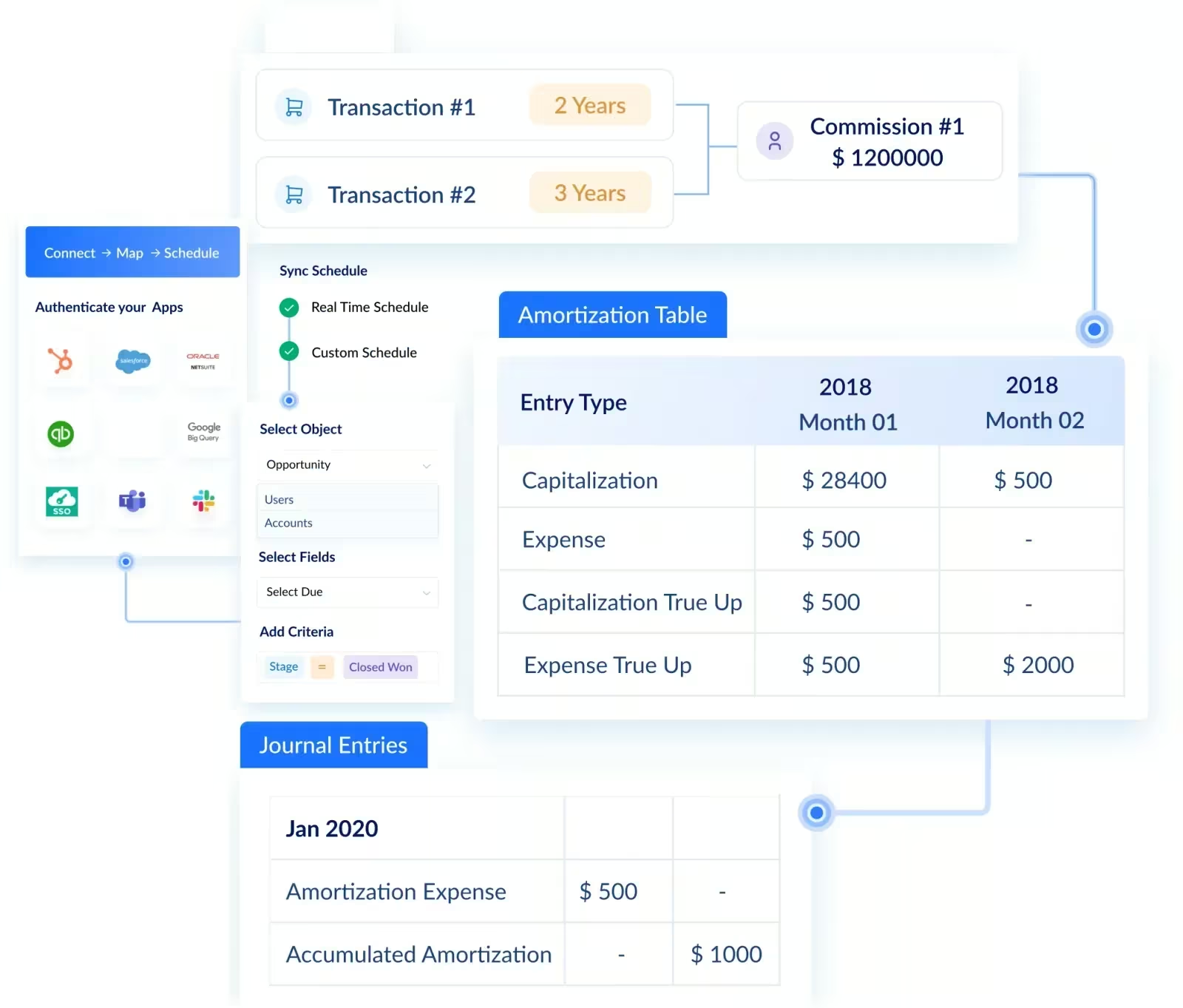
A complete ICM platform handles plan design, calculation, distribution, reporting, and compliance in one system. The key features to evaluate: no-code plan builder, real-time CRM sync, multi-currency and multi-region support, ASC 606 native amortization, dispute resolution workflows, approval chains, payout forecasting, and rep-facing visibility. Visdum provides all of these for mid-market and enterprise SaaS teams.
How long does it take to implement sales compensation software?
Implementation timelines vary across the category. According to G2 Spring 2026 data, Visdum averages 0.65 months (around 3 weeks), versus a category average of 3.48 months. Qobra averages 1.48 months. Spiff runs 6 to 8 weeks with a ~$3,000 implementation fee. CaptivateIQ runs 8 to 12 weeks with a ~$2,500 implementation fee. Xactly Incent runs up to 6 months for enterprise rollouts with substantial professional services costs. Visdum's timeline includes data migration, plan configuration, integration setup, and team training, with dedicated CSM support included as standard.
How do you choose the right sales compensation software for SaaS?
Start with three filters: team size, plan complexity, and finance team involvement. SaaS teams under 50 reps with simple plans can run on QuotaPath or similar. Mid-market SaaS teams with 50 to 500 reps, multi-region operations, or ASC 606 requirements need a finance-grade ICM platform like Visdum. Enterprise SaaS with 500+ reps and dedicated comp ops teams typically evaluate Visdum, Xactly, or CaptivateIQ. Visdum is the most common fit for the mid-market band.
How does sales compensation software integrate with CRM systems like Salesforce and HubSpot?
Integration depth matters more than the length of the integration list. Visdum's Salesforce integration syncs in real time, supports custom objects, and mirrors deal-level changes such as closed-lost, ramp, and clawback without finance intervention. The HubSpot integration is HubSpot-certified and handles the same flows. Both integrations are configured during implementation. Visdum also supports NetSuite, QuickBooks, Sage Intacct, and HRIS systems like HiBob and Workday, so commission data flows downstream to payroll and revenue recognition.
How is sales compensation software different from spreadsheets at scale?
Spreadsheets work for teams with fewer than 10 reps and simple flat-commission plans. They break predictably at three points: when comp plan logic adds tiers or accelerators, when team size grows past 30 reps, and when finance needs audit-ready calculations for ASC 606. The hidden cost is finance team hours. Most spreadsheet-based teams spend 5 to 10 hours per rep per month on manual calculations. Visdum reduces that to under an hour per rep per month while improving accuracy and audit-readiness.