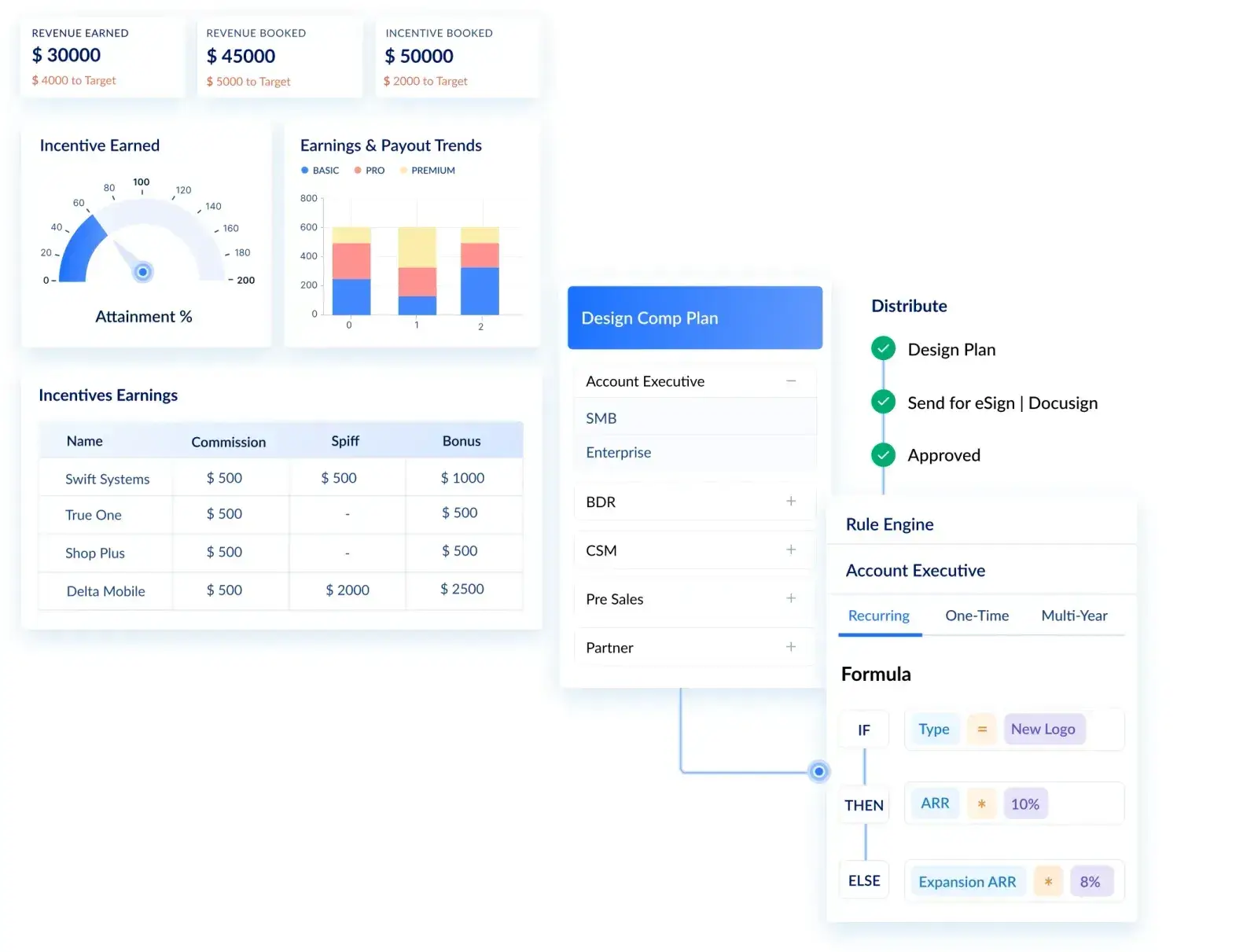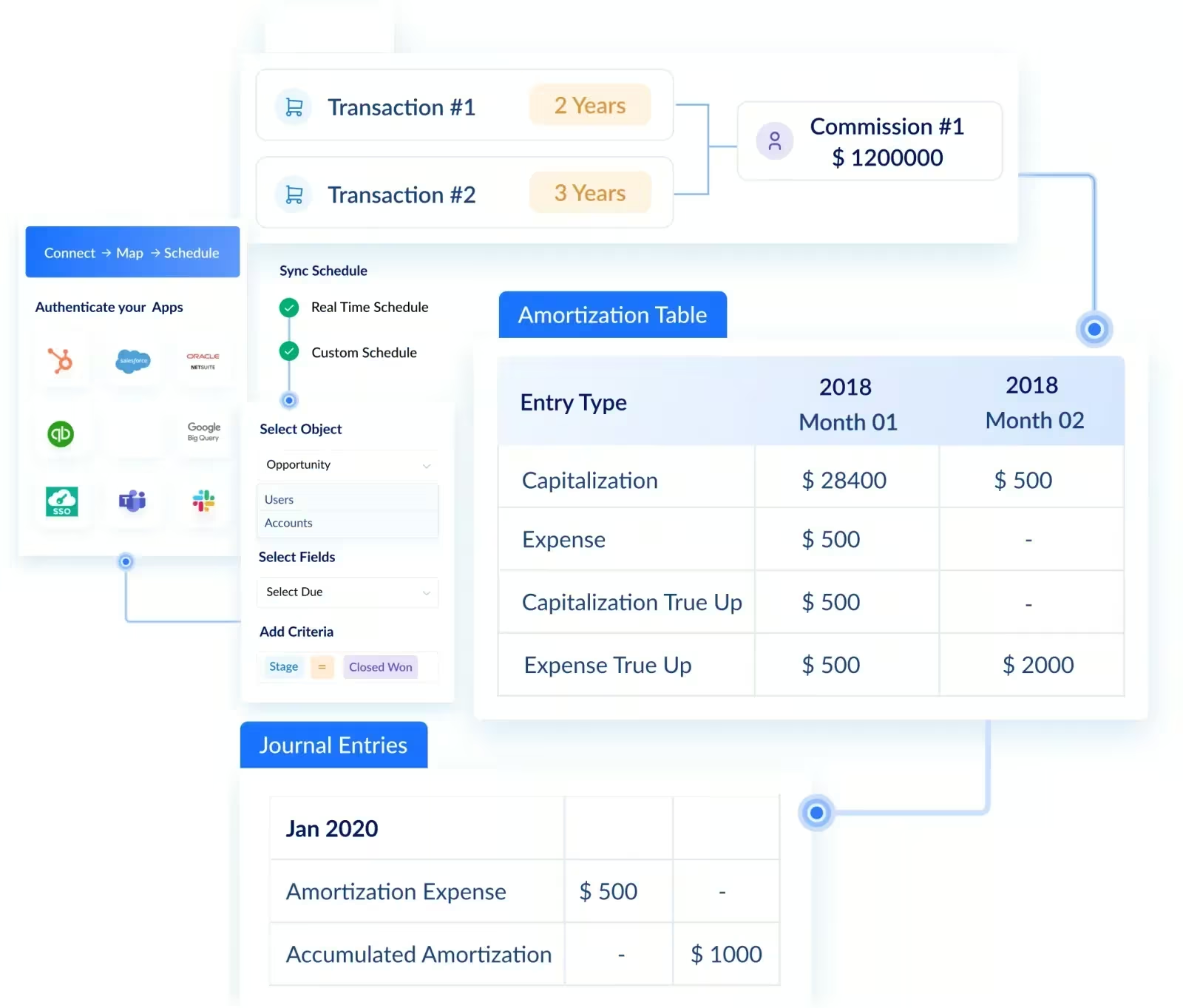
Snowflake + Visdum: Simplify Commission Management
Your sales data lives in Snowflake.
Your commission calculations live in spreadsheets.
That gap is costing your finance team 10+ hours per rep every month, and creating errors, delays, and disputes that erode trust.
While Snowflake acts as a powerful data warehouse and single source of truth, it isn’t designed for commission automation or payout workflows. Teams often end up building complex SQL logic or relying on manual processes just to calculate earnings.
So the question is:
Can Snowflake handle commission tracking and automation effectively?
Yes, but only when paired with a system built for commission logic.
That is where Visdum comes in.
In this guide, you’ll learn:
- How Snowflake supports commission data
- Why commission calculations become complex in Snowflake
- How Visdum transforms your data into automated, accurate payouts
What is Snowflake Tool and How Does it Support Commission Data?
Snowflake is a cloud-based data warehouse that helps organizations store, manage, and analyze large volumes of structured data on a single centralized platform.
It serves as a single source of truth, bringing together data from different systems, such as sales, finance, and customer platforms, into a single place.
Snowflake is designed for scalability and performance, allowing businesses to handle growing data needs while running complex queries efficiently. It also offers flexible data access through SQL, making it widely used by data teams for analytics, reporting, and decision-making.
In simple terms, Snowflake helps organizations organize their data in a way that makes it easy to query, analyze, and use across different business functions.
Why Snowflake Alone Isn't Built for Commission Automation
This is how teams typically attempt commission calculations in Snowflake:
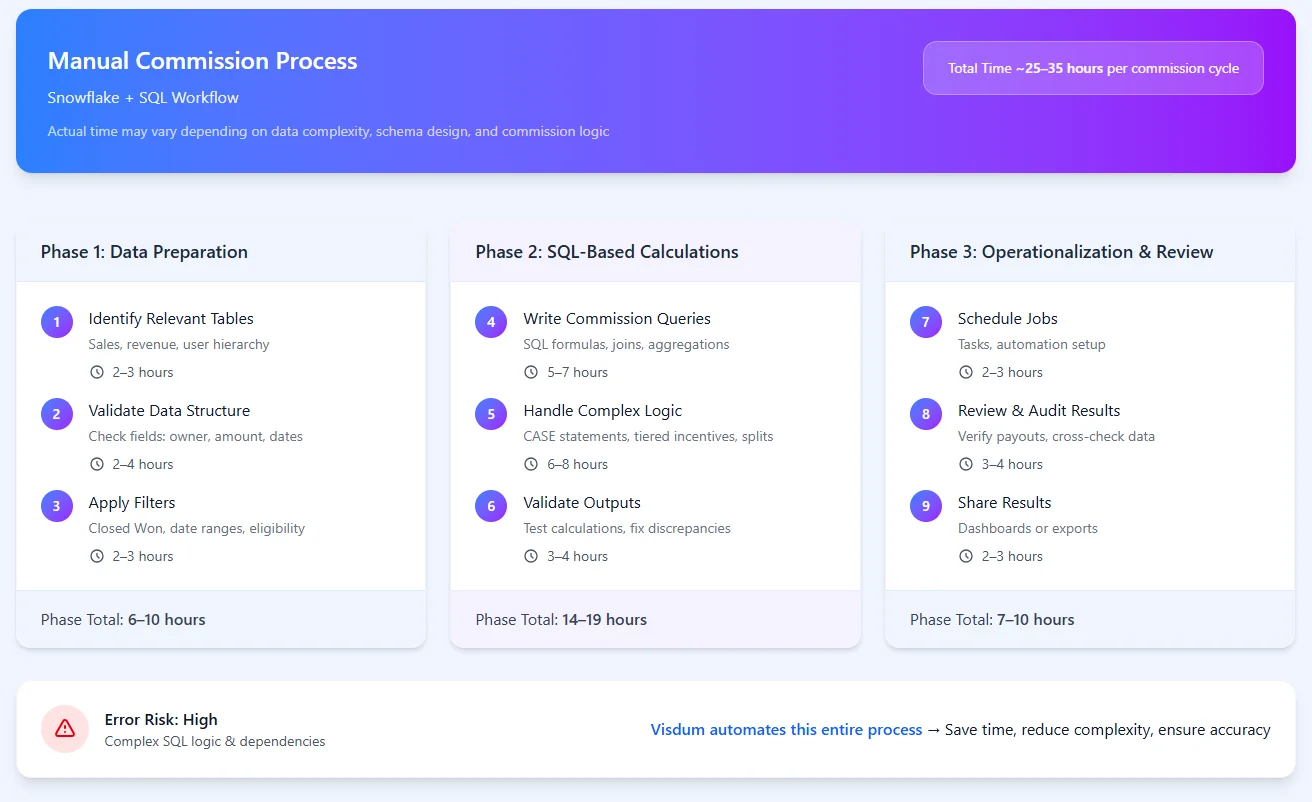
While it’s technically possible to calculate commissions in Snowflake using SQL, doing so introduces significant operational complexity.
Teams often rely on:
- SQL queries for commission formulas
- CASE statements for tiered incentives
- Tasks and streams for automation
But this approach quickly becomes difficult to scale.
Key challenges when using Snowflake for commission calculations:
The "Sales Ops Tax" Problem
Mid-market companies typically run 5-10 commission plans simultaneously:
- AEs on quota + accelerators
- SDRs on pipeline creation
- CSMs on retention + expansion
- Overlay specialists on deal registration
- Channel partners on referral fees
Each plan has 3-5 rule changes per quarter. That's 15-50 logic updates your RevOps team owns annually, while also managing territory planning, forecasting models, and CRM hygiene.
Version Control Becomes a Problem
Every commission change means:
- Updating production SQL
- Documenting what changed (manually)
- Maintaining historical logic for audits
You end up with files like:
commission_logic_v3_final_FINAL_use_this.sql
…and no clear record of what changed between quarters.
No native abstraction for commission workflows
Snowflake is designed for data storage, querying, and analytics. It does not provide built-in constructs for:
- Commission plans
- Credit allocation
- Payout calculations
Everything must be manually defined in SQL.
Cross-Functional Dependency Loops
SQL-based commission logic creates circular dependencies:
- Sales ops needs to update credit splits → depends on RevOps to modify queries
- Finance needs to adjust rates → depends on RevOps to test and deploy
- RevOps needs to validate calculations → depends on Finance to provide expected results
Every commission change becomes a 3-team coordination exercise with 2-week lead times.
Even small changes, like updating commission rates, changing eligibility criteria, or modifying payout rules, require SQL updates along with proper testing and validation, making the process time-consuming and dependent on technical resources.
Operational workflows require additional setup
Operationalizing commission workflows in Snowflake requires additional setup, as teams need to configure data pipelines for ingestion and transformation, set up scheduled jobs using tasks, and implement monitoring and error handling to ensure everything runs smoothly.
This shifts effort from calculation → infrastructure management
Hard to operationalize for business users
While Snowflake enables powerful backend calculations, it can be difficult to operationalize for business users, as the logic lives in SQL rather than business-friendly interfaces, offers limited visibility for sales teams, and lacks built-in audit trails for commission payouts.
This makes it harder for non-technical teams to:
- Understand payouts
- Verify calculations
- Resolve disputes
.png)
Build vs Buy: The Decision Most RevOps Teams Face
At some point, every RevOps team asks:
“Should we build commission automation in Snowflake or invest in a dedicated solution?”
Why Teams Build In-House
- Full control over logic and data models
- No vendor lock-in
- Leverages existing Snowflake investment
- Fully customizable to business needs
Why These Systems Break Over Time
- 6–12 month build timelines (often longer than expected)
- Ongoing maintenance burden (every plan change = code change)
- Edge cases emerge post-deployment
- Becomes a single-owner system dependent on tribal knowledge
The Hidden Cost
If your RevOps team is capable of building and maintaining a commission engine:
You’re effectively using high-leverage strategic talent to maintain infrastructure.
Instead of:
- Improving forecasting
- Optimizing pipeline
- Driving revenue strategy
They’re debugging SQL and maintaining payout logic.
How the Visdum & Snowflake Integration Works
Visdum works alongside Snowflake, turning your raw data into automated, accurate commission payouts.
Instead of writing SQL, Visdum applies commission logic directly on your Snowflake data.
Here’s what this integration does for you:
Automates commission calculations
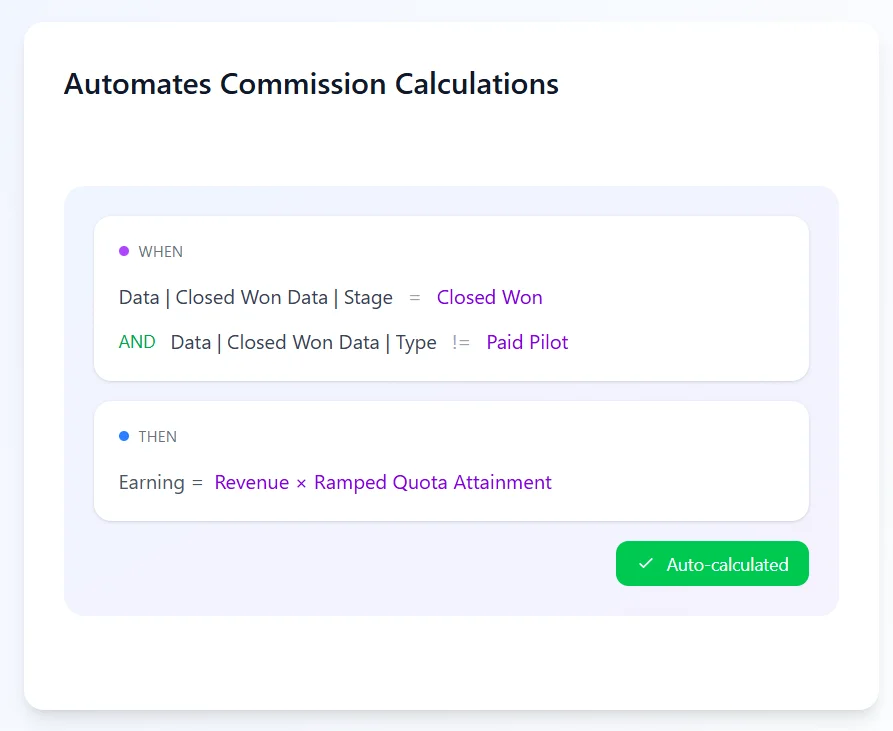
Visdum eliminates the need to write and maintain complex SQL queries by automatically applying commission logic to your Snowflake data, saving time and reducing manual effort. Here’s what that looks like in practice:
- Applies commission rules automatically
- Calculates payouts accurately
- Handles splits and incentives seamlessly
Your teams save hours that would otherwise be spent managing logic manually.
Uses your existing Snowflake data
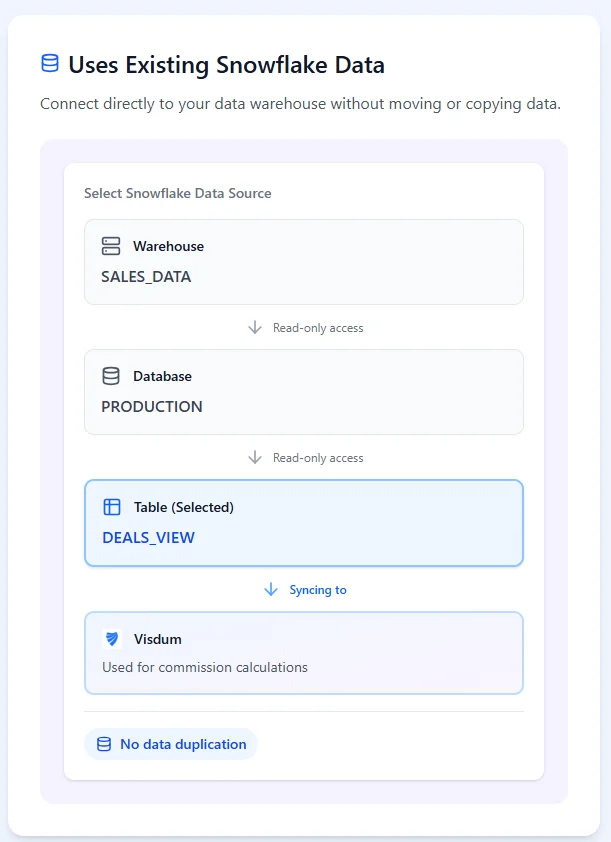
Visdum connects directly to your Snowflake environment and operates on top of your existing data without duplicating or requiring additional integrations. With this setup, you can:
- Connect to your selected warehouse
- Access specific databases
- Pull data from relevant tables
You stay in control of what data is used, keeping everything clean and secure.
Keeps data consistent and up-to-date
Visdum ensures that any updates in Snowflake are automatically reflected in commission calculations, keeping all teams aligned with the latest data.
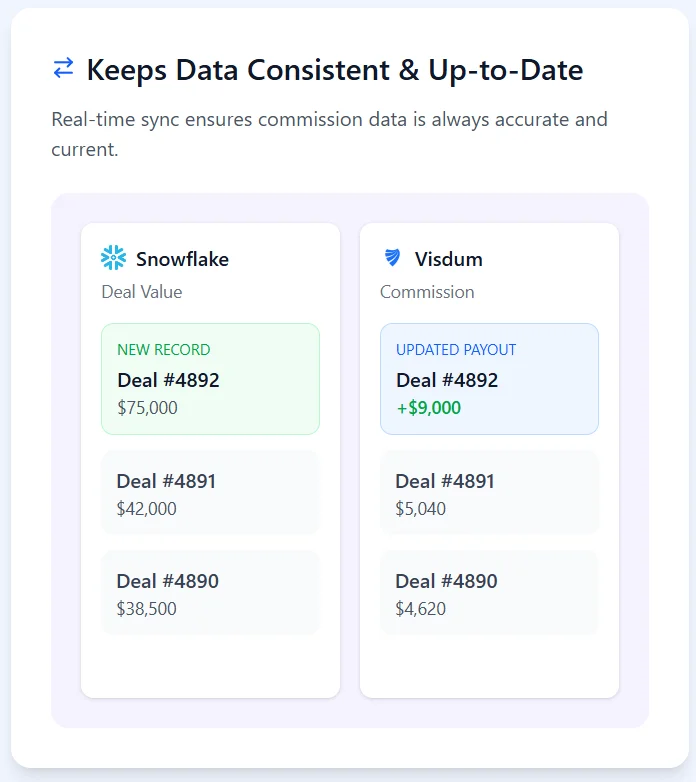
This means:
- New deals are reflected in payouts
- Updated revenue triggers recalculations
- Changes sync seamlessly across systems
Everyone works with the same, accurate numbers.
Ensures accurate and timely payouts
Visdum translates your Snowflake data into structured commission outcomes.
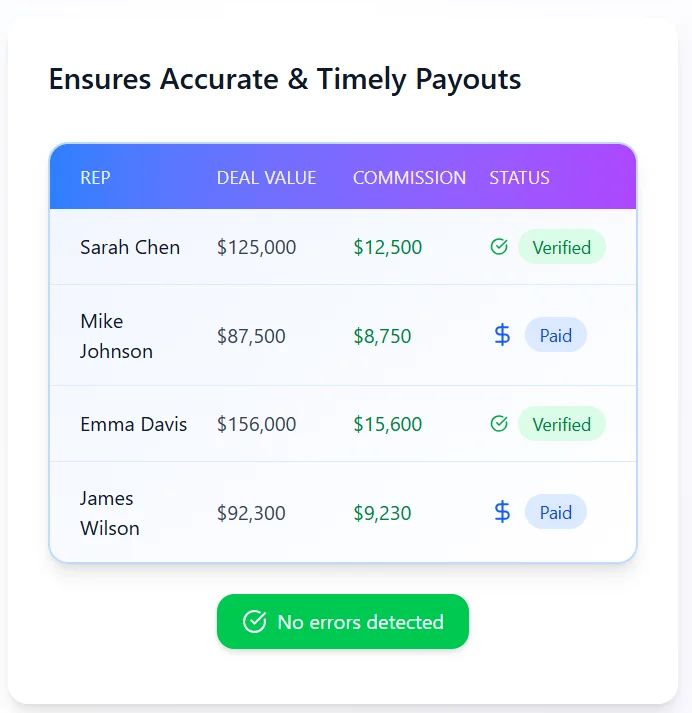
It automatically:
- Assigns deal credits
- Applies role-based splits
- Follows compensation plan rules
No manual adjustments, fewer errors, and faster payouts.
Did you know?
Automation can reduce commission processing time by 40–90% and significantly cut errors.
Provides complete visibility
Visdum brings all commission data into a single, easy-to-use interface, giving every team clear visibility into performance and payouts.
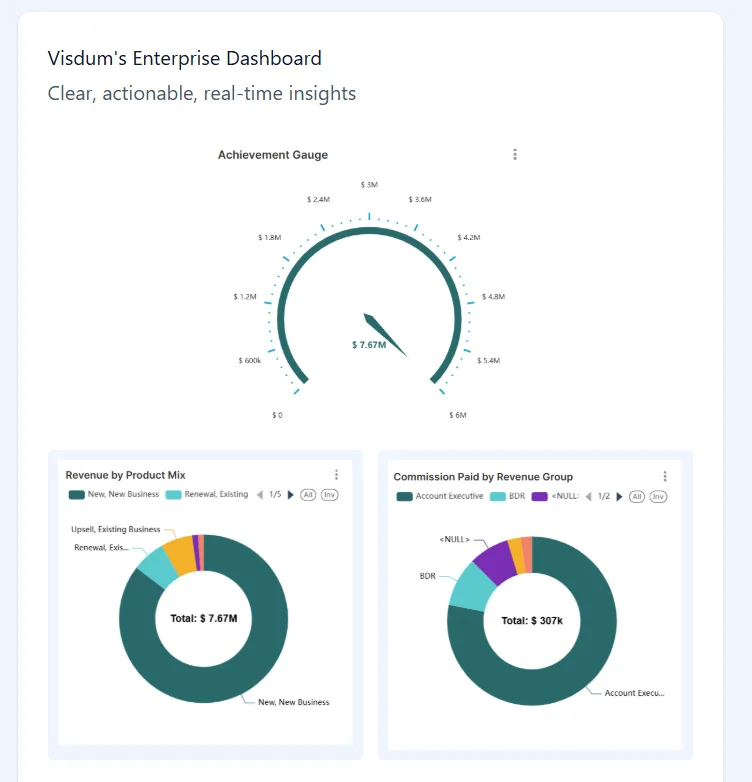
With this, teams can:
- Track earnings in real time (for sales reps)
- Monitor payouts easily (for finance)
- Access performance insights instantly (for leaders)
All without digging into SQL or raw tables.
Makes plan changes easy
Visdum allows you to update commission structures effortlessly without modifying queries or underlying data in Snowflake.
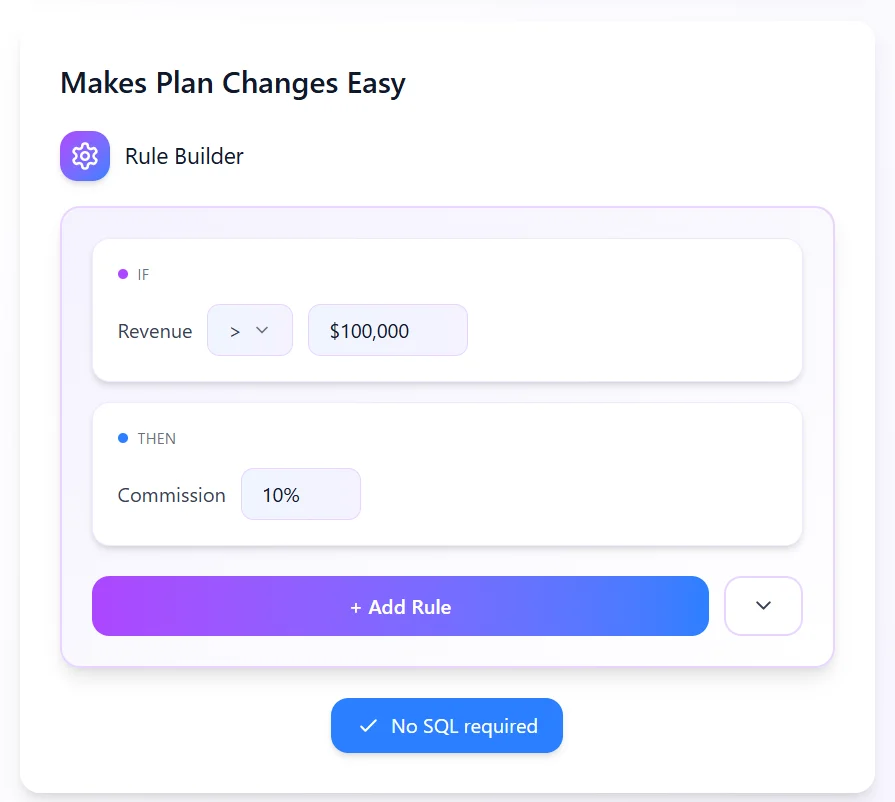
For example, you can:
- Modify commission plans easily
- Adjust incentives and rules
- Add new roles or regions
The logic updates automatically while your Snowflake data remains unchanged.
Maintains secure, controlled access
Visdum works within Snowflake’s existing security framework, ensuring all data access is controlled and compliant.
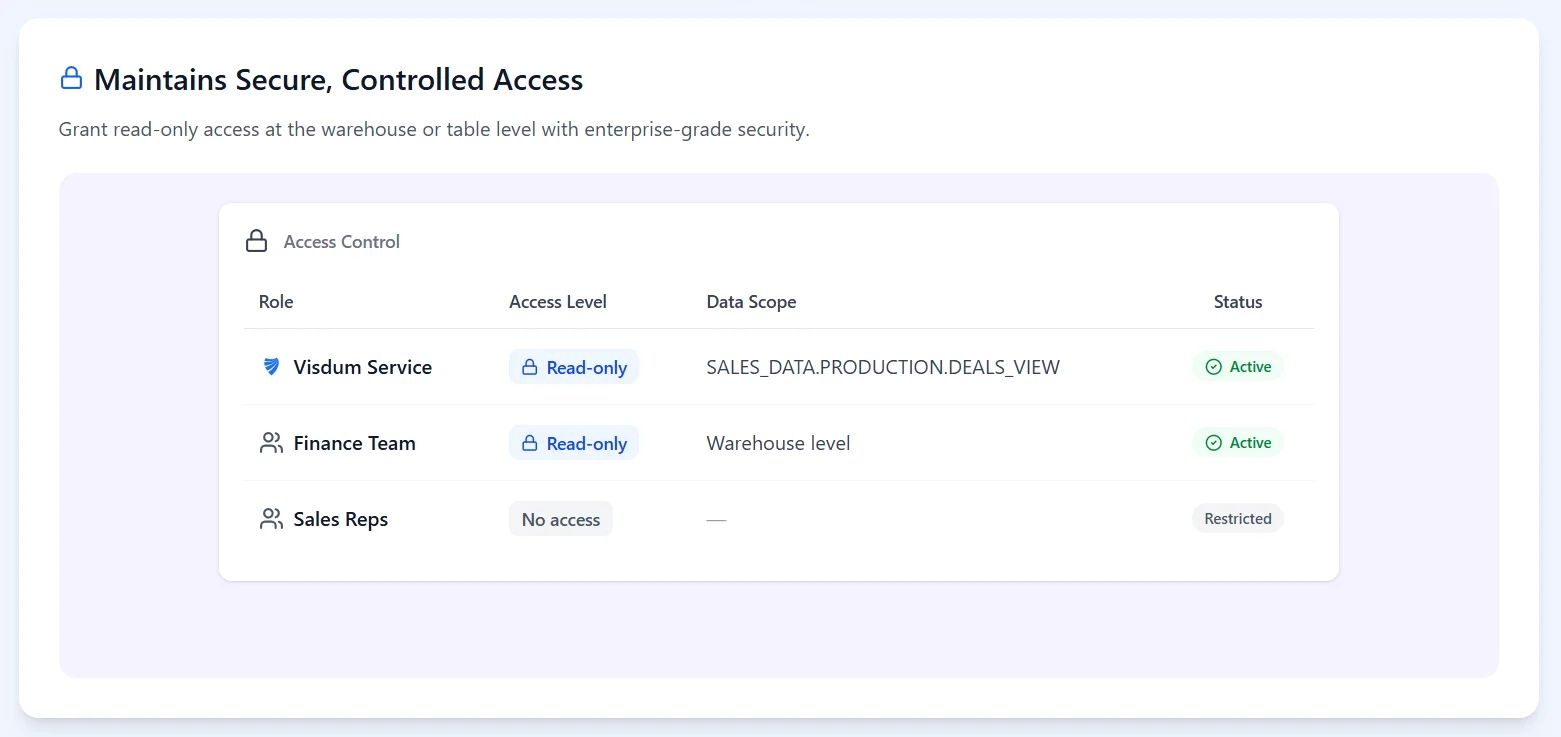
This allows you to:
- Define access to specific warehouses
- Control database-level permissions
- Limit access to selected tables
Full security with zero compromise.
.webp)
How to Connect Snowflake with Visdum
Integrating Snowflake with Visdum is a straightforward process that allows you to securely access your data warehouse and use it for commission calculations.
Below is a step-by-step guide to setting up the integration.
Step 1: Connect Snowflake to Visdum
Start by connecting your Snowflake account to Visdum. This ensures secure, controlled access to your data
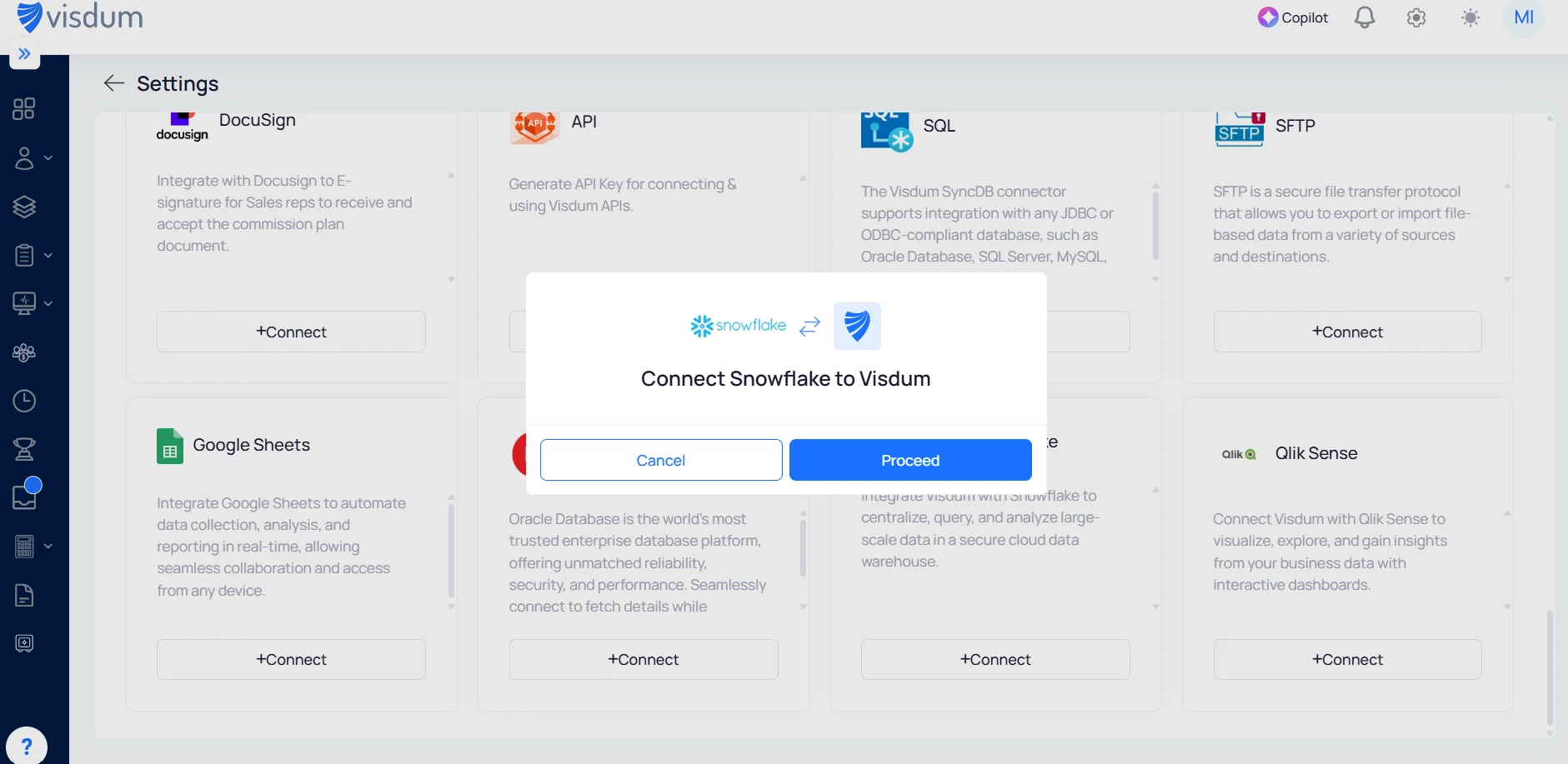
You’ll need to choose an authentication method:
Authentication Options:
- OAuth 2.0
- Secure, token-based authentication
- Ideal for organizations with SSO or centralized access control
- Service Account
- Uses username and password
- Simpler setup for direct access
Step 2: Create a Data Stream
Set up a data stream in Visdum by selecting Snowflake as the source and choosing the relevant tables. By selecting only specific tables, you maintain strict data governance and ensure Visdum only "sees" the data relevant to sales performance.
.webp)
Step 3: Map Data Fields
Map Snowflake fields (like owner, amount, date) to Visdum fields to ensure the data is correctly interpreted for commission calculations. This ensures your existing data structure stays intact, no schema changes required.
.webp)
Step 4: Define Criteria
Set conditions (e.g., Closed Won deals, date filters) to control which records are eligible for commission processing. This acts as a quality filter, ensuring that only verified, revenue-generating deals trigger payouts, which prevents overpayment on pending or cancelled deals.
.webp)
Step 5: Schedule Data Sync
Set a schedule to automatically sync data from Snowflake at regular intervals, ensuring commission calculations stay up to date.This ensures that your commissions are always up-to-date.
.webp)
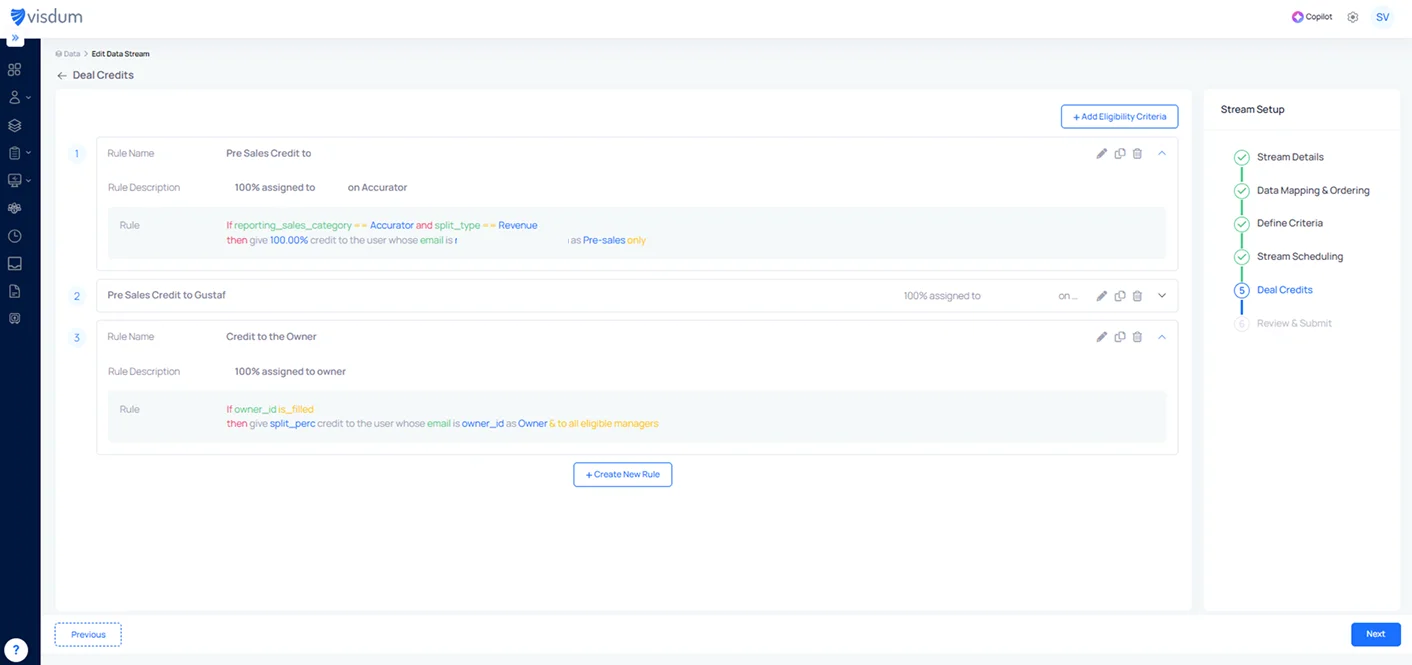
Step 6: Configure Deal Credits
Define how commissions are distributed by setting rules for credit allocation, splits, and role-based payouts. This translates your complex, real-world sales team structures into automated logic, eliminating the need for manual split calculations in spreadsheets.
Step 7: Review & Submit
Review all configurations, test the connection, and submit the stream to start processing commission data from Snowflake. A final validation step gives you the confidence that your logic is airtight before the first automated payout is generated.
.webp)
Done! Your Snowflake integration is now active.
Visdum will now automatically use your data to calculate commissions, apply rules, and generate accurate payouts without any manual effort.
Managing Commissions with Snowflake Alone vs With Visdum
How Different Teams Use Snowflake + Visdum
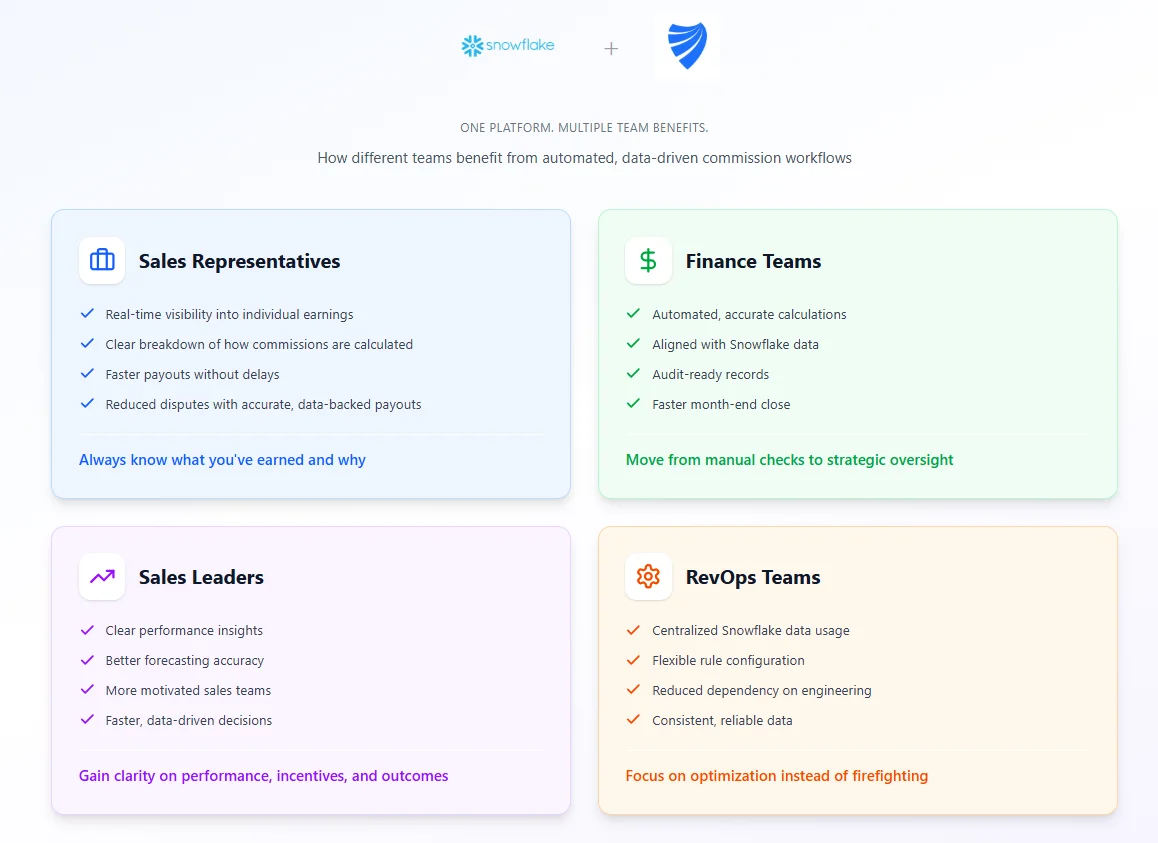
Commission management impacts multiple teams across the organization, from sales reps tracking earnings to finance teams ensuring accurate payouts.
With Snowflake as the data foundation and Visdum as the execution layer, each team benefits from greater visibility, accuracy, and efficiency in their workflows.
For Sales Teams
Sales teams gain complete visibility into their commissions without having to wait for reports or rely on manual updates. With real-time access to earnings and a clear breakdown of payouts, reps always understand what they’ve earned and why, reducing confusion and improving trust.
- Real-time tracking of earnings without delays
- Clear breakdown of how commissions are calculated
- Fewer disputes due to accurate, data-backed payouts
For Finance Teams
Finance teams benefit from fully automated and accurate commission calculations, eliminating the need for manual reconciliation. Since Visdum works directly on Snowflake data, payouts remain aligned with the source of truth, making the entire process reliable and audit-ready.
- No manual reconciliation or spreadsheet dependency
- Audit-ready records with full traceability
- Faster month-end close with reduced validation effort
For Sales Leaders
Sales leaders gain clear insights into team performance and incentives, with commissions directly tied to revenue data. This improves forecasting accuracy while ensuring teams stay motivated through transparent and timely payouts.
- Better forecasting with revenue-linked commission data
- Real-time visibility into team performance
- Faster, data-driven decision-making
For RevOps
For teams using Snowflake, the challenge isn’t accessing data, it’s turning it into a scalable, auditable commission system without constant SQL maintenance.
What Improves (In Real Terms)
Time Savings
- Eliminates 15–20 hours/month of SQL debugging for commission disputes
- Reduces commission close from 8 days → 2 days
- Cuts Sales Ops involvement in plan updates to near zero
Error Reduction
- Eliminates formula drift between test and production
- Prevents retroactive payout errors with version history
- Catches quota mismatches before disputes happen
Scalability
- Supports 50+ commission plans without added headcount
- Handles mid-quarter changes without pipeline rebuilds
- Enables Finance to manage plans without engineering
When Should You Consider This Integration?
You’ve likely outgrown SQL-based commissions if:
- You manage 5+ commission plans
- Commission close takes >5 days
- 10%+ reps dispute payouts
- Plan changes take 2+ weeks
If this sounds familiar, it’s a strong signal that your current setup isn’t scaling with your commission complexity.
Implementation Readiness Checklist
Before connecting Visdum to Snowflake, ensure you have:
Data Readiness
- Deal/opportunity data with timestamps (created date, close date)
- Owner/rep assignment fields
- Revenue/amount fields
- Deal stage or status indicators (Closed Won, etc.)
- (Optional) Historical commission data for validation
Access & Permissions
- Snowflake account with read access to relevant tables
- Service account or OAuth credentials
- Warehouse/database/schema names documented
- Understanding of your row-level security policies (if applicable)
Business Logic Documentation
- Current commission plans documented (even if in spreadsheets)
- Credit allocation rules defined (splits, overlays, referrals)
- Rate cards and accelerator structures
- Quota assignment methodology
Timeline Expectations
- Proof of concept: 1-2 weeks (validate data mapping)
- Initial implementation: 4-6 weeks (1-2 commission plans)
- Full rollout: 8-12 weeks (all plans, historical validation)
Note: Most of the heavy lifting is configuration, not development. If your Snowflake data is clean and your commission logic is documented, implementation is primarily mapping work.
Real-World Implementation Example
Mid-Market SaaS Company ($40M ARR, 120 Reps)
Before Visdum:
- 8 concurrent commission plans (AE, SDR, CSM, Overlay, Channel)
- Commission data in Snowflake, calculations in Google Sheets
- RevOps spent 60 hours/month managing commission logic
- 10-day commission close process
- 15-20 disputes per quarter
After Visdum + Snowflake Integration:
- Same 8 plans, now fully automated
- RevOps time on commissions: 8 hours/month (87% reduction)
- 2-day commission close (80% faster)
- 3-5 disputes per quarter (70% reduction)
- Finance gained self-service plan management
Key Outcome: RevOps team reallocated 52 hours/month from commission maintenance to strategic projects—territory optimization, forecast model improvements, and GTM analytics.
.webp)
Final Thoughts
Snowflake provides a powerful foundation for storing and managing business data, bringing everything into a single, reliable source of truth.
However, turning that data into actionable commission payouts requires more than just storage and querying, it requires structure, automation, and business logic.
By integrating Visdum with Snowflake, organizations can bridge this gap seamlessly. Visdum transforms raw data into accurate, automated commission workflows, eliminating manual effort, reducing errors, and ensuring complete transparency across teams.
The result is a system where:
- Commissions are calculated automatically
- Payouts are accurate and timely
- Teams have full visibility into performance and earnings
Instead of managing complex SQL logic and workflows, teams can focus on what truly matters, driving growth and performance.
FAQs
Is Snowflake a data modeling tool?
While Snowflake is primarily a cloud data warehouse, it is also widely used as a data modeling tool to structure, transform, and organize data for analytics and reporting.
What is Snowflake used for?
Snowflake is used to store, manage, and analyze large volumes of structured data in a centralized platform. It helps organizations combine data from different systems, such as sales, finance, and customer tools, and enables teams to run queries, generate reports, and make data-driven decisions.
Can Snowflake be used for commission calculations?
Yes, Snowflake can be used to calculate commissions using SQL queries, transformations, and scheduled jobs. However, managing complex commission logic directly in Snowflake can become difficult to maintain and scale over time.
Do I need to export data (CSV) from Snowflake?
No. The Visdum integration connects directly to Snowflake via API or Service Account, eliminating the need for risky manual CSV exports and spreadsheet uploads.
How long does the Snowflake + Visdum integration take?
Most teams can establish the initial connection and map their primary data fields in under an hour.
How does Visdum work with Snowflake?
Visdum integrates directly with Snowflake to pull deal and revenue data, apply commission rules, and automate payout calculations. It eliminates manual workflows and ensures commissions are accurate, transparent, and aligned with your data source.
Why use Visdum with Snowflake for commissions?
Using Visdum with Snowflake allows teams to automate commission calculations, reduce errors, and gain complete visibility into payouts. It removes the need for complex SQL logic and manual processes, making commission management faster and more scalable.

.webp)