Mastering RevOps: A Guide for Success in Revenue Optimization
Managing revenue today is very different from how it used to be. Sales, marketing, and customer success can no longer operate in silos—customers expect a seamless, connected experience across every touchpoint.
This is where Revenue Operations (RevOps) comes in. RevOps aligns revenue teams around shared goals, processes, and data, helping businesses reduce friction, improve collaboration, and drive predictable growth.
In this guide, we’ll explain what RevOps is, why it matters, and how companies use it to scale revenue more efficiently.
Ready to transform how your teams work together? Let's dive in.
What Is RevOps (Revenue Operations)?
RevOps, short for Revenue Operations, is a business function that aligns sales, marketing, and customer success teams around shared processes, data, and revenue goals.
A special RevOps team usually handles the RevOps plan. This team makes sure all departments work together toward shared revenue goals.
The value of RevOps is in making everything work better, improving how data is seen, and focusing more on the customer when making money. By bringing together teams, data, and processes, companies can greatly improve their profits.
How RevOps Works Across the Revenue Funnel
Who Should Use RevOps?
RevOps is most commonly adopted by:
- B2B companies with complex sales cycles
- SaaS businesses focused on predictable recurring revenue
- Revenue leaders managing multiple go-to-market teams
- Scaling organizations experiencing data and process silos
This makes RevOps especially effective for companies moving beyond early-stage growth.
Understanding the Basics of Revenue Operations (RevOps)
Revenue operations, or RevOps, brings together sales, marketing, and customer success to help increase revenue. It serves as a single source of truth for everyone on the revenue team. RevOps focuses on the customer journey and makes the revenue cycle better.
The RevOps team uses key metrics and manages data to improve the customer experience, make operations run smoothly, and find new opportunities for business growth. By following best practices and using a good tech stack, companies can achieve steady growth and better predict future results.
Defining RevOps and Its Importance
At its heart, revenue operations is a plan to manage all the ways an organization makes money. It connects sales operations, marketing operations, and customer success operations to simplify the revenue cycle and help boost revenue generation.
A special RevOps team usually handles the RevOps plan. This team makes sure all departments work together toward shared revenue goals.
The value of RevOps is in making everything work better, improving how data is seen, and focusing more on the customer when making money. By bringing together teams, data, and processes, companies can greatly improve their profits.
The Evolution of RevOps in Business Strategy
As B2B sales became more complex, it became clear that revenue teams couldn’t keep working in isolation. Sales, marketing, and customer success were often out of sync, which led to confusion, duplicated work, and lost growth opportunities.
With better data and analytics, businesses started paying closer attention to the entire customer journey, not just individual touchpoints. RevOps grew out of this need, to bring teams together, improve coordination, and build a revenue engine that supports steady, predictable growth.
Check out our guide to the Top 10 RevOps Leaders to Follow on LinkedIn in 2024 for insights and inspiration from industry pioneers who are shaping the future of revenue operations.
The Building Blocks of a Successful RevOps Strategy
A good RevOps strategy relies on working together, using data for decisions, and focusing on the customer. Organizations need to know who their target market is, define their ideal customer, and understand the customer journey.
By charting the customer journey and finding important touchpoints, businesses can improve every interaction. This helps guide prospects through the sales funnel smoothly and increases customer lifetime value.
Key Components and How They Interact
A strong RevOps framework has many parts that work together to create a smooth revenue engine. One key part is creating a single source of truth for all customer data.
This central place for information makes sure that all teams, such as marketing, sales, and customer success, use the same accurate and current data. This common view of customer data is important for making smart choices and giving a reliable customer experience.
Also, having a clear revenue pipeline is necessary. This pipeline shows the steps a prospect takes from the first contact to becoming a customer. It helps with better planning, finds possible problems, and allows teams to track their progress well.
Aligning Your Team Around RevOps Goals
Aligning teams around shared RevOps goals is key to making revenue operations work. This means breaking down silos and helping sales, marketing, and customer success operate as one team.
- Align sales and marketing to improve lead quality and conversion
- Enable sales teams with the right tools, training, and customer insights
- Use shared goals and data to keep everyone focused on revenue outcomes
When teams are aligned, leads move faster through the funnel and customers have a better experience.
Our blog on Sales Compensation Playbook for Chief Revenue Officers offers detailed insights on creating incentive plans that drive organizational alignment and growth.
Preparing for RevOps Implementation
Before implementing RevOps, it’s important to assess your current state and define clear goals.
- Identify misalignment across sales, marketing, and customer success
- Review your existing tools, data, and processes
- Set measurable objectives for what RevOps should achieve
This preparation helps ensure a smoother transition and stronger results.
What You'll Need to Get Started
Laying the right foundation makes RevOps implementation easier.
- Evaluate your current tech stack and data-sharing capabilities
- Assign a dedicated RevOps team or clear ownership
- Map the full customer journey from first touch to post-sale
Understanding how customers move through your business helps teams work together more effectively and stay focused on revenue growth
Identifying the Right Tools and Technology
Selecting the right tools and technology is crucial for maximizing your RevOps investment. These tools should streamline operations, enhance collaboration, and provide valuable insights from your data.
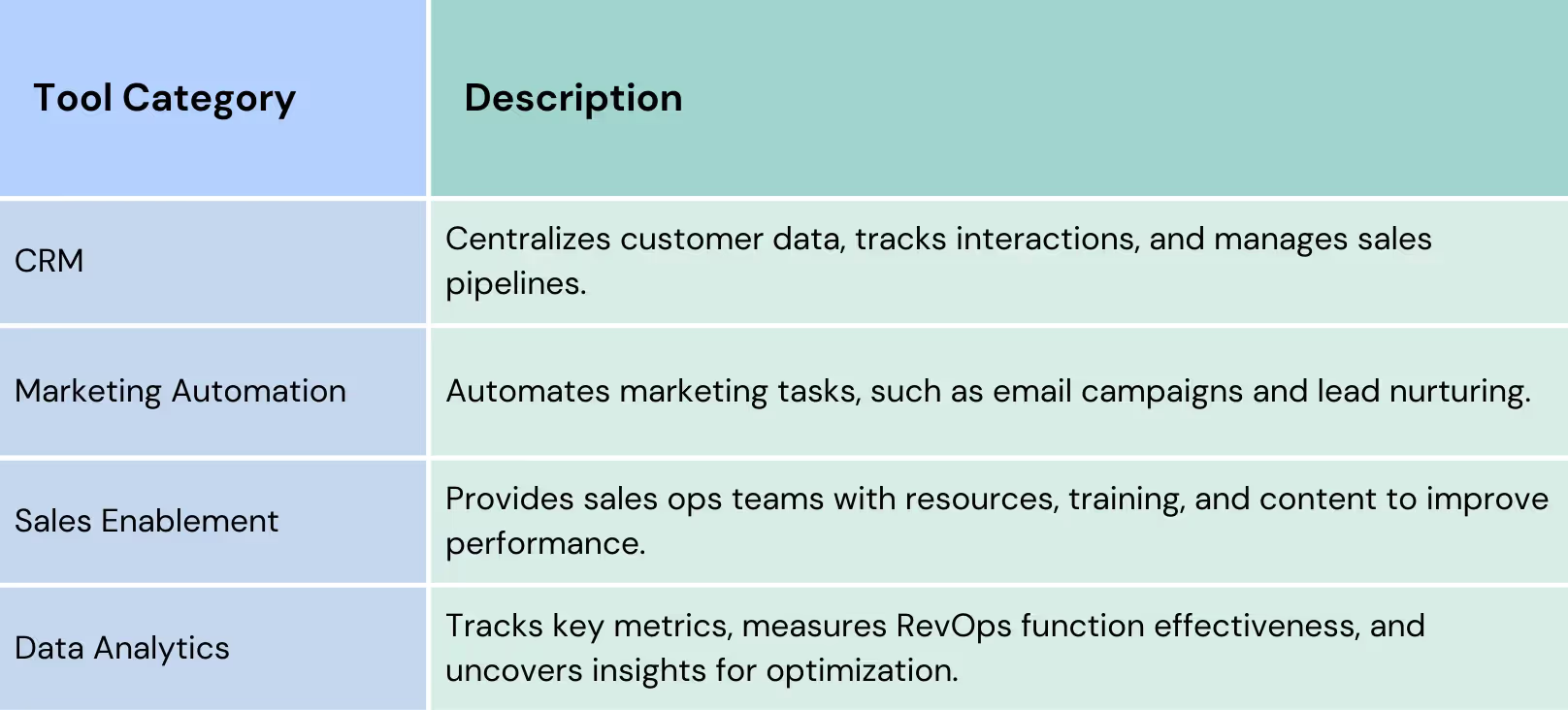
Your tech stack will likely include a customer relationship management (CRM) system, marketing automation software, sales enablement tools, and data analytics platforms.
Here’s a quick glance at some essential tools:
A Step-by-Step Guide to Implementing RevOps
A clear plan is important for a successful RevOps setup. Take it one step at a time. Each phase should build on the last to make the change easier and improve your chances of success.
By using a systematic approach, you can handle challenges better, get support from your team, and show the real value of RevOps for your organization.
Step 1: Establishing Your RevOps Framework
Start by clearly defining what RevOps is meant to achieve for your business.
- Set the purpose and goals of your RevOps strategy
- Identify key KPIs such as revenue growth, customer lifetime value, and sales cycle length
- Align RevOps goals with overall business objectives
- Communicate the plan clearly so every revenue team understands their role
Step 2: Integrating Sales, Marketing, and Customer Success
RevOps works only when revenue teams operate as one.
- Break down silos between sales, marketing, and customer success
- Establish clear communication channels and regular check-ins
- Encourage cross-team collaboration and shared ownership
- Focus on delivering a consistent customer experience across all touchpoints
Step 3: Developing a Data-Driven Culture
Strong RevOps depends on reliable, accessible data.
- Centralize revenue data using a CRM or shared system
- Ensure data accuracy, consistency, and accessibility
- Equip teams with analytics tools and training
- Maintain data hygiene by removing duplicates and errors
Step 4: Monitoring and Optimizing Processes
RevOps is an ongoing process, not a one-time setup.
- Track key metrics regularly to spot gaps and inefficiencies
- Review workflows, processes, and tools often
- Adjust strategies based on data insights and feedback
- Stay flexible as business needs and markets evolve
Step 5: Measuring Success and ROI
Measuring impact helps prove the value of RevOps.
- Track revenue-focused metrics like growth, CAC, CLV, and sales cycle length
- Use dashboards and reports to communicate results clearly
- Share wins across teams to build support
- Refine your RevOps strategy based on performance insights
Overcoming Common RevOps Challenges
Implementing revenue operations can bring big changes, but it also has challenges. Companies often face pushback to change, problems with data being separated, and trouble getting teams to work together.
Still, tackling these issues head-on can lead to a successful RevOps setup. Good communication is essential. It's important to explain the benefits of revenue operations clearly and involve everyone affected in the process.
Addressing Resistance to Change
One big challenge in starting RevOps is usually the internal pushback against change. Employees might be used to their own ways of working and may not want to accept new tools or processes.
To fix this, strong change management is very important. Start by explaining the reason for RevOps. Tell everyone how it can help the company grow, work better, and keep customers happy.
Involve your revops team and staff from other departments in planning and making changes. This will help them feel responsible and willing to support the changes. Make sure to offer thorough training so everyone can feel confident using the new tools and processes.
Ensuring Quality Data Management
Data is very important for RevOps. Without good and correct data, your ideas, choices, and results will be wrong. So, making sure data quality is high is very important.
Start by having a single source of truth for all customer data. This main place, usually a CRM system, should keep all information about customers. It helps everyone from different departments to use the same data.
Put in place rules and steps for data management to keep data accurate and steady. This means you should make data entry the same, check data often, and make sure clear roles for data ownership are set.
RevOps Best Practices for Sustained Growth
To make sure your RevOps strategy works well over time, follow best practices that help you improve and adjust. Look at your metrics often, get feedback from your team, and keep up with industry trends.
The RevOps field is always changing. Check your processes, workflows, and technology regularly. This helps keep them in line with your business goals and the shifts in the market.
Cultivating a Collaborative Culture
RevOps works best when teams truly collaborate, not just when silos are removed on paper. Building a strong culture means encouraging open communication, transparency, and shared goals across sales, marketing, and customer success.
- Hold regular cross-team check-ins to discuss challenges and progress
- Encourage open conversations and shared problem-solving
- Recognize and celebrate wins that come from teamwork
When teams see how collaboration directly impacts revenue, they’re more motivated to work together.
Leveraging Analytics for Strategic Decisions
One of the biggest advantages of RevOps is making decisions backed by data, not guesswork. By tracking key metrics and spotting trends, businesses gain a clearer view of what’s driving or blocking revenue growth.
- Use dashboards and visual reports to simplify complex data
- Focus on insights that guide action, not just reporting
- Encourage data-driven decision-making across teams
When insights are easy to understand and trusted, teams can make smarter, faster strategic decisions.
Looking to take your RevOps strategy to the next level?
Dive into our comprehensive guide on RevOps Best Practices & Winning Strategies in 2026 to learn proven approaches that drive results.
The Future of RevOps: Trends and Predictions
The world of Revenue Operations is always changing. This change is taken forward by new technology and shifts in the market. Tools like artificial intelligence (AI), machine learning, and automation will have a big impact on how RevOps operates in the future.
As these technologies improve, they will help RevOps teams make things better. They will allow teams to personalize customer experiences and create more accurate forecasts. This will help boost efficiency and drive revenue growth.
Emerging Technologies in RevOps
New technologies like AI and machine learning are reshaping how RevOps teams operate. They help automate repetitive work, surface insights from data, and make revenue teams more efficient.
- AI can handle routine tasks, freeing teams to focus on higher-impact work
- Advanced analytics help uncover trends and improve forecasting
- These tools strengthen alignment between sales, marketing, and customer success
As these technologies evolve, they continue to make RevOps more connected, intelligent, and scalable.
The Role of AI and Machine Learning
AI and machine learning play a growing role in modern revenue operations.
- AI-powered lead scoring helps identify high-intent leads based on behavior and engagement
- Predictive Analytics improves revenue forecasting and planning
- Churn Prediction help teams act early to retain customers
- Automation reduces manual effort across revenue workflows
Together, these capabilities help RevOps teams make smarter decisions and drive more predictable revenue outcomes.
Interested in the intersection of RevOps and Technology? Check out the Top 10 Revenue Operations Management Software in 2025.
Sales Compensation Management: A Critical Piece of the RevOps Puzzle
While discussing the future of RevOps, we can't overlook the growing importance of sales compensation management tools. As businesses scale and compensation plans become more complex, manual spreadsheets just don't cut it anymore.
Modern sales compensation platforms like Visdum are transforming how RevOps teams handle incentives and commissions. These tools do more than just calculate payments - they bring transparency, automation, and data-driven insights to your revenue operations:
- Real-time visibility into performance metrics helps sales teams stay motivated
- Automated calculations eliminate errors and save countless hours
- Integration with CRM and other systems ensures data consistency
- Built-in analytics help optimize compensation plans for better results
- Clear commission tracking improves trust between sales and finance teams
When your compensation management is streamlined, your RevOps engine runs smoother. Teams spend less time worrying about commission calculations and more time focusing on growth. Plus, with accurate forecasting and real-time data, you can make better strategic decisions about your revenue operations.
Ready to see how modern sales compensation management can strengthen your RevOps strategy?
Talk to our sales compensation experts to see how Visdum can help transform your revenue operations. Schedule your demo today.
Summing it up
In conclusion, mastering RevOps helps bring together sales, marketing, and customer success. This teamwork can drive revenue growth. By aligning your team, using the right tools, and creating a culture focused on data, you can improve operational efficiency and ROI.
It is important to tackle challenges like resistance to change and data management to ensure ongoing success. By adopting teamwork and using analytics, you can set up your business for future growth. Keep an eye on trends like AI and machine learning to stay ahead. RevOps is not just a trend; it's a powerful strategy for businesses of all sizes to succeed in a competitive world. Start your RevOps journey today to create a more streamlined and profitable future.
FAQs
What does RevOps stand for?
RevOps stands for Revenue Operations, a function that aligns sales, marketing, and customer success teams around revenue goals.
Why is RevOps important?
RevOps improves visibility, alignment, and efficiency across revenue teams, helping companies grow more predictably.
What does a RevOps team do?
A RevOps team manages revenue processes, data, and tools to support sales, marketing, and customer success.
Is RevOps only for SaaS companies?
While RevOps is common in SaaS, it is also used by B2B and subscription-based businesses with complex revenue models.
What are the first steps in starting with RevOps?
Starting with revenue operations means that business leaders need to outline their perfect customer acquisition process. They should also make sure that their sales operations and marketing teams work together smoothly. It's important to create a special RevOps team or give these tasks to current team members. This will help move the project ahead.
How does RevOps differ from traditional sales and marketing strategies?
A RevOps Strategy is different from old methods that work alone. It brings together traditional sales, marketing operations, and customer success to improve the whole customer journey. This strategy focuses on the alignment of sales, marketing, and customer success. The goal is to build a strong revenue engine.
Can small businesses benefit from implementing RevOps?
Yes, small businesses can gain a lot from revenue operations. It helps to make sales more productive, raise the customer lifetime value, and simplify the way they work. RevOps can greatly support business growth, even for smaller companies.
How frequently should RevOps strategies be reviewed and adjusted?
Regularly check your RevOps strategies. It's best to do this every three months or twice a year. Keep an eye on key metrics such as customer satisfaction, forecast accuracy, and business growth. This will help you know when to make changes.