
Top 5 Revenue Recognition Software in 2026
.webp)
Manual revenue recognition creates predictable problems: delayed closes, higher audit risk, revenue leakage caused by mismatched contract and billing data, and occasional misstatements when policies are applied inconsistently. When revenue data lives across CRM, billing, and spreadsheets, the month-end close becomes a reconciliation exercise instead of a repeatable accounting workflow.
Revenue recognition automation in 2026 typically means software that supports ASC 606 and IFRS 15 rule handling, contract modifications, multi-element arrangements, and a more continuous close posture where schedules and journal entries stay updated as contracts change. Many modern platforms also emphasize immutable change logs, locked periods, and audit-ready reporting to reduce back-and-forth with auditors.
This guide is for:
- SaaS and subscription businesses running monthly or annual plans.
- Usage-based and hybrid pricing teams that need rev rec to keep up with metered usage plus base subscriptions.
- Mid-market finance teams moving beyond spreadsheets into structured workflows and repeatable close operations.
- Enterprises managing multi-entity and multi-currency complexity with stronger controls and audit requirements.
When you’ve outgrown spreadsheets
- Multiple performance obligations inside a single contract and the need for SSP-based allocation.
- Frequent contract amendments such as expansions, renewals, churn, credits, refunds, and partial terminations.
- Separate billing and CRM systems that do not reconcile cleanly without a dedicated rev rec layer.
- Audit requests for policy consistency, clear change logs, and evidence-ready reporting.
Quick Comparison Table
.webp)
How to read the table
- SaaS subscriptions with a strong billing system benefit from billing-driven automation because billing events can drive schedules and reduce manual mapping.
- ERP-led or publicly audited teams typically need enterprise-grade controls like immutable logs, locked periods, and strong handling of modifications and SSP allocations.
Top 10 Revenue Recognition Software in 2026 (detailed reviews)
1) Zuora Revenue
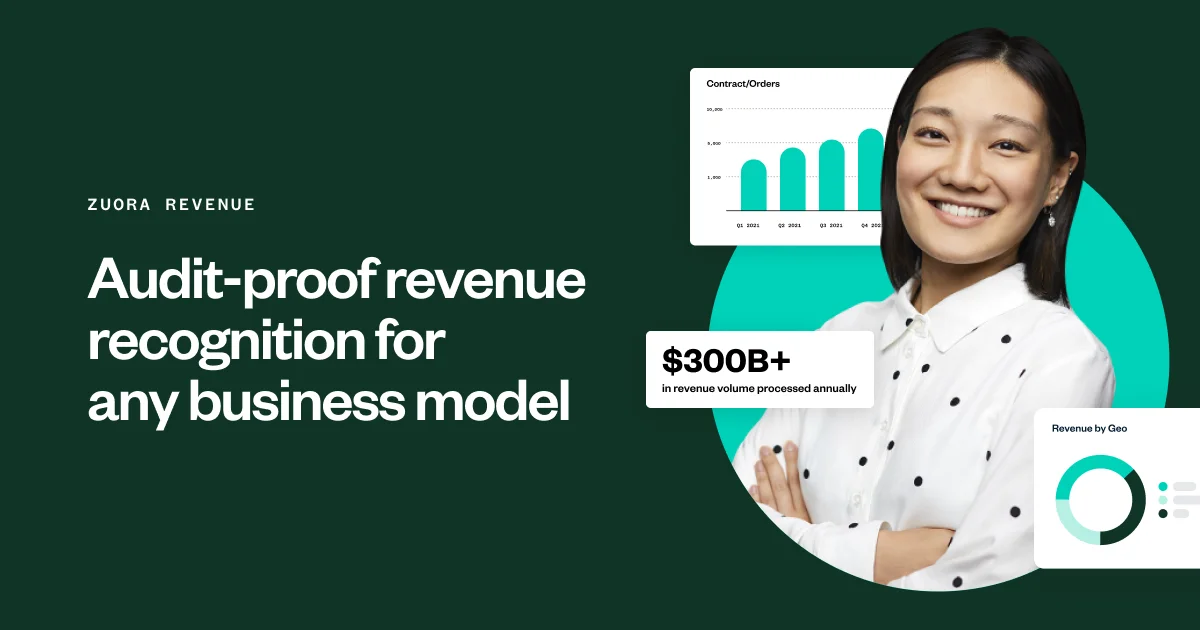
What it is: Revenue recognition software designed to automate ASC 606 and IFRS 15 for complex contracts and monetization models.
Best for: Mid-market and enterprise finance teams handling multi-element arrangements, frequent amendments, and audit-heavy reporting needs.
Standout automation features
- Automates the ASC 606 and IFRS 15 process with configurable policies.
- Supports SSP allocation for multi-element arrangements.
- Handles contract modifications and supports disclosure reporting requirements.
- Emphasizes immutable change logs to support audit defensibility.
Integrations (CRM, billing, ERP, data warehouse)
- Integrates with ERP, CRM, and billing systems.
Pros
- Built for complex revenue scenarios at scale.
- Strong audit posture through controls and audit-ready reporting artifacts.
Cons / limitations
- Implementation and configuration can be heavier than simpler tools.
- Quote-based pricing can be less predictable for smaller teams.
Pricing approach: Quote-based.
Bottom line: A strong fit when revenue complexity and audit expectations are high and the organization needs enterprise-grade controls.
2) Stripe Revenue Recognition
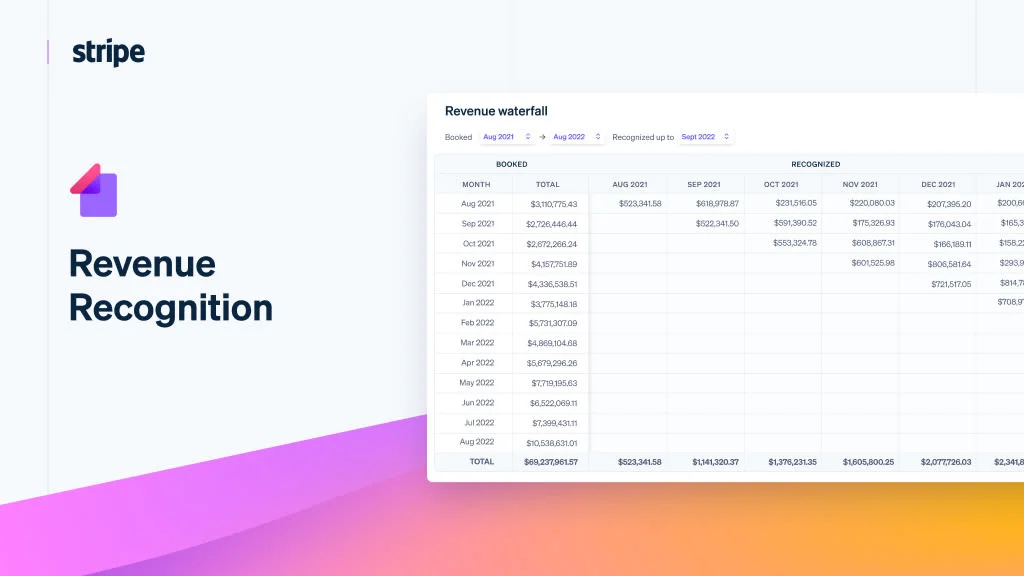
What it is: Revenue recognition automation capabilities designed for businesses that run billing and payments workflows through Stripe.
Best for: Stripe-first subscription teams that want revenue recognition tied closely to Stripe transactions and billing terms.
Standout automation features
- Consolidates revenue activity from Stripe such as subscriptions, invoices, and payments.
- Supports revenue recognition automation aligned to ASC 606 and IFRS 15 best practices.
- Mentions integration of non-Stripe sources, fulfillment schedules, and service terms as beta capabilities for consolidation.
Integrations (CRM, billing, ERP, data warehouse)
- Stripe-native, with non-Stripe source integration mentioned as beta.
Pros
- Strong time-to-value for Stripe-first stacks.
- Can reduce spreadsheet-based reconciliations for subscription and invoice-driven revenue.
Cons / limitations
- Coverage for non-Stripe sources is described as beta, so fit depends on specific requirements.
- Highly complex multi-element revenue may require a more specialized rev rec engine.
Pricing approach: Varies by Stripe packaging.
Bottom line: A clean option for teams that want rev rec automation anchored to Stripe data without building a separate rev rec stack first.
3) Ordway Revenue Recognition
What it is: Revenue recognition software focused on ASC 606 and IFRS 15 automation, with schedules and journal automation tied to contract terms.
Best for: SaaS finance teams that need configurable revenue schedules and automated journal entries into a GL or ERP.
Standout automation features
- Automates ASC 606 and IFRS 15 calculations using configurable rules.
- Builds deferred revenue schedules based on product, pricing, and contract terms.
- Automates journal entry creation for invoices, payments, credits, and deferred revenue movements.
- Posts journal entries to a general ledger or ERP with chart-of-accounts mapping.
Integrations (CRM, billing, ERP, data warehouse)
- Posting into a GL or ERP is a core workflow, with mapping to chart of accounts.
Pros
- Practical accounting workflow focus: schedules, journals, and posting.
- Helps teams formalize a rev rec subledger process beyond spreadsheets.
Cons
- Implementation quality depends on data cleanliness and clearly defined revenue policies.
- Some advanced enterprise scenarios may require deeper customization or broader suite tooling.
Pricing approach: Varies by package and is often quote-based.
Bottom line: A strong fit for SaaS finance teams that want automated schedules plus automated journals into the GL.
4) Zenskar Revenue Recognition
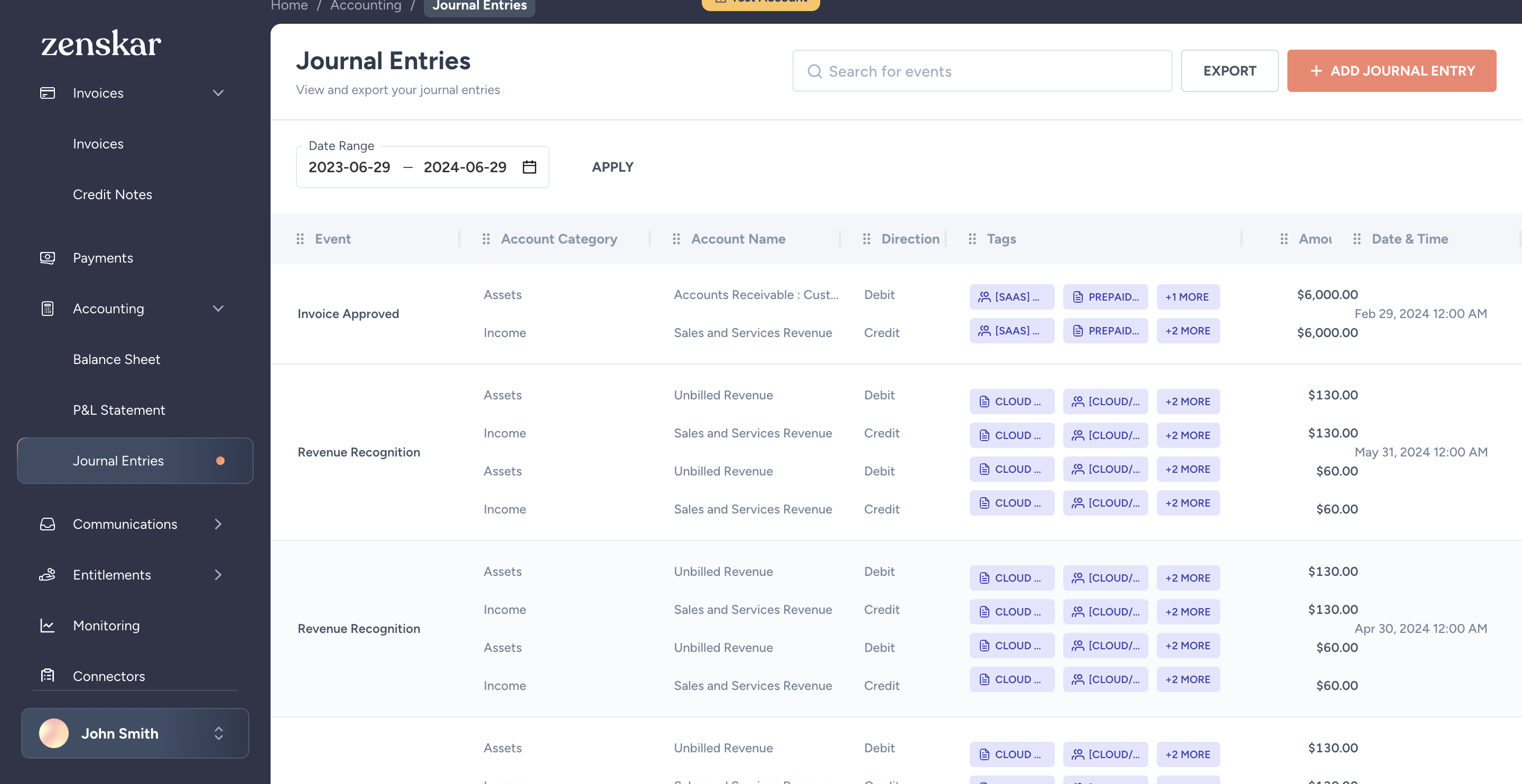
What it is: A revenue recognition tool designed to automate the five-step method and keep teams audit-ready, particularly in modern pricing models.
Best for: Usage-based and hybrid pricing teams that face frequent amendments and need controlled recalculations and audit trails.
Standout automation features
- Automates the ASC 606 and IFRS 15 five-step method using contract and usage inputs.
- Supports contract amendments and recalculation logic for revenue schedules.
- Provides a complete audit trail with timestamps and supports locked periods.
- Supports multi-entity access from a single login.
Integrations (CRM, billing, ERP, data warehouse)
- Supports workflows that connect contract and usage data and post revenue entries to ERP systems.
Pros
- Built for pricing complexity and frequent changes.
- Strong emphasis on locked periods and audit trail strength.
Cons /
- Quote-based pricing and integration scope should be validated early.
- Outcomes depend on disciplined contract data and usage data quality.
Pricing approach: Quote-based.
Bottom line: A strong contender for usage-based and hybrid monetization teams that need flexibility without sacrificing audit readiness.
5) DualEntry
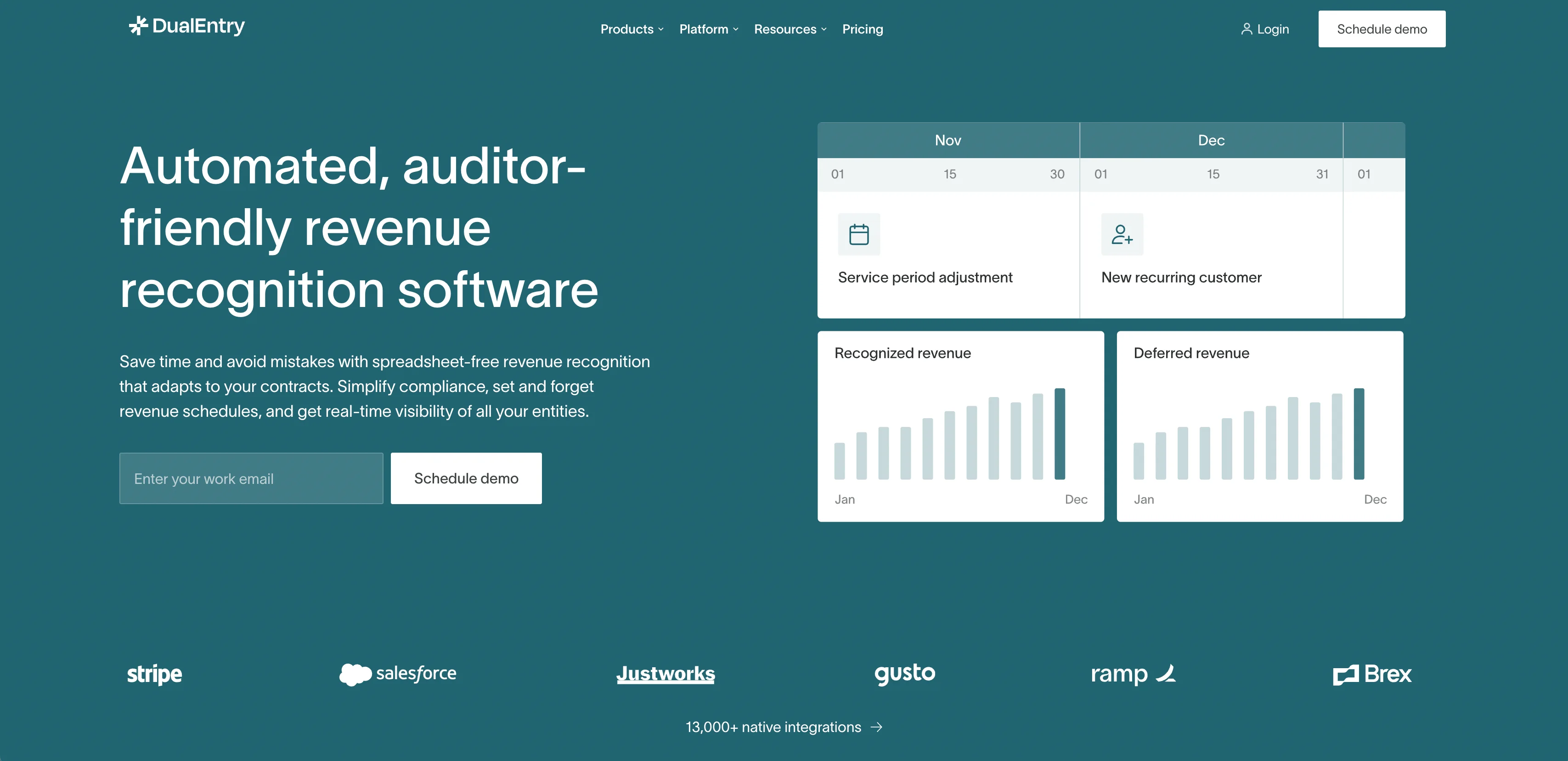
What it is: Revenue recognition software positioned around ASC 606 and IFRS 15 compliance with AI-assisted automation and reporting.
Best for: Teams that want AI assistance for compliance workflows and faster reporting cycles with structured governance.
Standout automation features
- Positions AI-assisted automation to support ASC 606 and IFRS 15 compliance.
- Emphasizes audit streamlining and accuracy improvements for revenue reporting.
- Highlights real-time revenue reporting as a product value area.
Integrations (CRM, billing, ERP, data warehouse)
- Integration coverage depends on implementation and should be validated during evaluation.
Pros
- Clear compliance and audit streamlining focus.
- Good fit for teams prioritizing reporting speed and audit posture.
Cons / limitations
- Integration depth varies by environment.
- AI features should be assessed through the lens of controls and audit defensibility.
Pricing approach: Quote-based.
Bottom line: Works well for teams that want compliance-first rev rec with AI-assisted workflows, especially when audit readiness is a top requirement.
Best features to look for in revenue recognition software (2026 checklist)
Core compliance and accounting
- ASC 606 and IFRS 15 support with policy-based rule configuration.
- SSP allocation and multi-element arrangement support for bundles and complex contracts.
- Contract modifications for upgrades, downgrades, renewals, and partial terminations.
- Variable consideration handling for discounts, credits, refunds, and usage variability.
Automation and close operations
- Automated revenue schedules from billing events and contract terms.
- Continuous reconciliation between billing, cash, deferred revenue, and the GL.
- Close workflows: approvals, controls, and exception queues so reviews are structured.
- Audit trail: immutable logs, timestamps, policy consistency, and locked periods.
Revenue model coverage
- Subscription billing (fixed recurring).
- Usage-based and metered billing.
- Services, milestones, and professional services revenue where relevant.
- Bundles: software plus services plus support with proper allocations.
Integrations and data
- CRM integrations for deal terms and CPQ data when needed.
- Billing integrations for subscriptions, invoices, credit notes, and amendments.
- ERP and GL integrations for journal entries, dimensions, and multi-entity reporting.
- Data connectors for analytics and forecasting workflows.
Reporting
- Deferred revenue rollforward and revenue waterfalls.
- Contract asset and liability reporting aligned with compliance expectations.
- Segment reporting by product, region, and entity.
Security and governance
- Role-based access controls and segregation of duties.
- SSO support and evidence-ready audit exports.
AI reality check
- Useful AI: anomaly detection, contract classification suggestions, and variance explanations that reduce investigation time.
- Risky AI: autonomous policy changes or revenue impact without approvals, audit logs, and locked periods.
How to choose the right revenue recognition tool (decision framework)
Start with your revenue model complexity: subscription only vs hybrid vs usage-heavy. Identify your source of truth, whether it is billing, ERP, or CRM, because the cleanest integration path usually determines implementation success.
Map your must-have integrations: billing, CRM, ERP or GL, payments, and any analytics layer you depend on for forecasting. Decide on controls early, including audit trail depth, approvals, and segregation of duties, because these requirements shape both vendor fit and implementation design. Run a parallel close for at least one cycle so schedules, journals, and rollforwards can be validated against the current process before cutover.
FAQs
What is revenue recognition software?
Revenue recognition software automates how revenue is scheduled, recognized, and reported so teams can close faster and stay compliant with accounting standards.
Does revenue recognition software support ASC 606 and IFRS 15?
Many revenue recognition platforms are designed specifically to support ASC 606 and IFRS 15, including policy configuration, allocations, and audit-ready reporting.
How does revenue recognition differ for subscriptions vs usage-based pricing?
Subscriptions often follow time-based schedules tied to contract terms, while usage-based pricing may require variable consideration handling and usage data inputs to determine recognized revenue.
What’s the difference between billing and revenue recognition?
Billing issues invoices and collects cash, while revenue recognition determines when revenue is actually earned and recognized, often creating deferred revenue schedules and related journal entries.
Can revenue recognition software automate journal entries into the GL?
Some platforms explicitly support automated journal entry creation and posting to a GL or ERP with chart-of-accounts mapping.
How long does implementation take?
Implementation time varies based on integration scope, data cleanup, historical migration, and the number of contract scenarios that need policy configuration.
What are common revenue recognition automation mistakes?
Common mistakes include inconsistent contract data, underestimating integration work, skipping parallel close validation, and not locking down policies for modifications and allocations.
.webp)
.webp)
.webp)

