From Leads to Loyalty: How SaaS Marketers Can Use AI for Better Insights
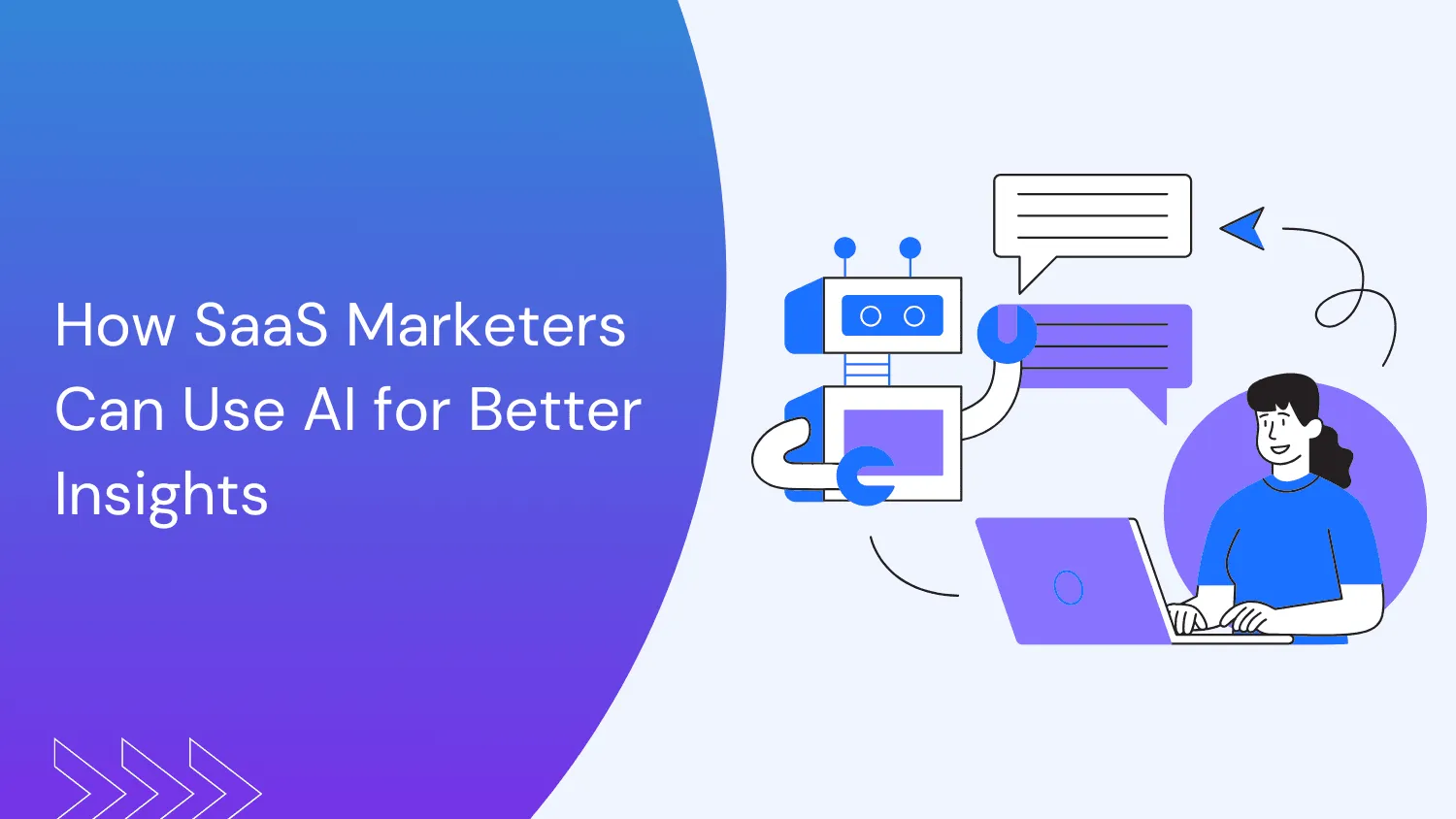
SaaS marketers can open the door to incredible insights by applying AI to change the way they interact with leads and customers. In real time, AI processes large volumes of data to assist a marketer with the future behavior, high-value prospects, and even risky behavior, such as churn. This allows teams to modify campaigns in a quicker manner and provide custom experiences that result in greater customer loyalty. AI assists marketers to make wiser decisions that lead to growth by transforming raw data into actionable intelligence, which guides the decision-making process and stems growth from the inception to the retention of their initial interaction.
The strategy generates an effective, receptive marketing plan that produces superior outcomes.
From leads to loyal customers with AI
Predicting future behavior, hyper-personalizing experiences, and automating interactions: AI can change leads into loyal customers by using the data to build a unique experience that resonates with individuals and happens automatically. It examines the data of the customers to comprehend their preferences, allowing them to market to customers specifically and thereby have specific loyalty programs. Machine learning may also be proactive with identifying and deploying solutions to possible challenges, e.g., anticipating churn or through sentiment analysis to understand customer moods to engage with the customer to develop even stronger relationships and create long-lasting loyalty.
1. Personalizing the customer experience
It has everything to do with AI treating each customer as a person, rather than as a part of a crowdsource. Rather than sending spam-like messages or presenting the same deals to all people, AI examines the previous actions of the specific individual, including what they have purchased, what they have clicked, what they have searched, and what they have not responded to, and designs the experience around that. Its aim is to ensure that the customer feels known, higher in status, and understood by the brand, regardless of contact points.
Tailored messaging:
The subject lines, the creator of an ad, the in-app messages, and product suggestions can dynamically be tailored by AI to a customer based on their behavior, demographic,s and interests. And as an example, a regular sportswear shopper may receive promotional material on fitness products, and an individual who hunts down business-style apparel may receive a suggestion of a fit suit or dress. This will make the communication more pertinent and the possibility of conversion.
Proactive outreach:
Rather than waiting to have the customer visit him/her, AI can anticipate when they need something, such as when their subscription is nearly due or when they are out of a product, or when they are browsing in a certain manner. Brands are then able to give timely prompts, exclusive deals, or useful tips that do not seem coerced.
Curated experiences:
AI can no longer be a product, but here is a whole experience. In retail, it may be recommending an outfit rather than one shirt, or recommending matching accessories, care products, or upgrades. In online businesses, it could package-shop, content sets or collections according to the style of the user and preferences. This makes the journey smoother and more enjoyable.
2. Optimizing customer interactions
This is a headline of making all interactions easier, more expeditious, and smarter, be it support, sales, or general inquiries. AI also enables companies to manage huge numbers of customer requests effectively and, at the same time, aim to make the process human and friendly.
Automated support:
Artificial intelligence (AI) chatbots and virtual assistants can address frequent queries 24/7, such as order status, returns, troubleshooting process, or customer accounts. This will help to shorten customer wait time, and the businesses will employ human agents to deal with complex or sensitive matters that require them to use their human judgment.
Anticipatory service:
Instead of reacting only when the customer asks for help, AI can predict what a customer might need next and offer it upfront. For example, a “loyalty concierge” might:
- Suggest booking a ride after a flight purchase
- Notify a customer about a discount in a store they’re walking past
- Remind them of unused points or rewards
This kind of proactive help makes the brand feel smart and attentive.
Real-time feedback analysis:
AI is able to analyze social media, reviews, chat logs, and survey results to get to know what customers are actually experiencing. In case sentiment all of a sudden becomes negative towards something product, feature, or campaign, the business can quickly research, react, and correct the problem. In the long run, this will create a sense of trust as the customers will realize that the brand is listening to and acting accordingly.
3. Predicting and preventing churn
The following heading deals with identifying the customers who may quit with the help of AI and then taking action before it really happens. Businesses can take the initiative instead of responding when cancellations happen or customers are lost.
Identifying at-risk customers:
AI algorithms grade patterns such as decreased logins and usage, overdue or missed payments, rising complaints, and negative feedback to alert potentially turnover-thinking customers. This will enable prioritizing the outreach of the most needed people.
Optimizing retention strategies:
After identifying at-risk customers, AI could be used to determine what to do with them; make personal discounts, give complimentary upgrades, create learning material, or have customer success teams come to them with special check-ins. Since these strategies are grounded on actual data (such as what has already had a positive impact on similar customers in the past), they are more effective than blanket retention campaigns.
How SaaS Marketers Can Use AI to Unlock Deeper Customer Insights
AI can assist SaaS marketers to make more informed decisions by utilizing predictive analytics to make churn and trends, automating a personalized customer experience, richer content and SEO, and market and competitor data analysis. Monotonous work can also be automated with the help of AI, and marketers can pay more attention to strategy and give practical recommendations regarding campaigns and engagement with the users.
1. Data analysis and predictive insights
The contents of this section involve applying AI to transform raw SaaS data (product usage, trials, campaigns, CRM, billing) into clear and futuristic insights. Rather than merely reporting what happened, AI will assist marketers to know why it happened and what will probably happen next so that they can do everything earlier and smarter.
Predictive analytics:
Based on the usage, engagement, and revenue data, AI models are able to predict customer churn, lifetime value, and conversion probability. It assists teams to determine the top accounts to save, the top prospects to pursue, and the areas which are likely to be responsive to future campaigns. It also leads to smarter budgeting and channel resource allocation.
Customer behavior analysis:
AI has the capacity to analyze extensive amounts of behavioral data, including, but not limited to, logins, feature utilization, click paths, duration of session, and location, to visualize actual customer journeys. By understanding where users become a bottleneck, what aspects contribute to the stickiness of the product, and what specifications distinguish power users and churned accounts, marketers can identify a way to resolve the bottleneck. Knowledge such as Tuesdays in EMEA are the best days to do demos, or users adopting Feature X in the first week hardly ever churn, are put into action.
Campaign performance:
Rather than simply monitoring clicks and form fills, AI assists in relating campaigns to results such as revenue, retention, and growth. It is capable of examining multi-touch attribution, where the prospects are falling short in the funnel, and what messages, channels, and sequences are working under the real ROI. This will enable marketers to invest more in elements that work and reduce those that do not work faster.
2. Personalization and customer experience
The topic of this heading is the application of AI to provide experiences that appear personal to individual users or accounts, whether in email, on a website, in a product, or in an advertisement. In the case of SaaS, it involves the reduction of generic messaging towards contextual and role- and industry-conscious communications that can be quicker to convert and adopt.
Personalized communication:
AI has the ability to categorize users by behavior, company size, industry, and lifecycle stage, and create targeted content for the emails sent to each group (or even individuals). Subject lines, calls to action, and the body content can be changed according to what the user has read, clicked, or utilized in the product, and this will make the campaigns seem more like individual outreach than a barrage.
Dynamic website experiences:
Your website need not be stagnant. AI can rebrand hero messages, case studies, and feature highlights based on who is visiting, such as displays of fintech to a bank visitor and the highlighting of Admin features to a Head of Operations. This makes it immediately relevant, and a visitor feels that this tool was created for them.
Optimized ad targeting:
Rather than relying on a manual guess of the audiences and creatives, AI will be able to keep testing and optimizing the latter. It is able to create micro-segments that perform, change bids by real-time performance, and change creatives that work best. This will direct ad spend into the most profitable audience, message, and channel combinations.
3. Automation and efficiency
In this case, it is about liberating the SaaS marketing teams from mundane work to allow them to invest additional time in strategy and creativity. AI will be the driving force that ensures that data is clean, content flowing, and prioritized without having to go through every step manually.
Automated data management:
AI is able to draw and consolidate information on CRM, ad platform, email tools, product analytics, and billing systems into one effective perspective. It is able to automatically refresh lists, enhance records, identify duplicates, and fix mistakes, thus marketers will not be locked in spreadsheets and can rely on the segments they create.
Content creation and optimization:
AI tools can turn hours of content work into minutes by drafting first versions of social posts, newsletters, landing pages, and even full blog outlines. They also create multiple variations for A/B testing, helping you experiment with headlines, CTAs, and value angles to see what truly resonates with your audience. AI tools can turn hours of content work into minutes by drafting first versions of social posts, newsletters, landing pages, and even full blog outlines. They also create multiple variations for A/B testing, helping you experiment with headlines, CTAs, and value angles to see what truly resonates with your audience. For marketing teams producing video ads, invideo agent helps streamline creative production by generating on-brand ad variations, refining concepts, and supporting faster iteration across campaigns.Beyond speed, AI improves performance by suggesting smarter edits based on real data, like sharper headlines or more compelling calls to action. To avoid content feeling robotic, tools that humanize AI generated text help refine tone, improve readability, and add a natural flow that connects with real readers. The result is faster content production with clearer messaging, stronger impact, and quality that still feels human and free from AI detection.
Lead scoring and qualification:
Instead of static scoring rules, AI can combine demographic (company size, industry, role) and behavioral (pages visited, features tried, emails opened) data to predict which leads are most likely to buy. Sales teams then get prioritized, high-intent leads, resulting in better alignment between marketing and sales and higher close rates.
4. Strategic optimization
This part is regarding the application of AI not only in analysis and automation, but in leading strategy (pricing and positioning), channel mix, and content direction. That is where AI will be a strategic consultant rather than a reporting service.
Pricing models:
Artificial intelligence has the potential to work out the reaction of various segments to changes in prices, discounts, and packaging over time. Two we can use include: Smaller teams working better on use-based plans, and enterprises working better under flat levels with predictable billing. This enables SaaS marketers and products to optimize pricing pages, offers, and plans to maximize revenue and minimize friction.
Prescriptive recommendations:
Instead of stating that this campaign was successful, AI can indicate the next step, what content to produce, which channels to invest in, and what segments to target with what messages. It can advise on the most effective mix of campaigns during product launch, or point out that video case studies are the most effective with CTOs in this segment, transforming knowledge into action plans.
Final Thoughts
AI is revolutionizing SaaS operations in the marketing department. It assists teams in comprehending leads, anticipating behavior, and creating worthwhile relationships with each other. AI can be useful when properly combined with data and creativity.
Marketers who are AI adopters will have an edge over their competitors. They make experiences helpful, personal, and consistent.
Having led to loyal customers, AI assists with each phase of the cycle.
.webp)