Top 5 CaptivateIQ Alternatives in 2026
.avif)
CaptivateIQ gained popularity as a sales commission automation platform for its spreadsheet-inspired modeling capabilities.
However, many teams now report challenges around setup complexity, reporting usability, data delays, and real-time visibility into earnings.
If your RevOps or Finance team is running into operational friction with CaptivateIQ, this guide covers five alternatives to evaluate and the features that can make or break your next selection.
Common Complaints About CaptivateIQ
User reviews often mention the following pain points when implementing or operating CaptivateIQ.
- Setup for complex plans can be time consuming and requires strong spreadsheet-style skills, which creates a higher learning curve during implementation.
- Reporting can feel unintuitive and some users find it difficult to pull the right data or generate detailed payout statements without additional help.
- Data syncing and refreshes may lag, which can affect how quickly reps see current period performance and earnings.
- Some users want a more accessible interface and clearer breakdowns for non-technical stakeholders.
- Admins may need support to configure specific components or unblock issues, which can slow down iteration speed.
If your team is spending more time managing the tool than using insights from it, it is reasonable to consider an alternative.
How to Choose a CaptivateIQ Alternative
When evaluating alternatives, look for a platform that:
- Is simple enough that automation actually saves time and improves visibility, with intuitive dashboards and reporting that are easy to learn.
- Streams CRM and billing data in real time or on a reliable schedule, with integrations to the tools you already use and dependable syncing across systems.
- Supports no-code or low-code plan building so complex rules can be implemented without excessive technical overhead.
- Provides granular payout statements and drilldowns so reps, managers, and finance can see the details behind every payout.
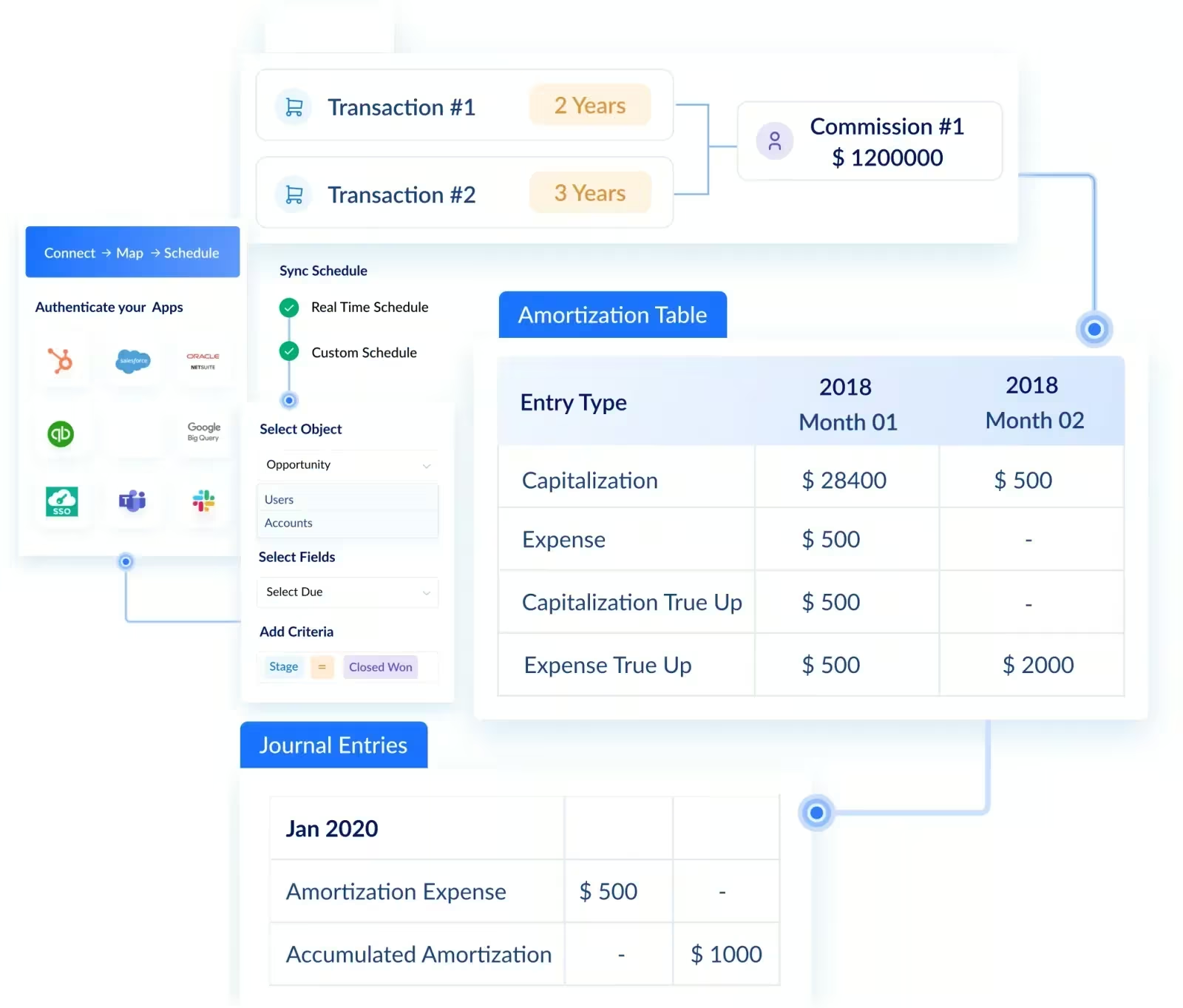
- Delivers ASC 606 amortization capabilities so Finance can close books on time and maintain a clean audit trail.
Below are five alternatives that address these needs in different ways.
1. Visdum: Intuitive, Customizable, With Deep Integrations
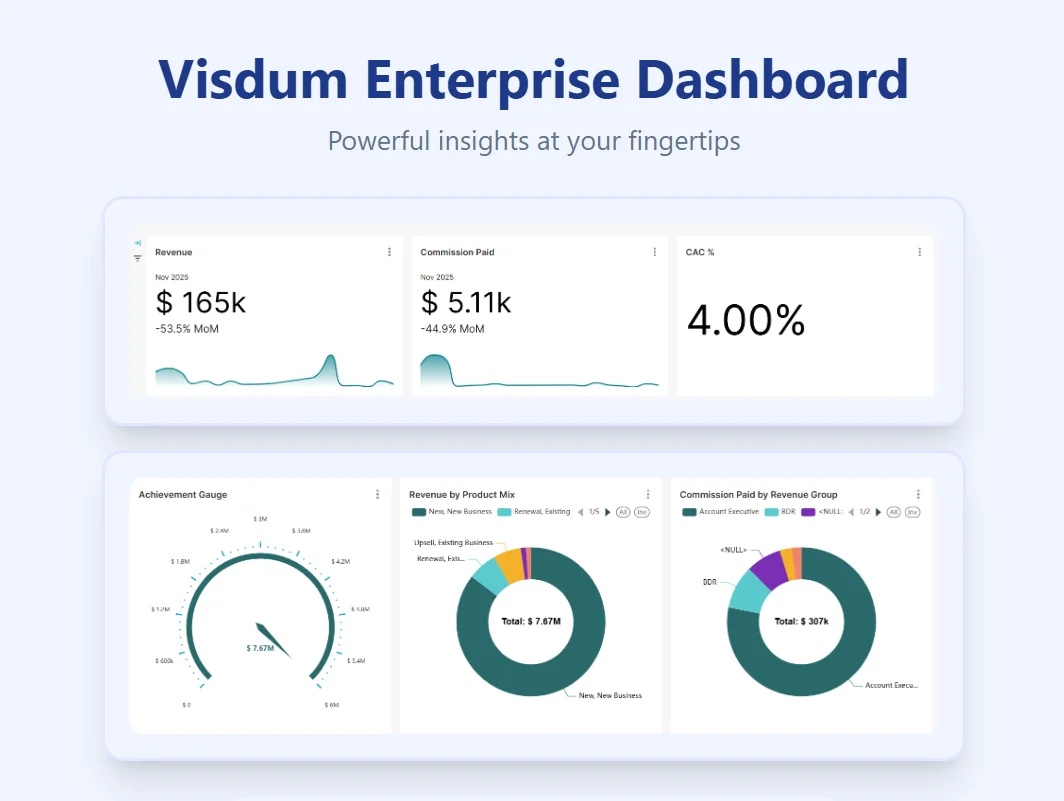
Visdum is a sales commission and incentive management platform designed for mid-market and enterprise teams that want deep integrations, strong rep visibility, and better governance around commissions.
It focuses on replacing spreadsheets with a system that is easier to operate, more auditable, and better connected to the revenue stack.
Ideal for:
Teams with 15 to several hundred reps that need real-time visibility, seamless integrations, and a scalable, low-maintenance commission process.
Key features:
- AI Copilot that can answer questions about payouts, attainment, and performance in natural language.
- Deep native integrations with CRM, billing and payments, accounting, ERP, eSign, HR and payroll, and SSO, with controls to decide which data is synced and how.
- Enterprise dashboards and rep views that show attainment, progress to goal, and payout details in one place for different roles.
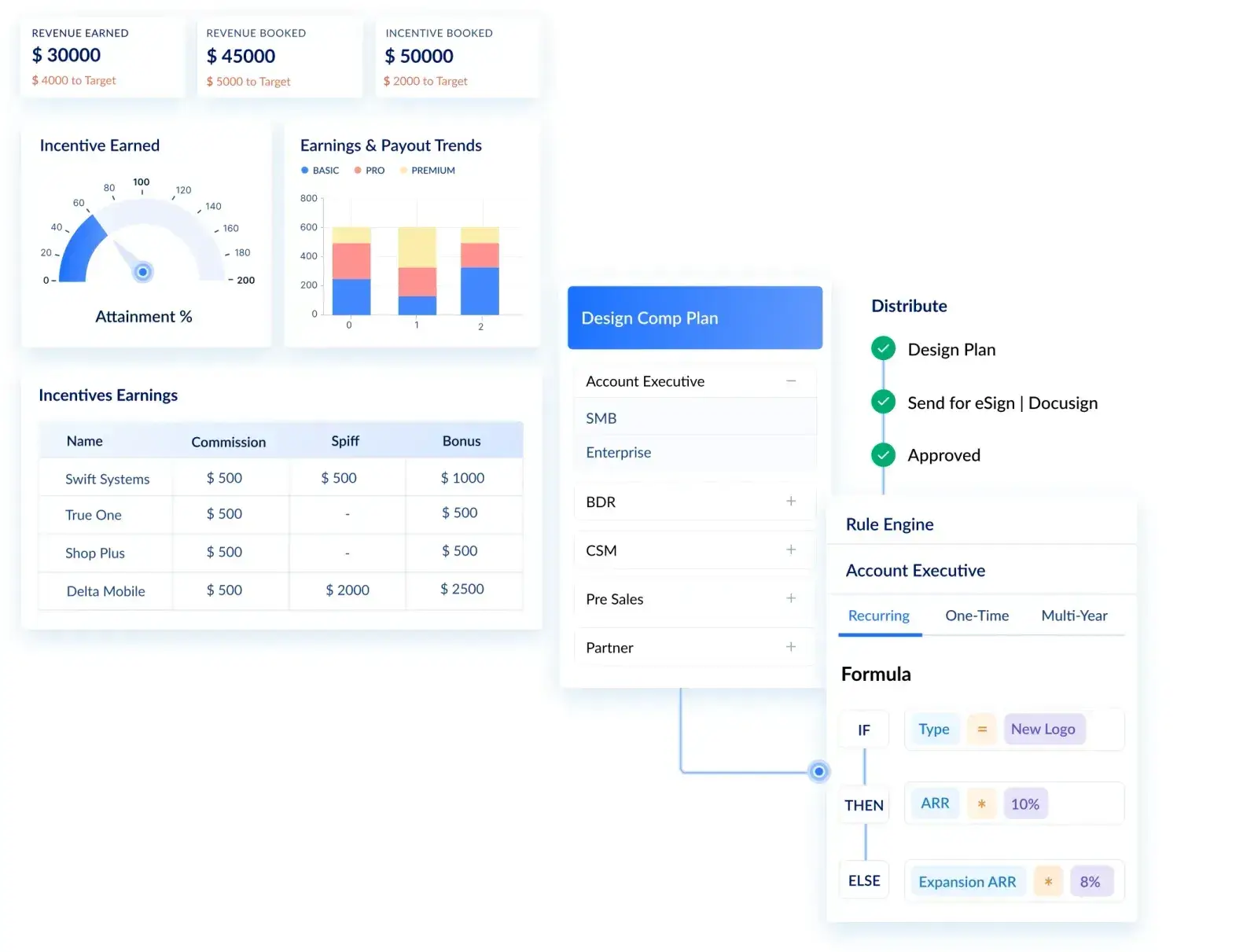
- Visual Rule Builder and an Excel-like view that make it easier to express plan logic without complex coding.
- Full audit trail with approvals and change tracking to make payout explanations easier.
- Pre-built connectors and a services model that targets faster implementation and lower ongoing admin load.
Potential drawbacks:
- Complex plans still require thoughtful setup and testing, similar to other enterprise commission tools.
2. Qobra: Clean UI, but Limited Depth for Complex Plans
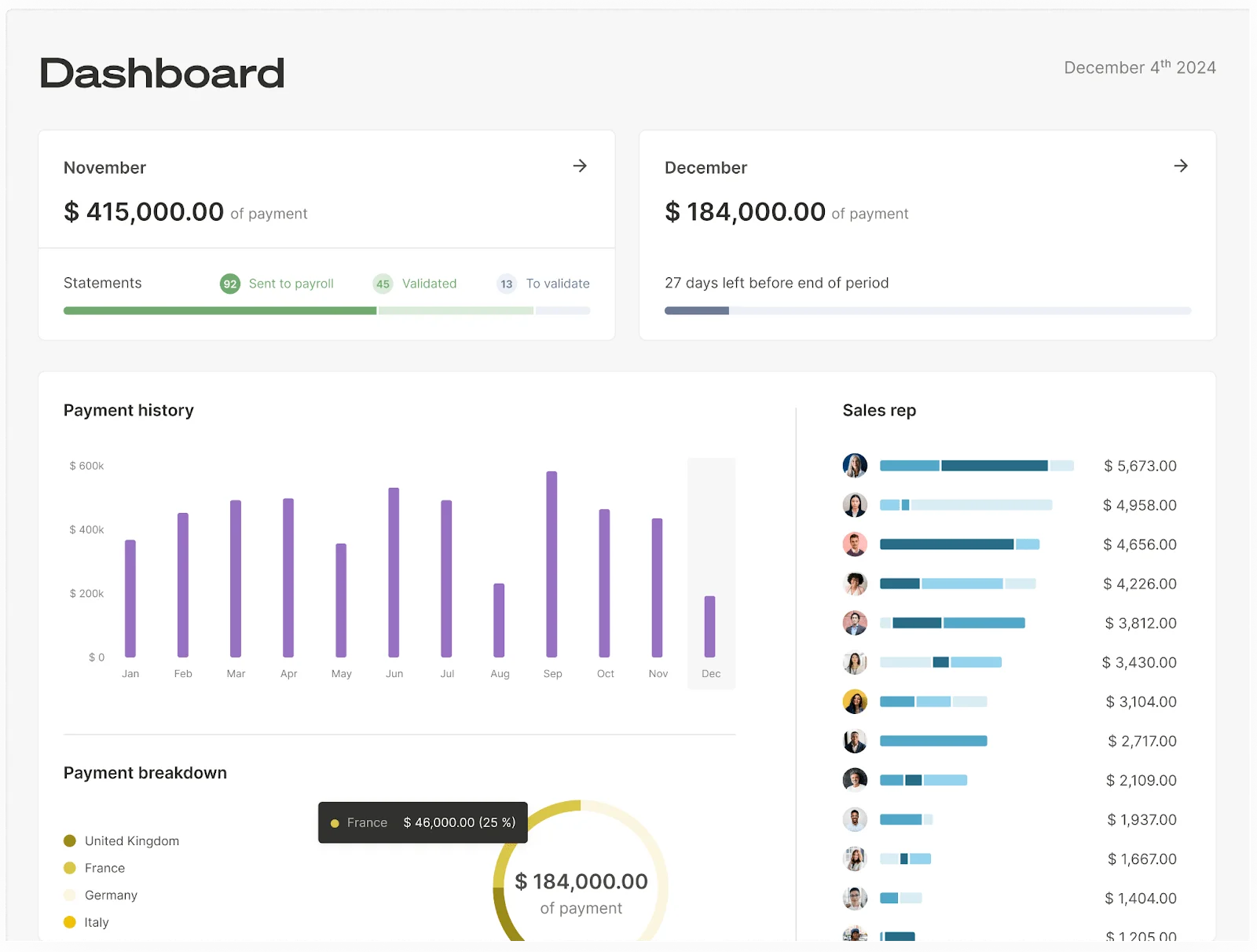
Qobra is a sales compensation platform that focuses on a modern interface and quick adoption, particularly among European mid-sized companies.
It is best suited to teams that need automation and visibility but do not have extremely complex compensation structures.
Ideal for:
Sales teams with basic to moderately complex plans that prioritize ease of use and fast onboarding over deep modeling and configuration.
Key features:
- Modern, intuitive UI that helps teams move away from spreadsheets.
- Automated commission tracking with workflows for approvals and validations.
- Dashboards designed for reps and managers to follow progress against targets.
- Integrations with CRM tools like Salesforce and HubSpot, and collaboration tools such as Slack.
Potential drawbacks:
- May not provide enough flexibility for highly complex structures such as multi-layer accelerators, extensive clawbacks, or heavily customized rules.
- ASC 606 capabilities are more limited and may require external handling in some environments.
- Focus on the European market can create differences in support coverage depending on region.
3. Performio: No-Code Flexibility with Built-in AI
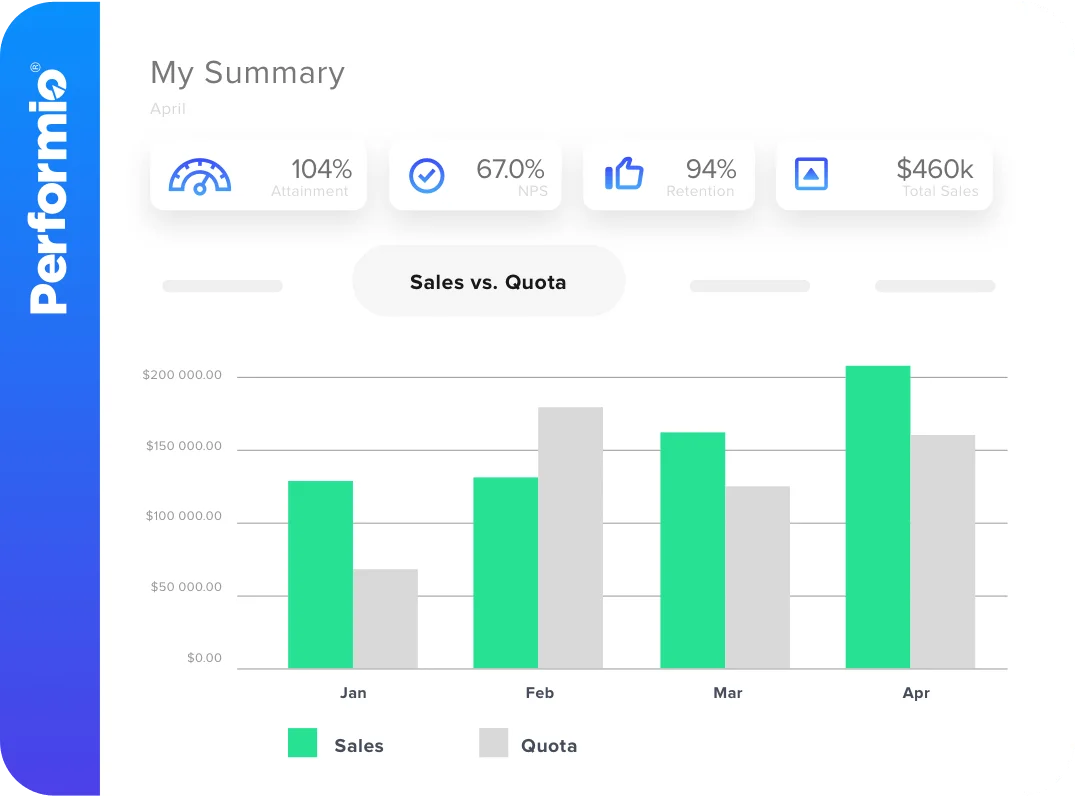
Performio is a sales performance management and commission platform that emphasizes accuracy, compliance, and forecasting for commission expense.
It is often selected by finance-led teams that want structured processes and ASC 606 support.
Ideal for:
Mid-market and enterprise organizations that need strong financial governance, reporting, and compliance for complex plans.
Key features:
- ASC 606 amortization and commission expense recognition reporting to support compliance and audit needs.
- Forecasting and simulation tools to project commission expense and manage accruals more accurately.
- Dashboards and reports that provide visibility into revenue performance and payouts.
- Configurable workflows to manage approvals and ensure structured commission operations.
Potential drawbacks:
- Some users report delays in data updates and want more real-time metrics in dashboards.
- Requests for additional dashboard views such as multi-currency or extended period comparisons indicate room for more out-of-the-box reporting.
4. Spiff: Salesforce-Native but Less Intuitive
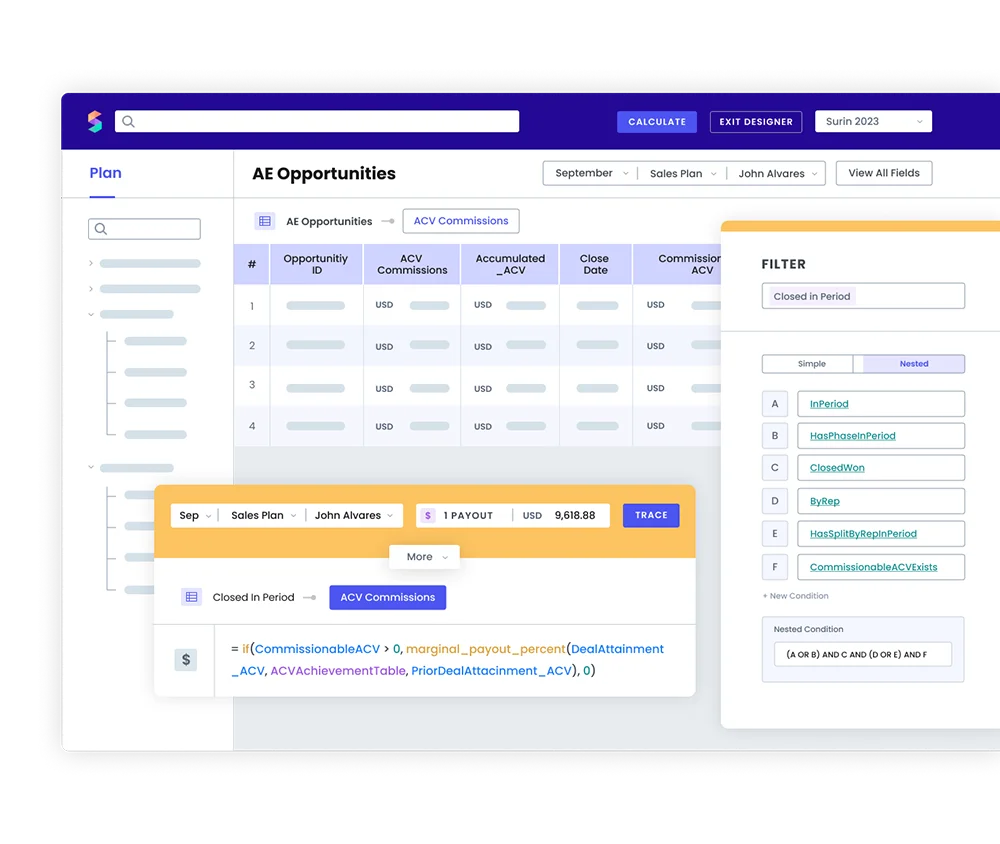
Spiff is an incentive compensation platform that provides real-time commission tracking, reports, and dashboards, with a strong connection to Salesforce.
It is often evaluated by teams that already use Salesforce as their primary system of record for sales.
Ideal for:
Teams that run the majority of their sales process in Salesforce and want commissions to live close to CRM data and workflows.
Key features:
- Native Salesforce sync that brings CRM data into commission calculations and surfaces earnings in Salesforce experiences.
- Visual plan and rules configuration using a spreadsheet-like model inside the Spiff Designer.
- Real-time or near-real-time commission statements and dashboards for reps and managers, including mobile access.
- Capabilities for audit logs and adjustments, so changes to data and statements are tracked.
- Amortization and compliance tooling positioned for teams that need more structure around earnings recognition.
Potential drawbacks:
- Teams not heavily invested in Salesforce may see less value from Salesforce-native advantages and may prefer a more platform-agnostic approach.
- Configuration and ongoing plan maintenance generally require engaged admin ownership, which can add internal overhead.
5. Varicent: Full-Scale SPM with Heavy Customization

Varicent is a broader Sales Performance Management platform that includes incentive compensation management along with planning and insights.
It is built for large organizations that need a high degree of configurability and can dedicate resources to implementation and ongoing administration.
Ideal for:
Large enterprises with complex incentive strategies, multiple business units, and dedicated RevOps and IT support.
Key features:
- Highly configurable incentive plan design that can accommodate diverse and complex compensation rules.
- Planning and modeling capabilities, including quota and territory planning and performance insights for sellers.
- Integrations with CRM, ERP, and HCM systems to align compensation with broader business data.
- Reporting and dashboards for executives, managers, and operations teams.
Potential drawbacks:
- Implementation projects can be lengthy and require significant technical and admin resources.
- Complex interfaces and configuration options may be challenging for non-technical users without dedicated support.
Where These Alternatives Actually Rank on G2
Before the feature lists, here is how the category scores on the G2 Mid-Market grids (G2, Summer 2026).
Mid-Market Usability Index
Mid-Market Relationship Index
Visdum ranks #1 of 19 on Mid-Market Usability and #1 of 20 on Mid-Market Relationship, and posts an Ease of Use score of 9.9 out of 10 against a category average of 9.2 (G2, Summer 2026).
Why CaptivateIQ Users Switch to Visdum
Many teams turn to Visdum after hitting operational bottlenecks with CaptivateIQ. Here's why:
ToolsGroup, a Boston-based supply chain software company, evaluated several platforms before moving its commission process onto Visdum. Lynn Cappuccino, who runs RevOps there, ruled CaptivateIQ out on internal feedback:
"Our head controller said she's never using CaptivateIQ again. So I had to roll those to the side."
- Lynn Cappuccino, Director of Revenue Operations, ToolsGroup

Feature Comparison Table
FAQs
1. Why do companies switch from CaptivateIQ to Visdum?
Most switch due to challenges with delayed data syncing, complex report setup, and unintuitive dashboards. Visdum addresses these issues with real-time data sync, ready-to-use dashboards, and detailed payout statements built for easier workflows when closing books.
2. Is Visdum easier to use than CaptivateIQ?
Yes. Visdum is designed for fast adoption by both finance teams and sales reps. The no-code plan builder, visual dashboards, and intuitive UI make it significantly easier to navigate and manage, especially for users coming from Excel or CaptivateIQ’s formula-heavy setup.
3. Can Visdum handle complex compensation plans like CaptivateIQ?
Absolutely. Visdum supports multi-layered commissions, SPIFs, team splits, draw structures, accelerators, and ASC 606 amortization without requiring advanced formula knowledge. The setup is easier, and changes can be made without delays.
4. How does Visdum compare in terms of report accuracy and detail?
Visdum offers highly detailed payout statements with line-item granularity. Reps and finance leaders can drill down into earnings by plan, deal, or product, solving one of the biggest frustrations with CaptivateIQ’s reporting.
5. Will I get real-time performance visibility with Visdum?
Yes. Visdum integrates in real-time with CRMs like Salesforce and HubSpot, along with accounting platforms like QuickBooks and SageIntacct. Performance data is always up to date, ensuring reps aren’t flying blind at the start of the month.
6. What support can I expect from Visdum during onboarding?
Visdum has the fastest implementation time in the sales compensation category in G2. Depending on the complexity of your plans, you can expect to go live in just a few weeks.
7. Can I migrate from CaptivateIQ to Visdum without losing historical data?
Yes. Visdum’s implementation team helps you migrate historical compensation plans, earnings data, and rep performance records. This ensures a seamless switch without starting from scratch.
Conclusion: Time to Replace Complexity with Clarity
CaptivateIQ offered flexibility for teams needing control but with that came lag, confusion, and steep learning curves. Today’s fast-moving finance and RevOps teams need something simpler, faster, and purpose-built.
Visdum delivers where CaptivateIQ falls short:
- ✅ Real-time CRM and billing sync
- ✅ One-click plan testing and instant visibility
- ✅ Granular payout statements and native ASC 606 reports
- ✅ Intuitive UI for reps, admins, and finance
- ✅ Fast, human support when deadlines matter
Switch to Visdum and simplify commissions without sacrificing power.
👉 Book a demo with your CRM data, no setup needed.
.webp)