Average Salary in the USA Explained: By State, Job & Gender

How much do people actually earn in the United States? It’s a question many of us wonder about, especially when thinking about a new job, a raise, or a move to a different city. The truth is, there isn’t one simple answer. Salaries in the U.S. can look very different depending on where you live, the kind of work you do, your experience level, and even factors like gender.
In this guide, we break down U.S. salary data in a way that’s meant to be genuinely helpful. Instead of focusing on one big number, we look at how pay differs by state, by profession, and between average and median earnings, along with how the gender pay gap shows up in real life.
Everything is based on reliable government data, but explained in plain, everyday language, so you can better understand how your income compares and make more informed decisions about your career or finances.
What does “Average Salary in the USA” actually mean?
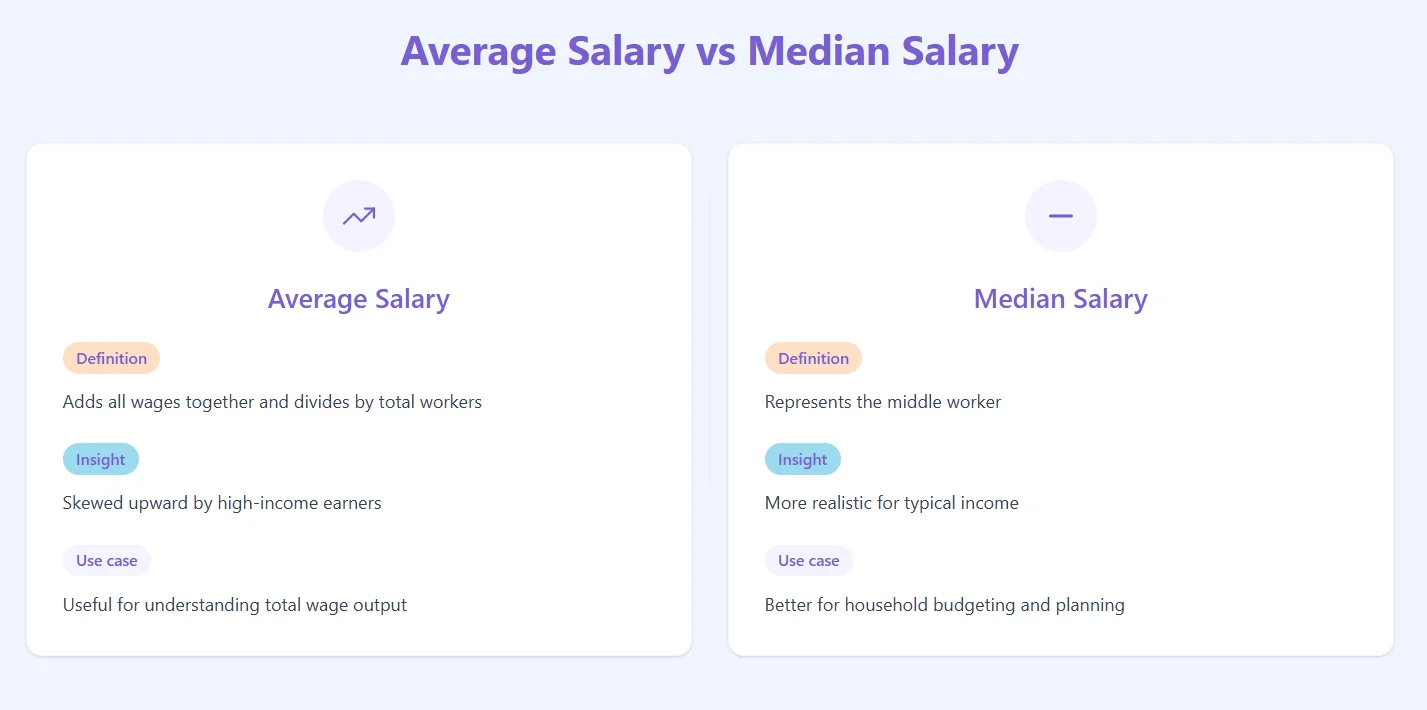
The phrase average salary in the USA usually refers to the mean annual wage earned by full-time workers. This number is calculated by adding all wages together and dividing by the number of workers.
However, this method has a limitation. A small group of very high earners pulls the average upward. Because of that, the average salary often overstates what most people earn.
This is why many analysts also look at the median salary, which represents the midpoint of earnings. Half of workers earn more than this number, and half earn less.
When reading salary data, it’s important to ask:
- Is this average (mean) or median pay?
- Does it include part-time workers?
- Is it national or regional?
These details change how useful the number is for real-life decisions.
Average Vs Median Salary In USA: What’s The Difference?
When I look at salary data, the first thing I check is whether a source is talking about the average salary or the median salary. They sound similar, but they tell very different stories.
Example: why the difference matters
Imagine five workers earning the following annual salaries:
Average salary: $96,000
Median salary: $50,000
In this example:
- The average suggests workers earn close to $100,000
- The median shows the typical worker earns $50,000
Four out of five workers earn far less than the average. This is exactly how national salary data behaves.
If you earn below the average salary in USA, that does not automatically mean you are underpaid. In many cases, it simply means the average is being pulled up by top earners. The median salary provides a clearer, more realistic reference point for most people.
What is the average salary in the USA?
TL;DR: Average Salary in USA
- The average annual salary in USA is roughly $65,000–$75,000 depending on data source.
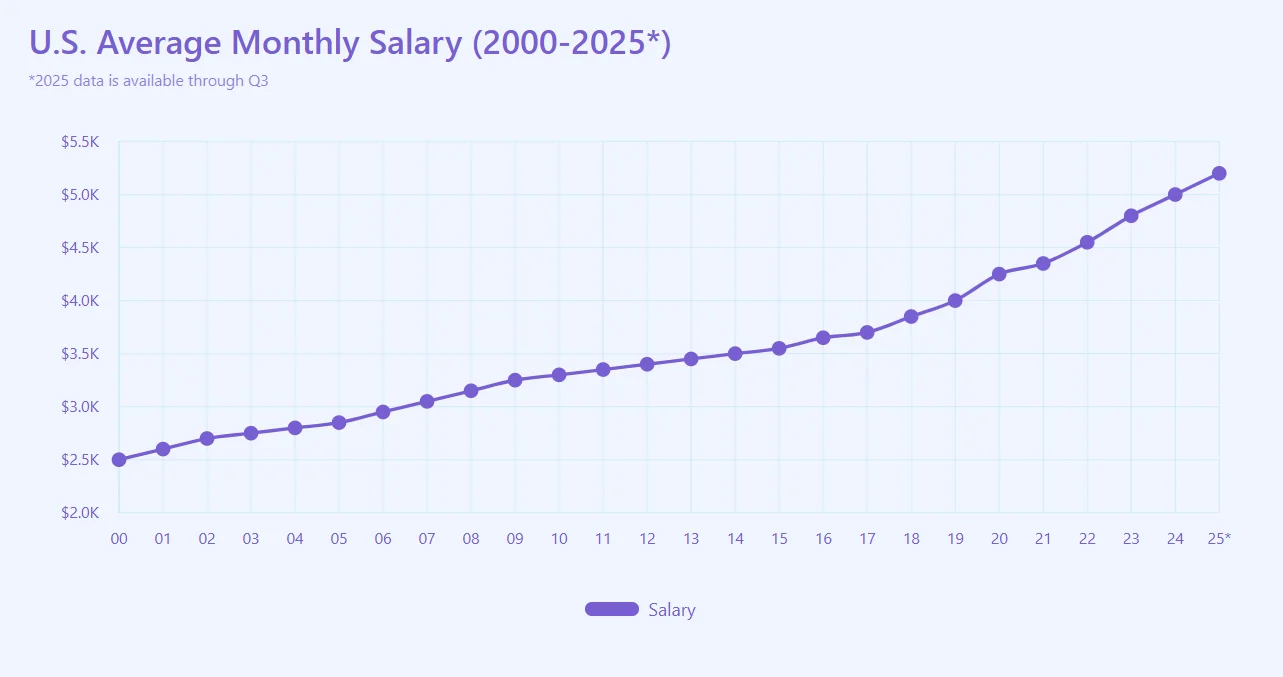
- The US average salary monthly typically ranges between $5,400 and $6,250 before taxes, based on national wage data.
- The median annual salary is lower, closer to $48,000–$52,000.
- Geography and industry matter more than national averages.
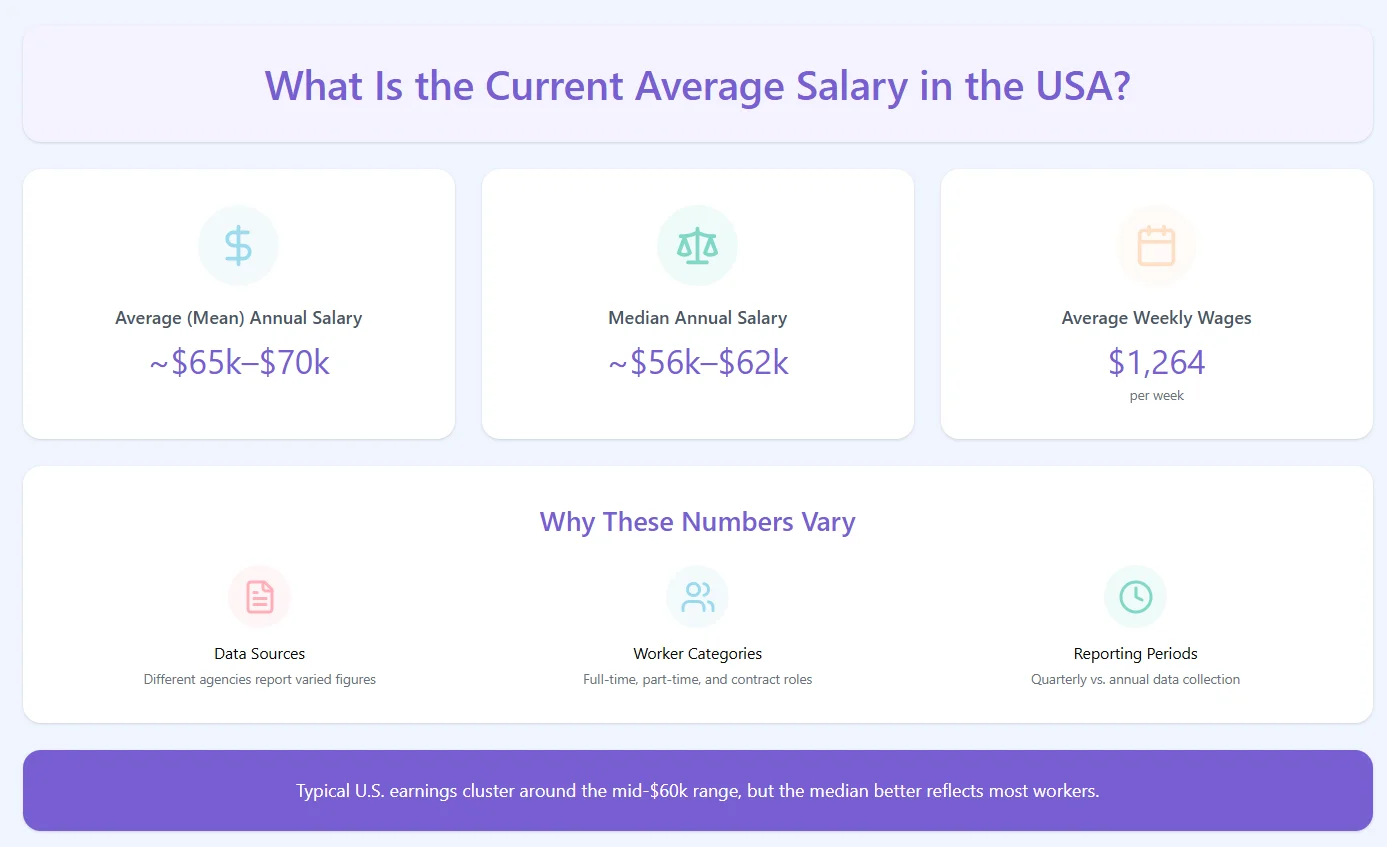
Here’s what recent sources show:
- Average (mean) annual wage: Around $63,795 per year, based on national occupational wage estimates, which includes all occupations and industries.
- Median earnings for full-time workers: Roughly ~$56,000–$62,000 per year, based on weekly earnings of about $1,192 recorded by the U.S. Bureau of Labor Statistics (BLS).
- Average weekly wages: About $1,264 per week as of November 2025, according to the BLS, this translates to roughly $65,700 annually when projected over a full year.
Source : Consumer Shield
How does the average salary in USA vary by state?
TL;DR
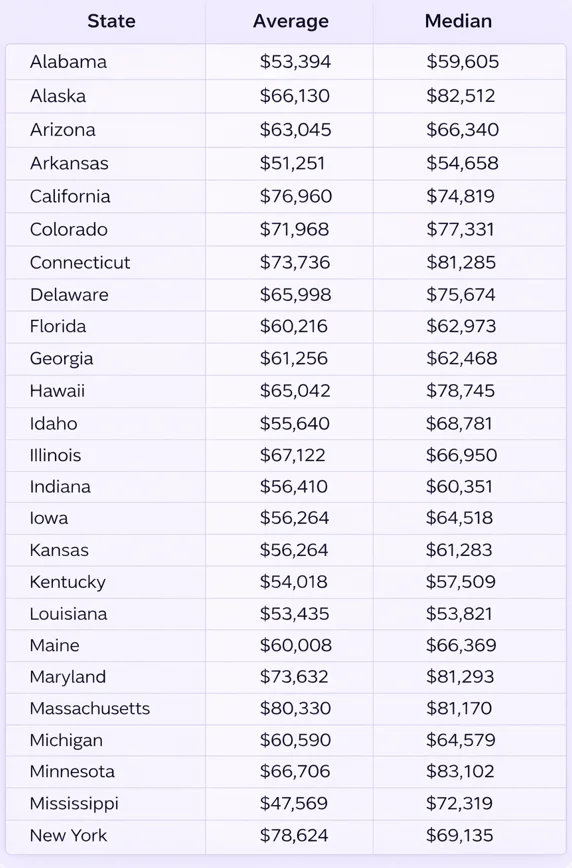
- Highest paying states by estimated average: Connecticut, New Jersey, Washington, Massachusetts, California.
- Moderate pay states tend to cluster in the Midwest and Southeast (e.g., Minnesota, Illinois).
- Lowest paying states include Mississippi, Arkansas, Kentucky, New Mexico.
- The spread between top and bottom states can be 20–30% or more based on weekly wage rates.
Source : SoFi Learn
Top-Earners vs. Lower-Earners (By Average Wage)
Top Earning States :
Low Earning States :
Source: U.S. Bureau of Labor Statistics
This comparison highlights how average wages vary sharply by state, with top-earning states paying $75,000–$80,000+ per year on average, while lower-earning states cluster closer to $50,000–$55,000. The gap is driven largely by differences in industry concentration, cost of living, and regional labor market.
Average salary in USA by age group
Source : Bureau of Labour Statistics
Early-career workers earn well below the average salary in USA, but income growth accelerates during the first decade of work.
Median earnings in the U.S. rise sharply after age 24, reflecting experience and career progress. Typical wages peak in the mid-career range (35–54) at roughly $69,000–$71,000 annually before trending slightly lower as workers approach retirement.
How education affects the average salary in USA
Education level strongly correlates with earnings.
- High school diploma: lowest average wages
- Associate degree: moderate increase
- Bachelor’s degree: significant jump
- Graduate degrees: highest average pay
Education does not guarantee income, but on average it raises lifetime earning potential and lowers unemployment risk.
Average salary in USA by occupation
TL;DR
- Highest-paying fields: Software, healthcare, and finance roles typically earn $95,000–$160,000+ per year, with physicians and senior tech roles exceeding $200,000.
- Mid-paying fields: Education, business operations, and professional services generally fall between $60,000 and $95,000 annually.
- Lower-paying fields: Retail, hospitality, and personal care roles usually earn $30,000–$45,000 per year, well below the national average.
- Entry-level & support roles: Administrative and junior positions cluster around $38,000–$50,000 annually, with growth tied to specialization.
- Overall pattern: Occupational choice creates a pay gap of $100,000+ per year between the highest- and lowest-paying fields.
Occupation is one of the strongest predictors of pay in the U.S. National averages hide large gaps between fields.
Below are typical annual pay ranges for major occupational groups.
Software & Engineering Roles
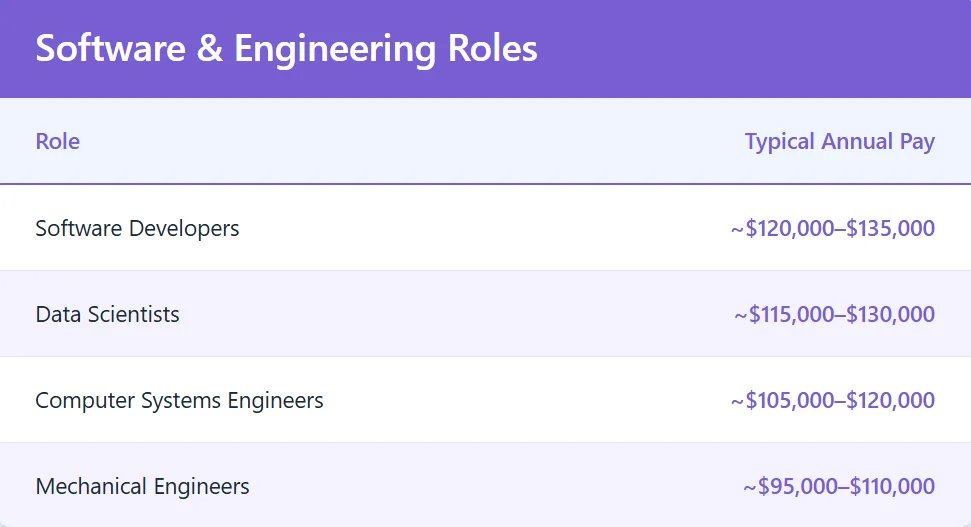
Pay in software and engineering is among the highest in the U.S., driven by specialized skills, strong demand, and concentration in high-cost metro areas.
Healthcare Professionals

Healthcare salaries vary widely, with doctors and specialists earning far more than support roles due to licensing, training length, and responsibility.
Legal & Professional Services

Legal salaries are highly uneven, with top earners in specialized or corporate roles pulling averages well above the median.
Finance, Business & Management
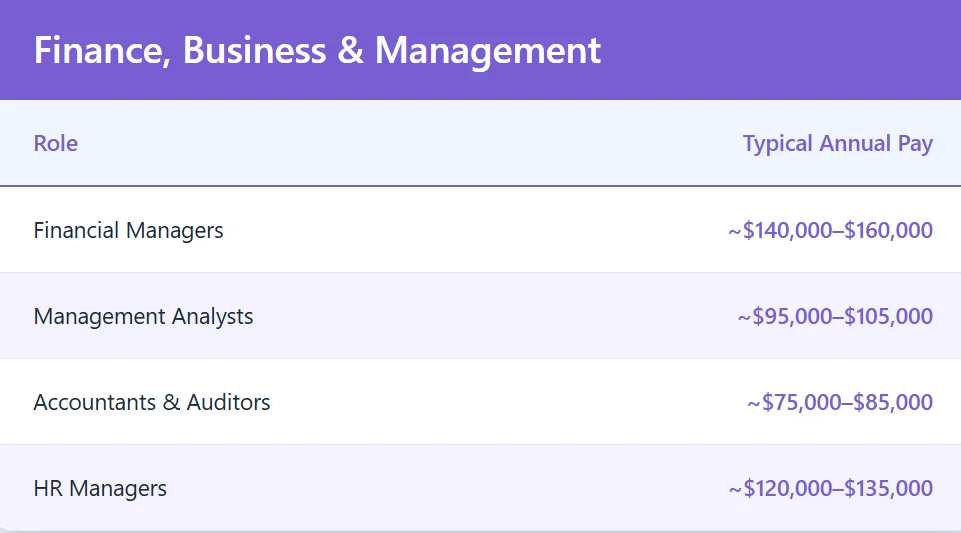
Business and management roles tend to pay above average because compensation is closely tied to revenue impact and leadership responsibility.
Education & Public Sector
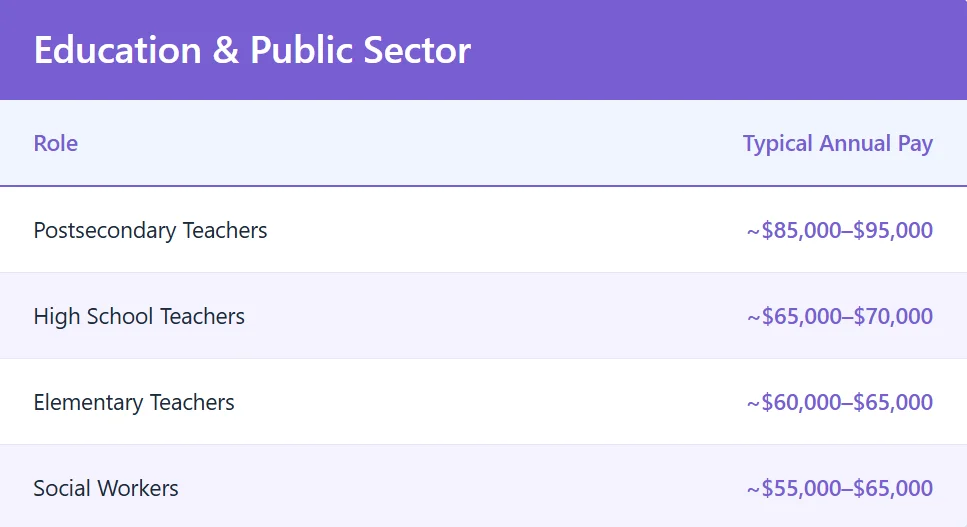
Education and public sector roles offer stable income and benefits, but salaries are generally lower than comparable private-sector positions.
Retail, Food Service & Hospitality (Lower-Paying Fields)

Retail and hospitality jobs typically pay below the national average due to lower entry barriers and a large available workforce.
Personal Care & Support Roles
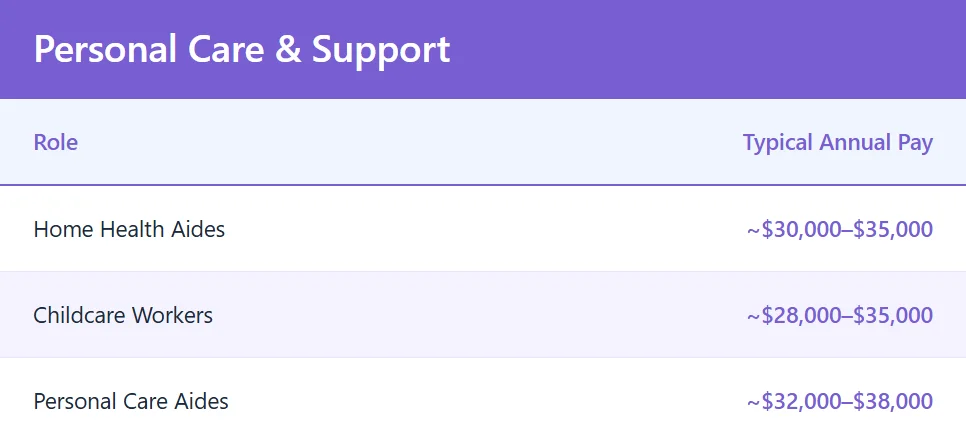
Personal care and support roles are essential to daily life but remain among the lowest-paid occupations in the U.S.
Entry-Level & Administrative Support
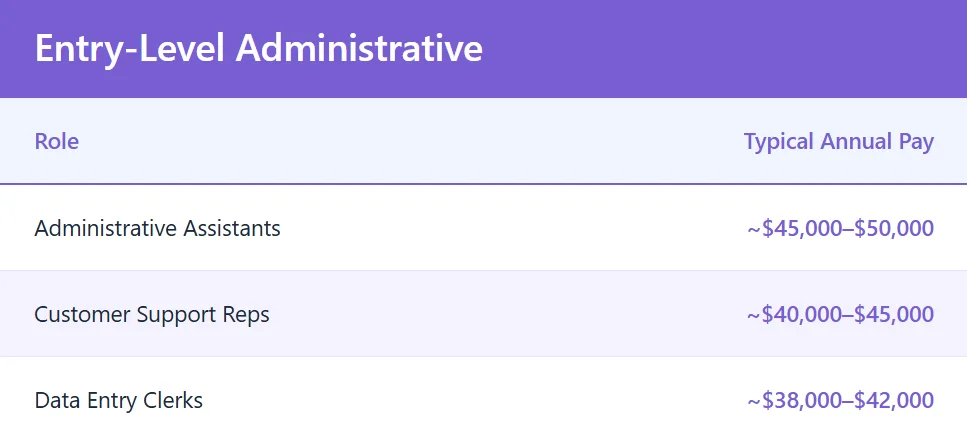
Administrative and entry-level roles usually sit below the national average, with pay increasing mainly through specialization or promotion.
Average Salary by Gender in USA
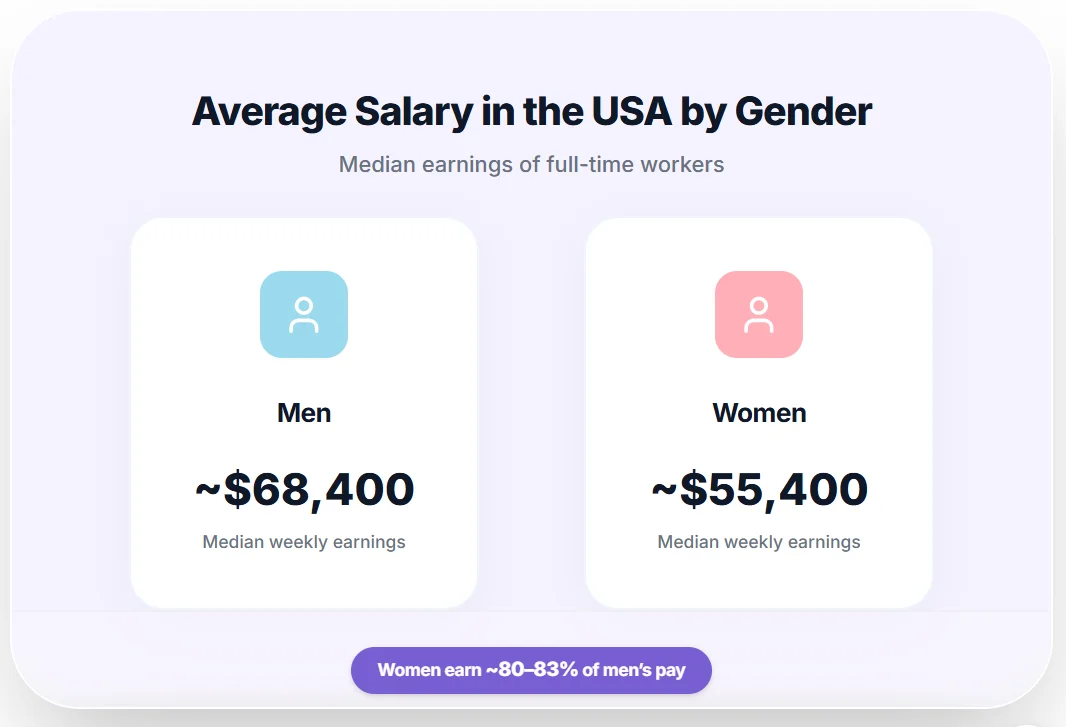
Source: U.S. Bureau of Labor Statistics (BLS)
Gender Pay Gap (Earnings Ratio Women vs Men)
- In the U.S., women earned about 82 cents for every dollar men earned based on median weekly earnings of full-time workers, according to USAFacts citing Bureau of Labor Statistics (BLS) data.
- As of third quarter 2025, women’s median weekly earnings were ~80.7% of men’s earnings ($1,076 vs $1,333), based on BLS reports.
- Long-term analyses (e.g. Pew Research) show women’s median hourly earnings are around ~85% of men’s earnings when combining full- and part-time work.
Gender pay gap by state in the USA
TL;DR
- Across states, women earn between ~68% and ~89% of men’s pay.
- Coastal and high-cost states tend to have smaller pay gaps.
- Southern and Mountain West states often show larger gaps.
- No U.S. state has fully closed the gender pay gap.
The gender pay gap varies significantly by state. In some states, women earn close to 90% of what men earn, while in others the gap is much wider, with women earning 75% or less of men’s pay.
Most state-level comparisons are based on median annual earnings of full-time, year-round workers.
Gender pay gap by state (women’s earnings as % of men’s) :
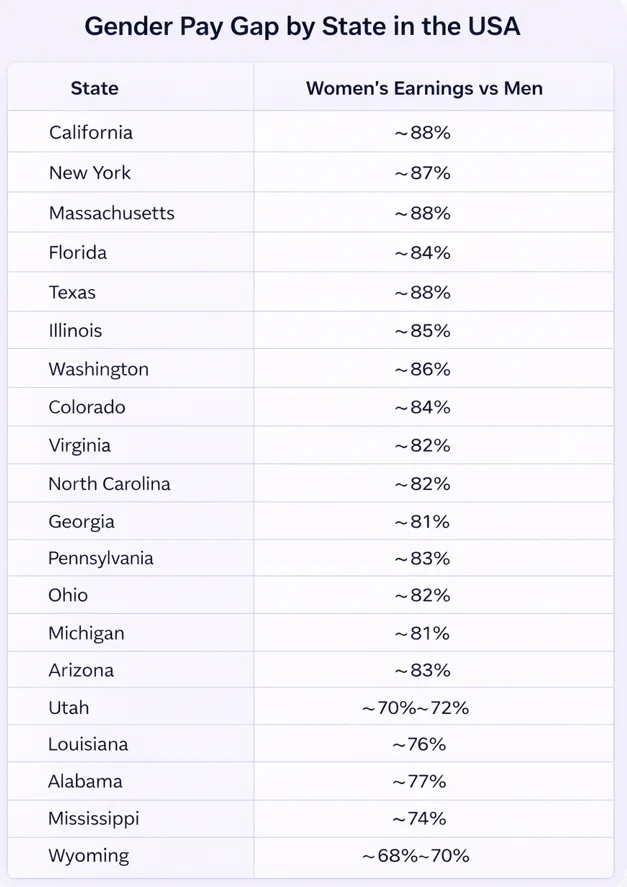
How to read this: A value of 84% means women earn $0.84 for every $1 earned by men in that state.
States with the smallest gender pay gaps
These states tend to have:
- Higher unionization
- Larger public-sector workforces
- Higher female participation in professional roles
Top performers (≈86%–89%):
- California
- Massachusetts
- New York
- Washington
States with the largest gender pay gaps
These states often show:
- Lower female workforce participation
- Higher concentration in lower-paying industries
- Wider occupational segregation
Widest gaps (≤75%):
- Wyoming
- Utah
- Mississippi
- Alabama
Average salary needed to live comfortably in USA
TL;DR:
- A comfortable salary in the U.S. usually ranges from $60,000 to $90,000 for a single adult.
- High-cost cities often require $85,000–$100,000+ to live comfortably
- The national average salary does not guarantee a comfortable lifestyle everywhere
- Housing and healthcare are the biggest cost drivers
Using cost-of-living benchmarks and common budgeting rules (like the 50/30/20 framework), a comfortable annual salary in the U.S. typically falls between $60,000 and $90,000 for a single adult.
Here’s a simple breakdown:
- Lower-cost states and cities: ~$55,000–$65,000
- Mid-cost metro areas: ~$65,000–$75,000
- High-cost cities (NYC, SF, LA, Boston): ~$85,000–$100,000+
These ranges assume:
- One adult household
- Renting (not owning)
- No major debt beyond basic expenses
Why the required salary varies so much
The biggest factor driving how much you need to earn is housing. Rent alone can consume anywhere from 25% to 40% of income, depending on location.
Other major cost drivers include:
- Healthcare premiums and out-of-pocket costs
- Transportation (car ownership vs public transit)
- State and local taxes
- Childcare (for families)
This is why someone earning $70,000 may feel comfortable in one state and financially stretched in another.
Comfortable salary for families vs individuals
Household size changes everything.
- Single adult: ~$60,000–$90,000 (location-dependent)
- Dual-income household (no kids): ~$100,000–$130,000 combined
- Family with children: $120,000+ in many metro areas
Childcare, healthcare, and housing costs increase sharply for families, especially in urban regions.
Conclusion
There’s no single number that defines what people earn in the United States, and that’s the most important takeaway from this guide. While the average salary in the USA offers a broad snapshot, it often hides important differences driven by location, occupation, experience, education, and gender. That’s why median pay, state-level data, and role-specific salaries provide a more realistic view of what most people actually earn.
What this data shows is that income is highly contextual. A salary that feels comfortable in one state or career stage may not be enough in another, and national averages alone can be misleading.
Whether you’re comparing job offers, planning a career move, or thinking about long-term financial stability, salary data is most useful when applied to your own situation, not as a benchmark to chase, but as a tool to make better-informed decisions.
FAQs
What is the Average Salary in the US?
The average salary in the US is roughly $65,000–$75,000 per year, depending on the data source and methodology.
What’s the average salary in the US per month?
On a monthly basis, the US average salary is about $5,400–$6,250 before taxes. The median monthly salary is lower, closer to $4,000–$4,300, which better reflects typical earnings for full-time workers.
What is considered an above-average salary in the USA?
An above-average salary in the USA generally starts around $80,000 per year or higher. At this level, earnings exceed both the national average and median, placing workers comfortably above typical income levels in most regions.
How much does the average American make per month?
The average American earns approximately $5,500 per month before taxes, based on annual average wage estimates. After taxes and deductions, take-home pay is usually significantly lower and varies by state and benefits.
Does the average salary in the US vary by state?
Yes, average salaries vary widely by state. High-paying states like California, Washington, and Massachusetts tend to average $75,000–$80,000+, while lower-paying states often fall closer to $50,000–$55,000.
Is the average salary a good measure of what people earn?
Not always. The average salary can be skewed by high earners, which is why the median salary is often a better indicator of what a typical worker earns in the US.


.webp)